Editor’s Note
This article discusses a potential scientific breakthrough that could enable diamond production at ambient temperature and pressure. While promising, readers should note this research represents an early-stage development, not a commercially available technology. The implications for industries from manufacturing to electronics could be significant if successfully scaled.
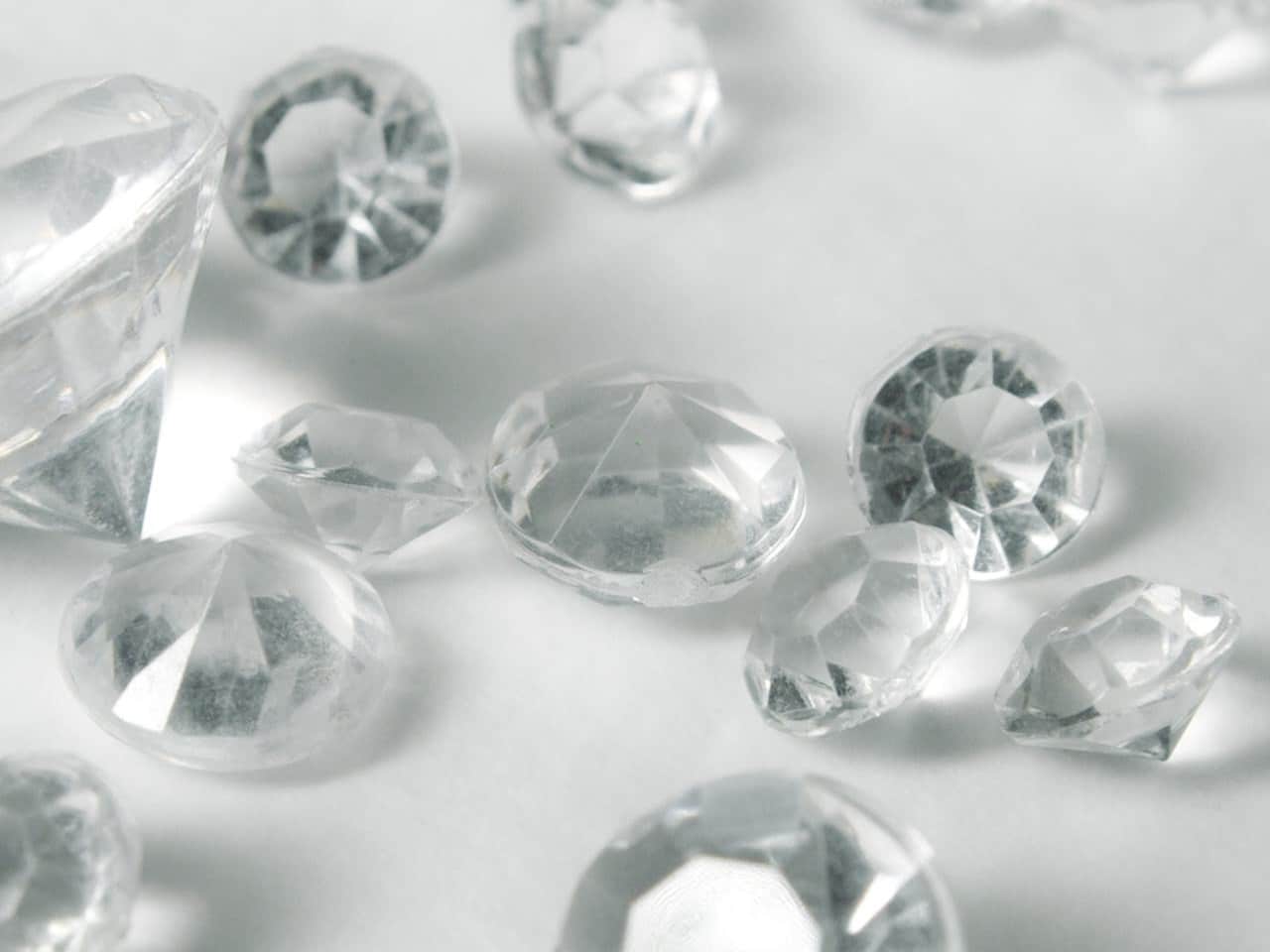
From their formation deep within the Earth to their use in jewelry or technology, diamonds possess a unique crystalline structure that makes them extremely hard. In nature, they form under conditions of extreme heat and pressure. In the laboratory, techniques such as HPHT and chemical vapor deposition attempt to replicate this process, albeit with limitations. Now, a new method promises to change the game.
In an impressive breakthrough, a team led by Rodney Ruoff, a physical chemist at the Institute for Basic Science in South Korea, has developed a method to create diamonds at normal temperature and pressure. This discovery challenges traditional techniques, such as high-pressure, high-temperature (HPHT) diamond growth, and eliminates the need for a starter diamond to initiate the process.
In nature, diamonds form at depths between 90 and 150 kilometers, where temperatures reach 1,100°C and pressures are immense. These conditions allow carbon atoms to bond into a unique crystalline structure, creating diamonds. Subsequently, historical volcanic eruptions transported them to the surface, lodging them in volcanic rocks like kimberlite.
Recreating these conditions in the laboratory has been a constant challenge. The HPHT method, which replicates extreme pressure and temperature, has been the standard, but it requires significant energy and produces small diamonds, about the size of a blueberry. Another technique, chemical vapor deposition, attempts to overcome these limitations but still requires a starter diamond as a seed.
Ruoff’s method begins with a graphite crucible containing electrically heated gallium and a small amount of silicon. This gallium, a metal with catalytic properties, was chosen after studies demonstrated its ability to form graphene, a carbon-based material.
The team designed a special chamber at atmospheric pressure to experiment with different gas mixtures and determine the best combination. After numerous trials, they discovered that a mixture of gallium, nickel, iron, and silicon efficiently catalyzed diamond growth. The most surprising aspect is that the first crystals appeared in just 15 minutes, and a complete diamond film formed within two and a half hours.
Although the mechanism behind this technique is not yet fully understood, researchers believe that the temperature reduction during the process drives carbon from the methane gas toward the center of the crucible, where it crystallizes into diamond. The role of silicon is fundamental; without it, diamonds do not form, suggesting that it acts as a seed for carbon crystallization.
Currently, diamonds produced with this method are extremely small, much smaller than those created with the HPHT method, making them unviable for jewelry. However, they have great potential for technological applications, such as cutting or polishing tools. Furthermore, the simplicity of the low-pressure process could facilitate large-scale production in the future.
Ruoff is optimistic about the commercial possibilities of this technique.
This discovery not only redefines how diamonds can be manufactured but also opens the door to new applications and technological possibilities, marking an exciting chapter in the evolution of synthetic gems. Only time will tell how far this innovation can take us.