Editor’s Note
This article explores the shifting landscape of the diamond industry, highlighting the rise of lab-grown alternatives as a symbol of both luxury and conscious consumption. It examines the fundamental differences in their creation while prompting readers to consider the broader implications of their choices.

The landscape of diamonds, long a symbol of luxury and sophistication transcending eras and fashion, is changing. The emergence of lab-grown diamonds is transforming our perception of indulging in elegant jewelry while also offering an eco-friendly alternative.
Lab-grown diamonds, also known as synthetic diamonds, are created in a laboratory environment using modern technology. In contrast, natural diamonds are formed outdoors and discovered through mining.
While both types of ‘stones’ are similar in chemical and design aspects, lab-grown diamonds are significantly cheaper. This economic advantage makes them an excellent choice for value-seeking consumers. Currently, a 1.2-carat mined diamond costs about $22,000 (approximately 29.23 million won), while a 3-carat lab-grown diamond is around $3,000 (approximately 3.98 million won).
One reason artificially ‘cultivated’ diamonds are considered a form of conscious consumption is their environmental friendliness. They do not involve the moral dilemmas that can arise from mining natural diamonds, making consumers feel more comfortable wearing them and confident in their choice.
In particular, lab-grown diamonds are often produced in facilities focused on environmental protection and fair labor practices, which is another advantage. Unlike mined diamonds, these sustainable pieces of jewelry can align with the wearer’s values and beliefs, offering not only beauty but also ethical satisfaction.
Experts analyze that consumers, freed from the ethical issues and various conflicts associated with diamonds, are turning to lab-grown diamonds for ‘guilt-free luxury.’
Indeed, the ethical problems of traditional diamond mining, such as environmental damage and labor exploitation, have long plagued the industry, and lab-grown diamonds are becoming a practical and moral alternative to address these issues.
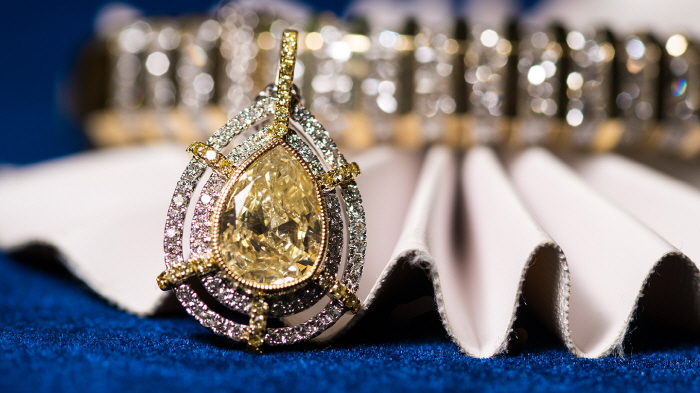
Innovative lab-grown diamonds adhering to circular economy principles are cultivated using carbon captured from pollution. These sustainable gems must meet the stringent standards of the Scientific Certification Systems (SCS) to be called diamonds.
There are two main processes for growing diamonds in a laboratory, each producing different types of diamonds.
First, the High-Pressure High-Temperature (HPHT) technology replicates the intense conditions under which diamonds form naturally deep within the Earth. In this process, carbon undergoes high pressure and temperature to transform into a sparkling diamond.
By using this method, scientists can achieve remarkable results in a controlled environment while ensuring consistency in the quality and size of the diamonds. This innovative approach not only speeds up the diamond creation process but also allows for the ethical production of gems without the need for mining.
The Chemical Vapor Deposition (CVD) process involves injecting a carbon-rich gas into a sealed chamber containing a small diamond ‘seed.’ As the chamber is heated, carbon atoms from the gas begin to deposit onto the diamond seed layer by layer, gradually accumulating to form a full-sized diamond. This method allows diamonds to grow layer by layer with precision, forming high-quality gems.
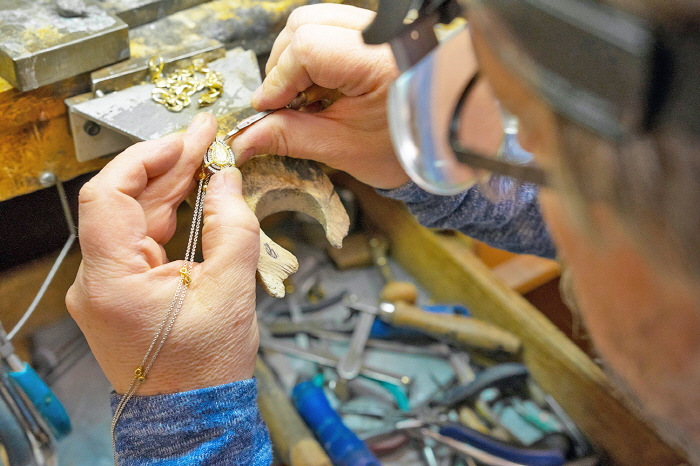
Lab-grown diamonds created in the laboratory are then processed using the traditional expertise of diamond artisans. In this way, lab-grown diamonds become a reasonable alternative for consumers who desire luxurious diamond jewelry at a relatively low cost, and they can be tailored to consumer tastes with various design options.