Editor’s Note
While a broad trade agreement has been announced, key details on tariffs and market access remain unresolved. Negotiations between the U.S. and India are set to continue.
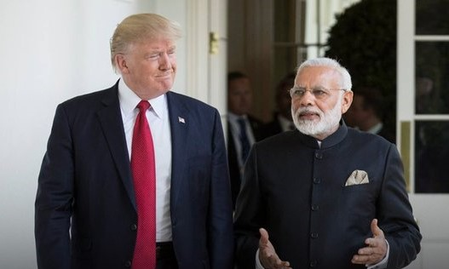
A few days after US President Donald Trump announced a trade deal with India, the White House stated that negotiations on several issues will continue. Although the main points of the agreement and the framework for its implementation have been outlined, talks will persist on some unresolved tariff and non-tariff barriers.
This information was provided in a fact sheet released after the joint statement issued following the talks between President Donald Trump and Prime Minister Narendra Modi last Friday. During these discussions, both leaders agreed on a framework for an interim trade agreement and reiterated their commitment to advancing a future India-US bilateral trade agreement.
According to the White House, the two countries will continue negotiations on remaining tariff barriers, additional non-tariff barriers, technical barriers to trade, customs and trade facilitation, and improving regulations to ease and enhance trade. Additionally, discussions will cover issues such as services, investment, intellectual property, labor, environment, government procurement, and unfair trade policies of state-owned enterprises.
While negotiations on several sensitive topics are still ongoing, an agreement has been reached to implement some decisions immediately under the interim deal.
President Trump has decided to remove the additional 25 percent duty imposed on goods imported from India. According to the White House, this decision was made because India has committed to stopping oil purchases from Russia. In this regard, Trump has also signed an executive order.
Simultaneously, the US has decided to reduce the reciprocal duty imposed on India from 25 percent to 18 percent. The US states that India has shown willingness to cooperate with the US on matters related to trade imbalance and national security.
India has also promised to increase purchases from the US. Regarding regulatory matters, India has acknowledged that it will remove those non-tariff barriers that hinder trade between the two countries. Both sides will negotiate rules of origin to ensure that the benefits of the agreement primarily accrue to the United States and India.
Digital trade is also a significant part of this agreement. India has agreed to remove the digital services tax and is prepared to establish bilateral rules for digital trade. Under these rules, no customs duties will be levied on online transactions, and discriminatory regulations will be avoided.
Both countries have also agreed to strengthen economic security to reinforce supply chains and promote innovation. India and the US will also enhance cooperation in the field of technology.
The White House also noted that India has historically imposed very high duties on US goods. These average up to 37 percent on agricultural products and over 100 percent on some automobiles.