Editor’s Note
This article explores the multifaceted symbolism of diamonds in popular culture, tracing their cinematic journey from icons of glamour and romance to sobering symbols of conflict and commerce.
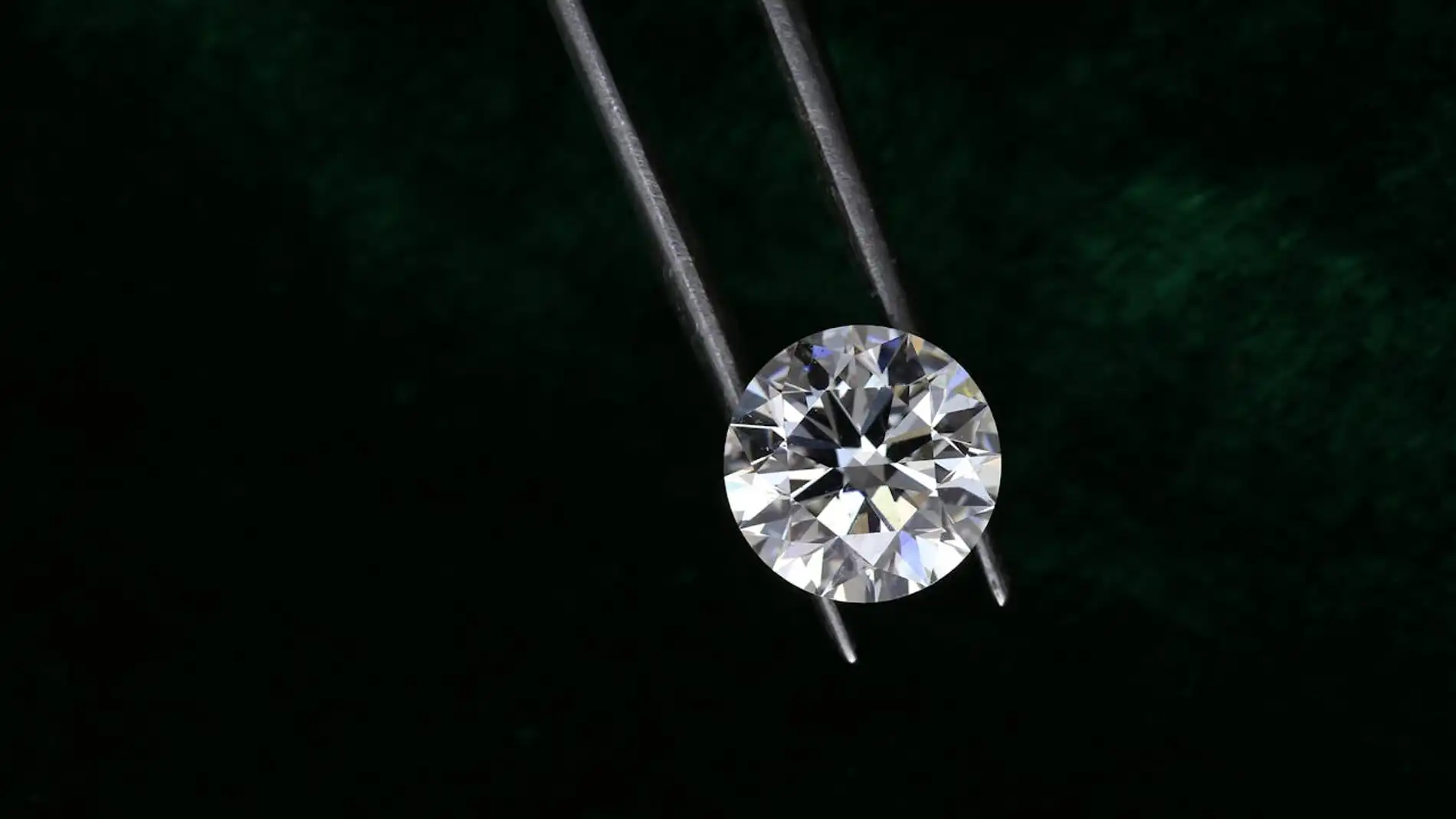
A diamond evokes a world of suggestions that, depending on our age, can transport us to a Parisian cabaret where Marilyn Monroe declares to the world that they are “a girl’s best friend” (Gentlemen Prefer Blondes, Howard Hawks, 1953); to New York’s Fifth Avenue in front of Tiffany’s, through the sleepy image of Audrey Hepburn (Breakfast at Tiffany’s, 1961, Blake Edwards); to the mines of Sierra Leone (Blood Diamond, Edward Zwick, 2006); or to Antwerp’s diamond district (Rough Diamonds, Rotem Shamir and Yuval Yefet, 2023). They represent a dream. It is no coincidence that they are the most expensive material used to make jewelry, far surpassing gold.
Diamonds and gold are safe-haven assets in the markets (their prices rarely fall). A small 5-carat (1 gram) diamond can cost over €60,000 (and no less than €10,000), while 1 gram of pure gold (24 karats) is worth no more than €90. But we are talking about natural diamonds. For economic reasons, the growth of most synthetic diamonds is halted when they reach a mass of 1 carat (200 mg) to 1.5 carats (300 mg).
Thus, scientific news related to such “brilliant” topics as diamonds generates high expectations. A recent study, published in Nature, develops a new method for manufacturing them that does not require applying extreme pressure. And it is a significant advance.
Will the price of diamonds drop drastically? It is possible that in some years (not a few) this could happen.
Artificial or synthetic diamonds have been a reality for decades and can already be produced at a cost of less than €500 per gram. They remain an “expensive” raw material, but new technologies are making them cheaper. They are chemically very similar, and although their physical properties are not the same, only an expert jeweler/gemologist can tell them apart.
French chemist Antoine-Laurent de Lavoisier discovered in 1772, by burning diamonds with sunlight, that they are composed of carbon. Thus began the first attempts to reproduce nature’s work (converting carbon into diamond) in a laboratory. We had to wait until 1954 for General Electric laboratories in the USA to succeed.
There are two preferred technologies for manufacturing artificial diamonds.
The first, in a way, reproduces how nature makes diamonds: high-pressure and high-temperature (HPHT) techniques. These technologies subject graphite simultaneously to pressure and temperature conditions where diamond is thermodynamically more stable than graphite. Pressures above 5 GPa and temperatures above 1,500°C are required. From the 1950s to the present, different paths have been developed to achieve these conditions.
The second technology encompasses chemical vapor deposition (CVD) techniques. For this technology, we need a well-crystallographically oriented “seed” (also diamond), over which a carbon-rich gas (usually a mixture of methane and hydrogen) is circulated at relatively low pressures (on the order of 27 kPa), causing the diamond to “grow” by chemical deposition.
Diamonds have been made without applying pressure for decades. So, what does the new development published in Nature contribute?
Diamond growth is carried out at atmospheric pressure and at the temperature of the liquid metal (which can be indium, tin, lead, mercury, or bismuth, all below the “high” 327°C of lead). These metals act as solvents but also as catalysts.
Lab-grown diamonds are not without fault. Manufacturing them consumes a very high amount of energy; they are not exactly ecological or respectful of sustainability. It is here, in this dilemma, where the new development could represent an interesting advance, as they possibly have a better energy balance, and this may be one of their advantages, given that their manufacturing temperature is much lower than that required by conventional techniques.
It remains to be seen whether, without a natural origin, they can evoke that world of suggestions that multiplies their value in luxury jewelry.