Editor’s Note
This article explores the expanding market for lab-grown diamonds, detailing their scientific composition and how they compare to natural diamonds. As consumer interest in sustainable and affordable alternatives grows, understanding these distinctions becomes increasingly relevant for both industry professionals and buyers.
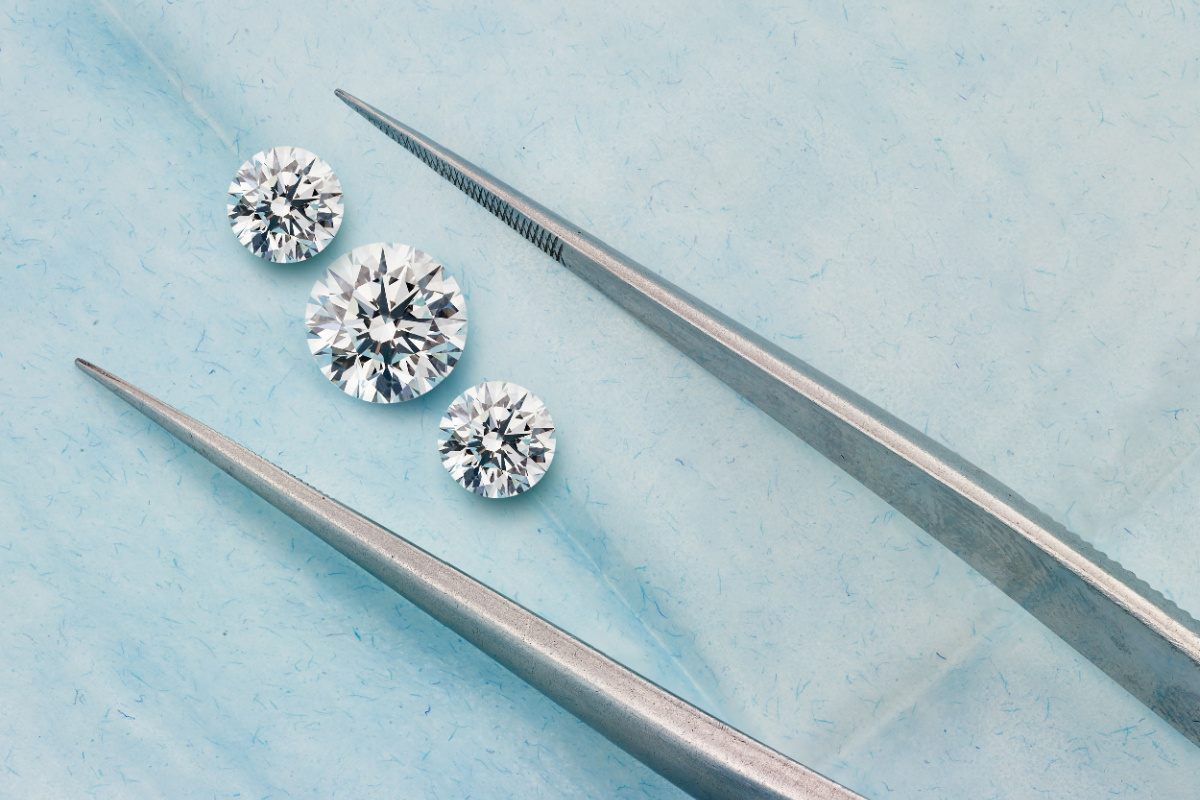
Lab-grown diamonds, also known as synthetic diamonds or lab-grown diamonds (LGD), are diamonds artificially synthesized using gases containing carbon, among other methods. When comparing diamonds, lab-grown diamonds, and cubic zirconia, which have a similar transparent appearance, natural diamonds and lab-grown diamonds share the same composition and hardness. Their scientific composition is carbon, their crystal system is isometric (three crystal axes are mutually perpendicular and of equal length), and they score the highest 10 on the Mohs hardness scale (scratch resistance) used in the gemstone industry. Their refractive index and dispersion are also nearly identical. Lab-grown diamonds have grading reports that use the same 4C criteria (cut, carat, color, clarity) as natural diamonds, which is an international evaluation standard. In contrast, cubic zirconia is inferior in terms of hardness, refractive index, and durability, and does not have such grading reports.
Lab-grown diamonds began gaining popularity among consumers around 2021. The perception that lab-grown diamonds are not inferior to natural diamonds in terms of composition and brilliance became widespread, leading to consumer acceptance. 2023 was even reported as “the year of the lab-grown diamond.” In September of that year, Pandora, a global brand from Denmark known for selling affordable jewelry like charm bracelets under $100, launched a major campaign for lab-grown diamonds during New York Fashion Week. For price-sensitive consumers who find natural diamonds out of reach, the lower-priced lab-grown diamonds are attractive.
The De Beers Group, known as a diamond mining, distribution, processing, and wholesale company, established its lab-grown diamond subsidiary, Lightbox, in 2018.
While growing demand and increasing supply have led to further price declines for lab-grown diamonds, and their market share continues to expand compared to natural diamonds, intense price competition poses challenges in terms of profitability. Furthermore, in production, China and India hold a competitive advantage. In October of last year, one of the major U.S. lab-grown diamond manufacturers filed for bankruptcy.
Additionally, problems have arisen where their identical appearance is exploited; they are being substituted for higher-priced natural diamonds or used as tools for money laundering.
On the other hand, some companies, like the major U.S. manufacturer Diamond Foundry, have succeeded in differentiation. The company invested in research and development early on, possesses its own technology, and is also involved in manufacturing materials for diamond semiconductors, which are attracting attention as superior materials to silicon semiconductors. In the jewelry market, it focuses on manufacturing larger diamonds of 45 carats or more, holding over 90% market share in that segment.
For lab-grown diamond companies to continue shining, a review of strategy and investment in product development are required.