Editor’s Note
The diamond market is undergoing a profound transformation. Beyond their symbolic allure, diamonds now function as investments and status markers, with their value increasingly influenced by economic shifts, geopolitical tensions, and technological advances. This article explores the new realities shaping this glittering industry.
Diamonds are often said to be forever. Their prices, however, usually are not, and the diamond market is facing new realities.
Humanity has been captivated by few gemstones as much as by the diamond. It is a symbol of love, eternity, and immeasurable wealth. But a diamond is no longer just a piece of jewelry; it is also an investment and a status symbol. Yet, behind the sparkling facade lies a market shaped by economic cycles, geopolitical changes, and technological innovations.
After a veritable boom in the first half of the 21st century, the diamond market is currently going through a phase of great uncertainty. In recent years, prices for rough and polished diamonds have experienced significant fluctuations.
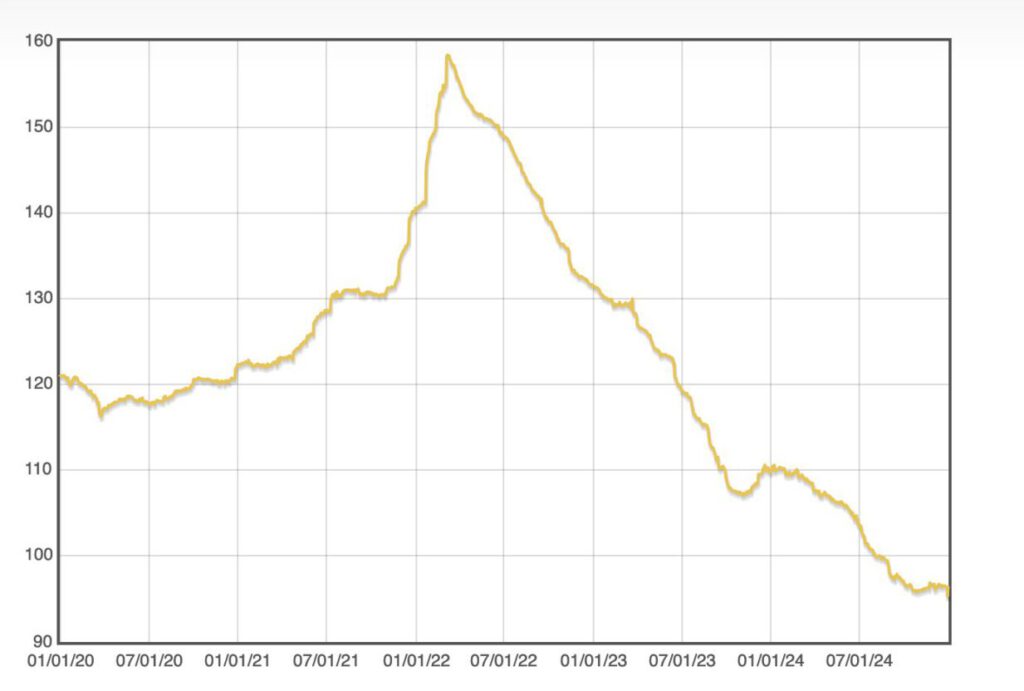
Initially, diamond prices recorded a significant slump during the coronavirus pandemic. Lockdowns and restricted wedding celebrations drastically reduced demand for jewelry diamonds, while the industrial use of diamonds – for example in precision manufacturing – also declined. Major producers, such as the British company De Beers and the Russian Alrosa, responded with production cuts and sometimes offered rough diamonds at reduced prices to minimize their inventories.
However, from 2021 onwards, a surprising turnaround occurred: a clear recovery set in, driven by resurging demand, particularly in the USA and China. The urge for luxury items as a symbol of personal success and reward after the years of pandemic hardship sent prices soaring. Jewelry manufacturers under Richemont, such as Cartier and Van Cleef & Arpels, benefited greatly.
All this is illustrated by diamond price indices. Even for individual carat sizes and different diamond shapes, the development can be traced. In this century, they have even reached an absolute low.
But this recovery in the diamond market did not last. In 2023, the structure began to slip again. According to experts, numerous factors are responsible for this.
Rising inflation weakened consumers’ purchasing power. Consequently, demand for diamonds also noticeably declined.
Rising interest rates or better prospects for the precious metal gold also offered opportunities for alternative capital investments.
However, this was not the only influencing factor.
Increasingly perfectly manufactured lab-grown diamonds are capturing market share – not only because of their lower price but also due to their sustainability promises, as laborious mining and associated conflicts are eliminated.
Diamonds, centuries-old symbols of luxury and stability, are currently undergoing a remarkable transformation. Falling demand meets an expanded supply due to lab-grown diamonds – and the price only knows one direction: down.
Diamonds are often said to be forever. That may be true. But as an investment, they are only conditionally suitable.