Editor’s Note
This article discusses the commercial availability of diamond manufacturing machines on platforms like Alibaba, reflecting a significant shift in the gemstone industry. It is important to note that the production, sale, and certification of lab-grown diamonds are subject to varying international regulations and standards. Readers should be aware of the legal and ethical considerations, including potential intellectual property issues and compliance with local trade laws, before engaging with such technology.

In an era where almost anything can be purchased online, the surprising news has emerged that on the Chinese e-commerce site Alibaba, anyone can now buy a diamond manufacturing machine for a minimum of $200,000 (approximately 270 million won). This news comes amidst the popularity of jewelry brands selling so-called lab-grown diamond rings and the recent development of a lab-grown diamond manufacturing technology at atmospheric pressure by a domestic research team (Institute for Basic Science, IBS). Since an American company first developed synthetic diamonds in 1954, this is expected to drive down diamond manufacturing costs more than ever before. Are we entering an era of concern that diamonds, the epitome of high-value gemstones, might be produced in excessive quantities? And if you buy this machine, can anyone magically produce diamonds?
Ars Technica reported on the 10th (local time) that Alibaba is selling diamond manufacturing machines for prices ranging from $200,000 to $450,000 (approximately 270 million to 600 million won). The manufacturer is Henan Huanghe Whirlwind Co., Ltd. Let’s explore the technology behind synthetic diamond manufacturing.
The successful development of lab-grown diamonds dates back 70 years to the winter of 1954.
Recently, Javed Laka, a Harvard graduate student, authored a comprehensive article on synthetic diamonds published last month in Works in Progress, stating that the first successful diamond synthesis in a laboratory environment was achieved in the 1950s.
Since Hall’s successful development of synthetic diamonds, diamond manufacturing technology has advanced significantly.
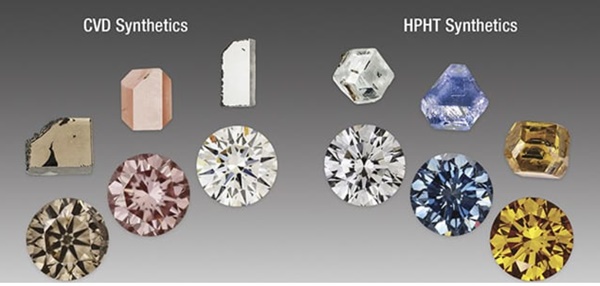
Today, there are two main methods for creating lab-grown diamonds: the HPHT process and the Chemical Vapor Deposition (CVD) method. (Tracy Hall developed artificial diamonds using the HPHT process, building on the work of pioneers who researched before him.)
As engineer John Nagle pointed out on Hacker News, both types of machines are currently listed on Alibaba, with prices starting at around $200,000.
Ars Technica reported that the CVD-type synthetic diamond manufacturing machine found on Alibaba costs about $450,000 (approximately 600 million won), which is more expensive than the HPHT type.
While the idea of purchasing a diamond manufacturing machine sold on Alibaba may be intriguing, it’s important to note that it’s not as simple as watching diamonds form.
Using an HPHT press requires a reliable supply of high-quality graphite, a metal catalyst like iron or cobalt, and precise temperature and pressure control systems.
A CVD machine requires a steady supply of methane and hydrogen gases, and the ability to generate and control microwaves or hot filaments. Both methods require a diamond seed crystal to initiate the growth process.
Furthermore, expertise is needed to manage growth parameters, safely handle potentially hazardous materials and high-pressure equipment, and process the resulting synthetic rough diamonds into usable gemstones or industrial components. The machines also consume significant energy and require regular maintenance. These factors mean the synthetic diamond production process may be subject to regulations that extend far beyond the scope of this article.
In short, while access to diamond manufacturing machines is higher than ever, transitioning to a productive diamond manufacturing operation requires significant investment in equipment, materials, expertise, and safety measures.
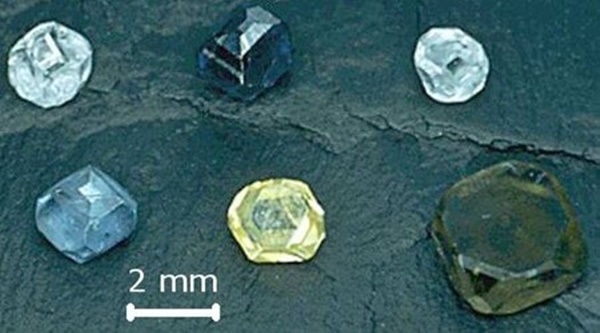
One notable development comes from De Beers, a diamond company famous for its dominance in the natural diamond market. Element Six, part of the De Beers Group, can now produce synthetic diamonds with defect levels as low as one part per billion through its R&D operations.
Diamonds with this level of purity can be used in high-tech applications, far exceeding the requirements for gemstones. (In fact, in 2012, the company’s synthetic diamonds were used for protection during the Higgs boson detection at CERN in Switzerland.)
Element Six has even created diamond windows for lasers up to 10 cm wide, demonstrating the potential of large, pure synthetic diamonds.
Remarkable breakthroughs have also occurred in natural diamond extraction.
John Nagle, who developed algorithms in the 1980s to improve TCP/IP network efficiency, pointed out that the diamond industry developed industrial X-ray systems to inspect rock containing diamond ore before crushing it, helping to preserve large diamonds that could be broken during extraction.
This technology has led to impressive discoveries, including a 2,492-carat diamond found last month by a Canadian mining company. The sorters for this task are provided by TOMRA, famous for bulk sorting systems used in recycling and food processing.
Interestingly, these improved extraction methods have led to the unexpected problem of an abundance of massive diamonds too large for typical gemstone use. Automation in the diamond industry hasn’t helped this oversupply.
He says the result is that lab-grown diamonds can now be purchased, surprisingly, by the vinyl bag or by the kilogram, and are also sold via Alibaba. However, the price varies greatly depending on whether one is buying industrial diamond abrasive (diamond powder used to grind, smooth, cut, or polish other materials) for crushing and polishing, or buying sparkling round brilliant cut specimens for jewelry.
This image stands in stark contrast to the traditional perception that diamonds are always rare and precious gemstones. As many now know, this concept was created in the 1930s by De Beers’ marketing department to sell diamond engagement rings.
While the diamond glut poses a difficult challenge for an industry calibrated around the idea of diamonds as rare and precious, the low price of synthetic diamonds could lead to industrial applications that were previously impractical.
The reproducible artificial diamond manufacturing machine and technology were first developed in December 1954. Before synthetic diamonds, low-quality diamonds were used for cutting and processing hard machinery metal parts, coating drills for rock and offshore oil field excavation, etc., but they were scarce or expensive.
Their synthesis required maintaining a minimum of 50,000 atmospheres and temperatures above 1000°C for a considerable time. Technological progress had been made to the point where 400,000 atmospheres were achieved in the 1930s. In 1951, GE, founded by Thomas Edison, was purchasing all its required diamonds from De Beers for processing carbide products and light bulb filaments. However, as production costs increased, they embarked on serious research to make their own. Research to artificially create high-temperature, high-pressure environments to make diamonds had been ongoing since the 1800s.
Amidst this, in 1953, news came that Eric Lundblad of the Swedish electrical company ASEA had synthesized diamonds in just one hour using a high-temperature device applying 83,000 atmospheres to graphite. Unfortunately, he could not reproduce the results.
On December 8, 1954, GE scientist Herb Strong and colleagues confirmed that two small diamonds were created by treating carbon powder at 50,000 atmospheres and 1250°C for 16 hours, but they failed to reproduce it.
On the 16th of the same month, Dr. Tracy Hall, a colleague at the GE research lab, finally succeeded in synthesizing and reproducing artificial diamonds by treating graphite carbon at 100,000 atmospheres and 1600°C for 38 minutes.