Editor’s Note
This article highlights a significant achievement for Spanish luxury, as the Soler-Cabot family firm becomes the first from Spain to gain full membership in the world’s premier Diamond Exchange. This historic milestone grants them direct access to the most valuable stones and cements their legacy as a leading jeweler.
Soler-Cabot is the only Spanish firm to have gained entry as a full member into the world’s most important Diamond Exchange. With its own premises in the historic Belgian exchange building and direct access to the market’s most valuable stones, this achievement reinforces the legend of the century-old Barcelona family of jewelers.
The diamond dealer keeps an impressive stone in the inner pocket of his jacket. Five carats of brilliance, immaculate clarity, and a whimsical emerald cut that he wants to sell for 100,000 euros before the day is over. Up Hoveniersstraat, down Schupstraat, thousands of cameras watch over the security of the business as he enters and exits buildings of bland architecture and walks through corridors lined with doors leading to unglamorous offices. First stop, the office of an Indian colleague who handles confidential information about some potential buyers. By mid-morning, the news that there is an exceptional gem on the market (inside his pocket) is already a clamor in the Diamantkwartier, Antwerp’s diamond district.
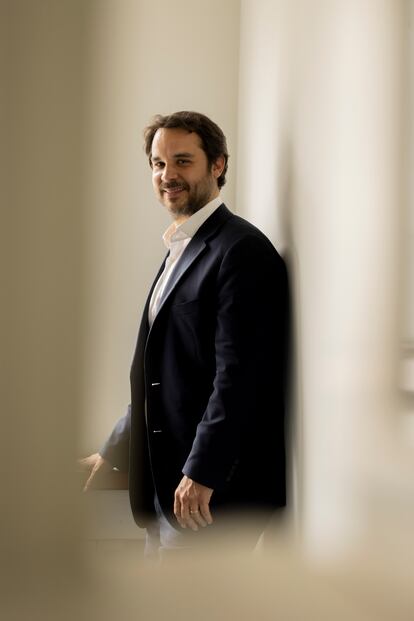
His name is Carlos Soler-Cabot and he is the only Spaniard accepted as a full member in the Exchange of the world capital of the precious stone trade.
His appointment to that select club was announced last April, but Carlos Soler-Cabot (Barcelona, 42 years old) has long earned his place—and his reputation—among the diamond brokers of the Belgian city.
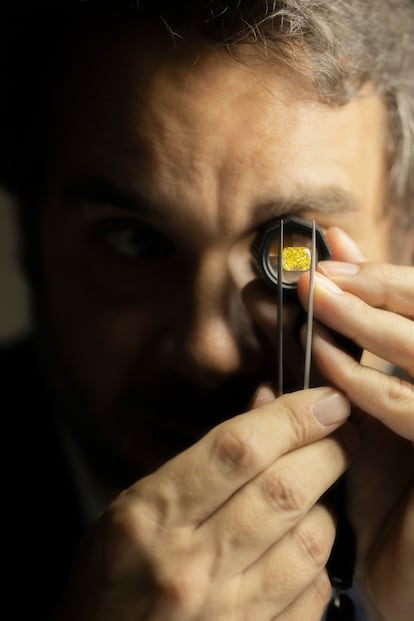
He has been a regular presence there for more than a decade, when he insisted on obtaining the best stones, those of the highest quality in terms of purity/clarity, color, cut, and carats—the four Cs, according to English nomenclature, which determine their value—for the century-old family jewelry business, following the tradition of its founder, his great-great-grandfather Joaquim Cabot. That Carlos would one day apply to become a numbered member with an office in the historic Antwerp exchange was a foregone conclusion.
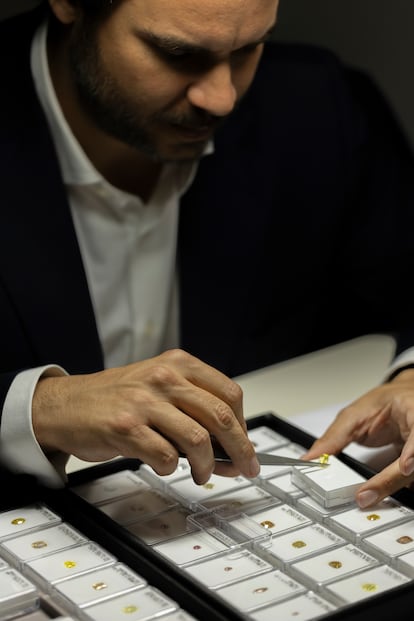
Going to the source means accessing unparalleled gems, the most coveted ones, those that usually end up set in designs with the label of Cartier, Boucheron, Chopard, Tiffany & Co., Chanel or De Beers. It happens that more than half of the stones extracted on the planet pass through the Antwerp Diamond Exchange, at least a couple of times in their life. First, in rough form to be evaluated (80% of those in circulation, almost all of African origin), and then, cut. India, Thailand, China and Southeast Asia share the cutting and polishing business today, but gems cut in Belgium remain unique: the largest and most valuable. Although the rival cities of Delhi and Dubai loom threateningly on the horizon, 50% of the global trade in cut diamonds still has its epicenter in those four unassuming streets where the headquarters of the two major global diamond banks are also located, where just over 30,000 people work in nearly 2,000 companies and dispatch around 230 million euros in carats per day. Other related businesses also thrive there, such as diamond washing (for less than four euros, stones receive a spa treatment that leaves them clean of dust and grease in just a few minutes) and stores selling utensils and tools for diamond dealers. At the firm I. David, over half a century old at 14 Schupstraat, Soler-Cabot makes a stop to stock up on loupes, diamond papers (the strategically folded little envelopes in which the precious merchandise is kept) and a couple of heavy, second-hand articulated table lamps, which go straight to his brand new office.
The ‘grand hall’ of the Antwerp Diamond Exchange. Although trading no longer takes place there as it did a century ago, diamond dealers who are members of the institution frequent it a couple of times a day to learn about market demands.