Editor’s Note
This article examines the tangible impact of the EU’s sanctions on Russia’s diamond sector, one year after their implementation. Through a visit to Antwerp’s historic diamond district, it explores the challenges facing the European diamond trade.

On December 18 last year, the EU announced a “diamond ban” as part of its 12th round of sanctions against Russia, prohibiting EU member states from trading diamonds with Russia. Now, one year after the ban took effect, how has the European diamond industry developed?
A reporter visited Antwerp, Belgium, known as the “Diamond Capital of Europe.”
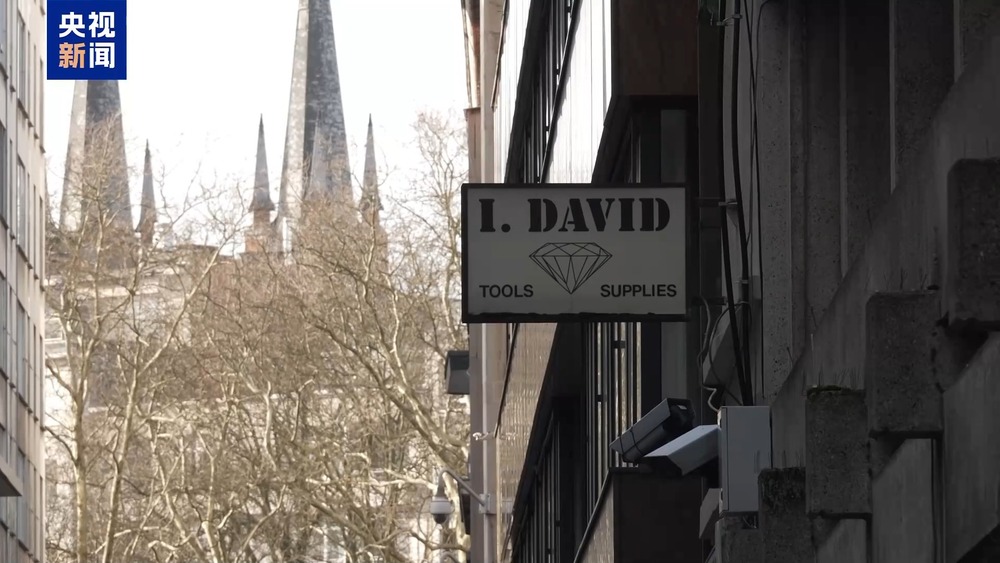
This is Antwerp’s Hoveniersstraat, known as “Diamond Street,” with a history of several hundred years. At its peak, this street, just over 100 meters long, was home to nearly 2,000 diamond-related businesses.
A local business owner introduced that in recent years, many companies engaged in the diamond business have successively left Antwerp. The shopfronts in one building’s hall have also moved out, and currently, the vacancy rate for the entire building is around 20%.
According to reports, due to the EU’s diamond sanctions against Russia, Belgium’s rough diamond imports have plummeted, dropping by 38% in the first three quarters of this year alone. Antwerp’s diamond trade has now reached a historical low. Originally, there were over 6,000 jobs directly related to diamonds locally, but a large number of positions have now been lost.
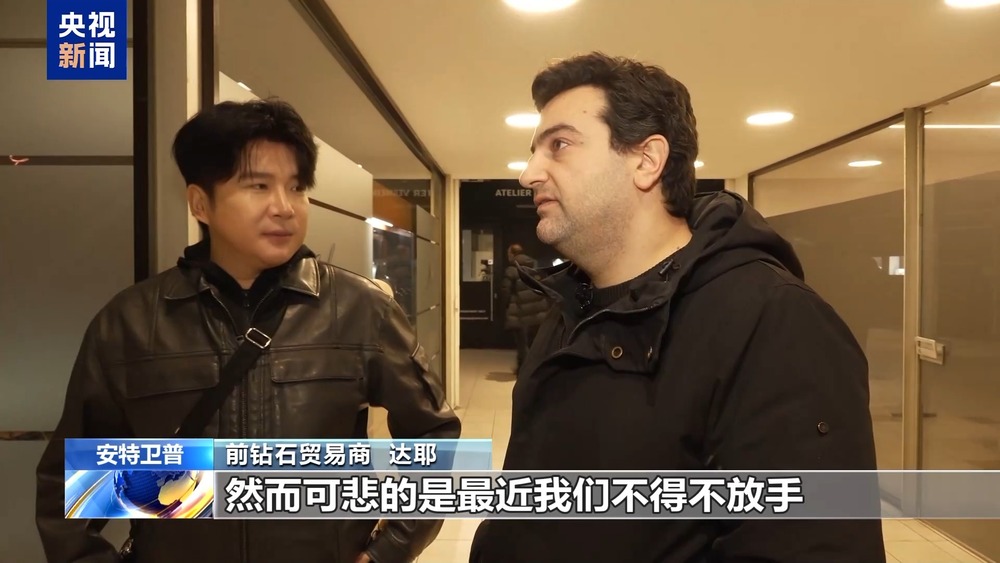
Dai Yao once operated one of the largest local diamond shops on Diamond Street, but he has now completely left the diamond industry.
Dai Yao said his father was in the diamond business for 50 years, and he started learning the diamond trade with his father at the age of 13. However, after the Russia-Ukraine conflict, the EU imposed diamond sanctions on Russia, industry regulations became increasingly strict, coupled with the economic downturn, energy crisis, and many other reasons, leading to a sharp shrinkage in profit margins. Therefore, he had to give up the diamond business he had operated for many years. His brother chose to go to Dubai for development because Russian diamonds can still be freely traded there.
Those facing unemployment difficulties are not only Belgian diamond traders but also diamond polishers, the core workforce of the diamond industry chain. Antwerp has long been famous worldwide for its exquisite cutting work, and these craftsmen are now facing a situation with no work available.
Russia is one of the world’s largest producers of rough diamonds. The boycott of Russian diamonds has undoubtedly accelerated the process of “hollowing out” Antwerp’s diamond industry: core talent loss and a sharp decline in trading volume.
Peter Opbeke, a 72-year-old diamond polisher, runs a workshop on Diamond Street. He has dealt with diamonds all his life but admits business has been relatively slow recently.
It is understood that before the sanctions, 8 out of every 10 uncut diamonds in the world had to be processed in Antwerp, and over half of the world’s polished diamonds also came from Antwerp. Opbeke stated that after the sanctions were imposed, much of the global diamond cutting and polishing work has shifted to countries like India.
Before diamonds enter the market, they need to be graded and certified by relevant laboratories. Yang Mingyue, the head of the Antwerp Gemological Laboratory, has also experienced this change. Yang Mingyue indicated that due to a sharp drop in diamond grading volume, the laboratory’s business focus has had to shift to the grading of other colored gemstones.
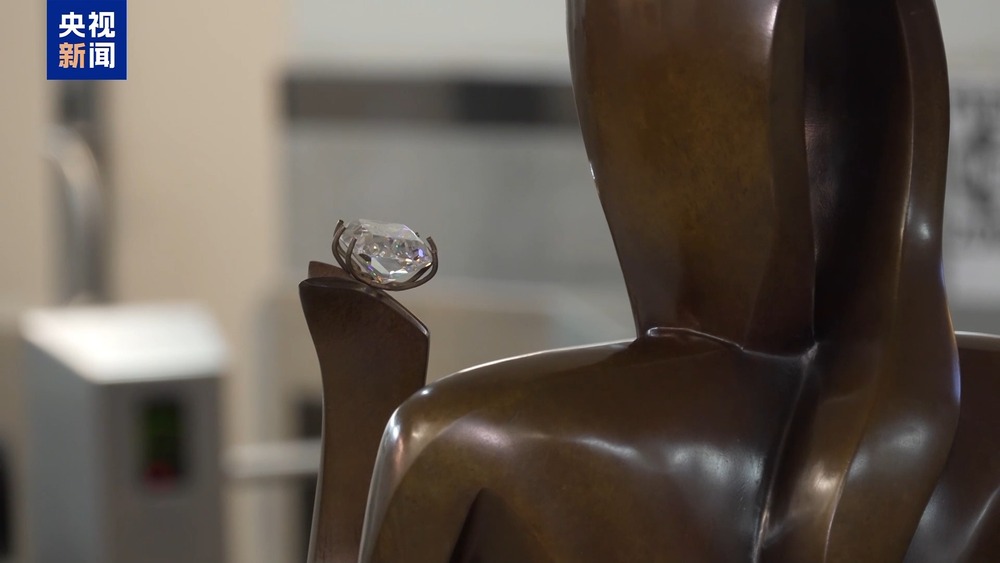
One year after the EU announced the implementation of the “diamond ban” against Russia, it has not only severely impacted the EU’s own diamond industry but also caused Antwerp, a city once prosperous because of diamonds, to suddenly lose its luster.
Founded in 1893, the IGC Group is a landmark local leading enterprise in Antwerp, Belgium, and also one of the important buyers of Russian diamonds. Russian diamonds have always been one of its stable top three supply sources. The EU’s implementation of the “diamond ban” against Russia hit this company first.
Reporter: “So, was it very difficult to find a replacement for Russian diamonds when (the diamond ban) started?”
Partners of the IGC Group admitted that finding substitutes for Russian diamonds not only led to increased company costs and reduced profits but also, due to loopholes in the EU’s sanctions against Russia, suffered unfair competition. The company’s competitiveness has been greatly weakened, and they are experiencing their most difficult year.
“Antwerp Evening News” quoted a research report stating that Antwerp’s diamond industry may disappear within the next five years.
In response, Professor Vandenbempt, an economics professor at the University of Antwerp, criticized that the EU’s ban on Russian diamonds is a failure. He stated that the sanctions are fatal to Antwerp’s diamond industry but benefit other diamond trading centers like Dubai and Mumbai.
The media outlet “European Dynamics,” which focuses on EU policy, recently published an article stating that Western sanctions against Russia are heading towards failure. So far, the Russian economy still maintains a certain degree of resilience, even rebounding; meanwhile, the European economy is deeply mired in an energy crisis and stagnation, paying a heavy price for it, just as the “Diamond Capital” Antwerp is losing its shine.