Editor’s Note
As industry exhibitions regain momentum, the synergy between exhibitions and fashion is creating new opportunities for innovation and growth. This trend highlights how major events are reshaping the fashion landscape, driving both economic and creative transformation.
In recent years, the exhibition industry has once again burst forth with strong vitality, and its vigorous development has become an important force driving the transformation and innovation of the fashion industry. Whether it’s large-scale exhibitions represented by the China International Import Expo (CIIE) and the China International Consumer Products Expo, diversified industry exhibitions like fashion shows, jewelry fairs, and beauty expos, or small-scale exhibition activities organized by companies themselves, different types of exhibition events play distinct roles, providing assistance and support for the rapid recovery of the fashion industry.
From the 28th Shanghai Beauty Expo (CBE) in 2024 to the 2024 China (Yuyao) International Fur Fashion Fair and the 2024 Hunan Apparel Expo & Lusong Fashion Week; from first-tier cities to second and third-tier cities across the country, various categories of exhibition events are being held in succession.
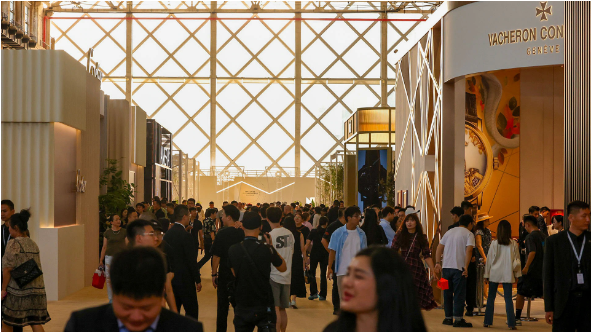
As one of the important exhibitions in the watch industry, the “Watches & Wonders” high-end watch fair attracts numerous renowned watch brands to participate every year. During its five-day run from August 28 to September 1, 2024, the “Watches & Wonders” Shanghai high-end watch fair welcomed over 10,000 independent visitors, while the three-day public event attracted more than 5,000 watch enthusiasts and end customers from Shanghai and the Asia-Pacific region.
He also pointed out that Vacheron Constantin’s active participation in diversified exhibitions like the CIIE is extremely helpful for enhancing brand exposure and showcasing the brand’s unique characteristics. Simultaneously, it allows the brand to understand market trends through other exhibitors at the exhibitions, which is crucial for timely adjustments to the brand’s own development strategy.
In recent years, the scale of China’s exhibition economy has continued to expand, its types have become increasingly diverse, and its international influence has grown. More and more companies are eager to expand their “exhibition circle of friends,” hoping to deepen connections with local consumers and, through diversified activities, seek brand growth and enhance industry competitiveness.
As an important component of the fashion industry and also a witness and participant in the leap of China’s fashion sector, foreign companies play a significant role in the exhibition economy.
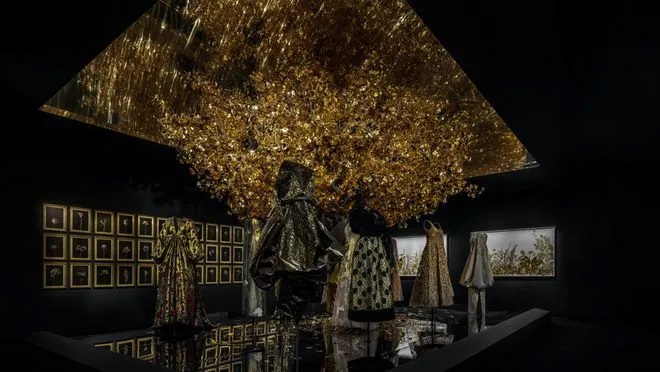
Dior’s “L’OR DE DIOR” exhibition held in September caused quite a stir within the industry. Industry insiders estimated that the reservation viewership for this exhibition on Dior’s mini-program reached around 40,000 within 10 days; the total viewership of the opening ceremony live stream across various platforms was approximately 96 million.
Compared to some companies that entered the Chinese market earlier, have higher market share, and possess strong capabilities, large-scale exhibitions provide a platform for small and medium-sized enterprises (SMEs) within the industry to explore the Chinese market and an international market expansion channel. More exhibitors can utilize diversified exhibition activities to enter incremental markets.
According to the “China Exhibition Economic Development Report 2023” released by the China Council for the Promotion of International Trade (CCPIT), in 2023, the number and exhibition area of economic and trade exhibitions in China achieved significant growth compared to 2022, indicating a comprehensive recovery trend in the exhibition industry.

For Canada Goose, a clothing brand that accelerated its expansion through a series of exhibition activities after entering the Chinese mainland market in 2018, the feeling seems particularly profound. Canada Goose believes that China has unique advantages in developing its exhibition economy: “Not only is there a diversity of venue choices and a well-developed ecosystem across the upstream and downstream of the exhibition service industry chain, but also, thanks to the advanced digital ecosystem, brands have ample room for innovation here to integrate various technologies into physical spaces and create more immersive and interactive experiences.” And “experience” happens to be an important focus for Canada Goose in building its differentiated competitive advantage.
In 2024, the international development of China’s exhibition industry will face more new opportunities.
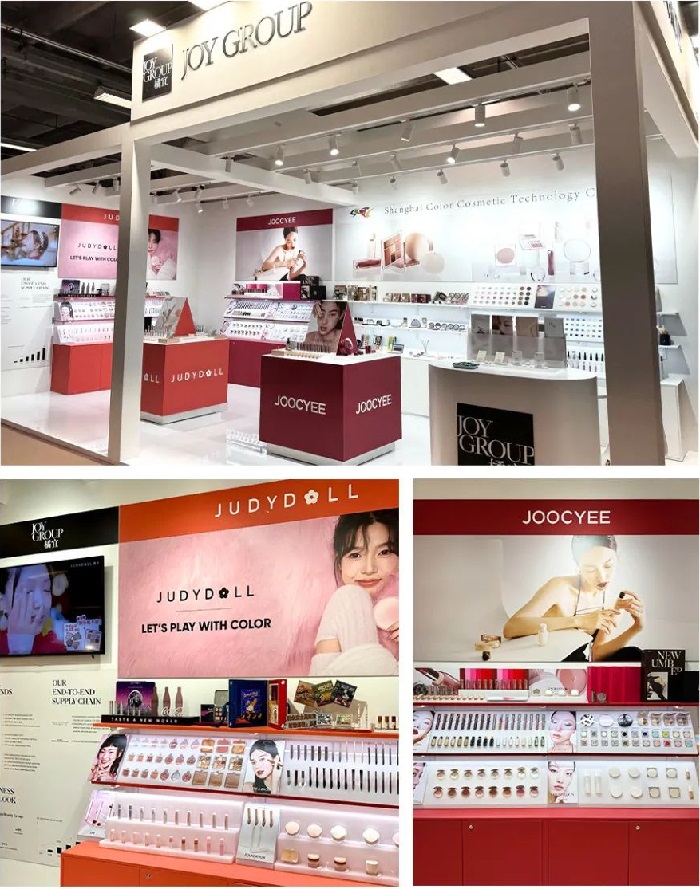
Using exhibitions as a bridge where commerce and culture converge, more and more international exhibitors are coming to China, while Chinese companies are also accelerating their pace to “go global” and participate in exhibitions abroad. In March of this year, Chinese cosmetics company Judydoll Group participated for the first time in the Cosmoprof Worldwide Bologna in Italy with its color cosmetics brands Judydoll and Joocyee, as well as its own factory, Shanghai Jianuohua Cosmetics Co., Ltd.
As for domestic brands, domestic beauty exhibitions are even more indispensable. For local brands, they are an excellent stage to showcase brand strength, understand market demand, and optimize supply chain structure, as well as an important platform to understand the development and trends of the local beauty industry and establish channel partnerships.
Due to factors such as the development level of the fashion industry, experience in organizing exhibitions, and market environment, there are significant differences in the organizers, positioning, service levels, and styles of fashion exhibitions. While the exhibition economy is heating up, issues such as lagging industry innovation, insufficient quality development, uneven levels of specialization, and the need to improve the integration of digitalization with exhibitions have also emerged.
In this regard, Zhang Mengxia, Director of the Luxury Goods Research Center at the University of International Business and Economics, believes that exhibitions have a powerful driving effect, whether in boosting local economic development or helping companies explore markets and convey brand positioning and value propositions.