Editor’s Note
While natural diamond mining has shaped landscapes and societies for millennia, its environmental and human costs are prompting a search for alternatives. This article explores the emergence of lab-grown diamonds as a modern innovation challenging traditional extraction.
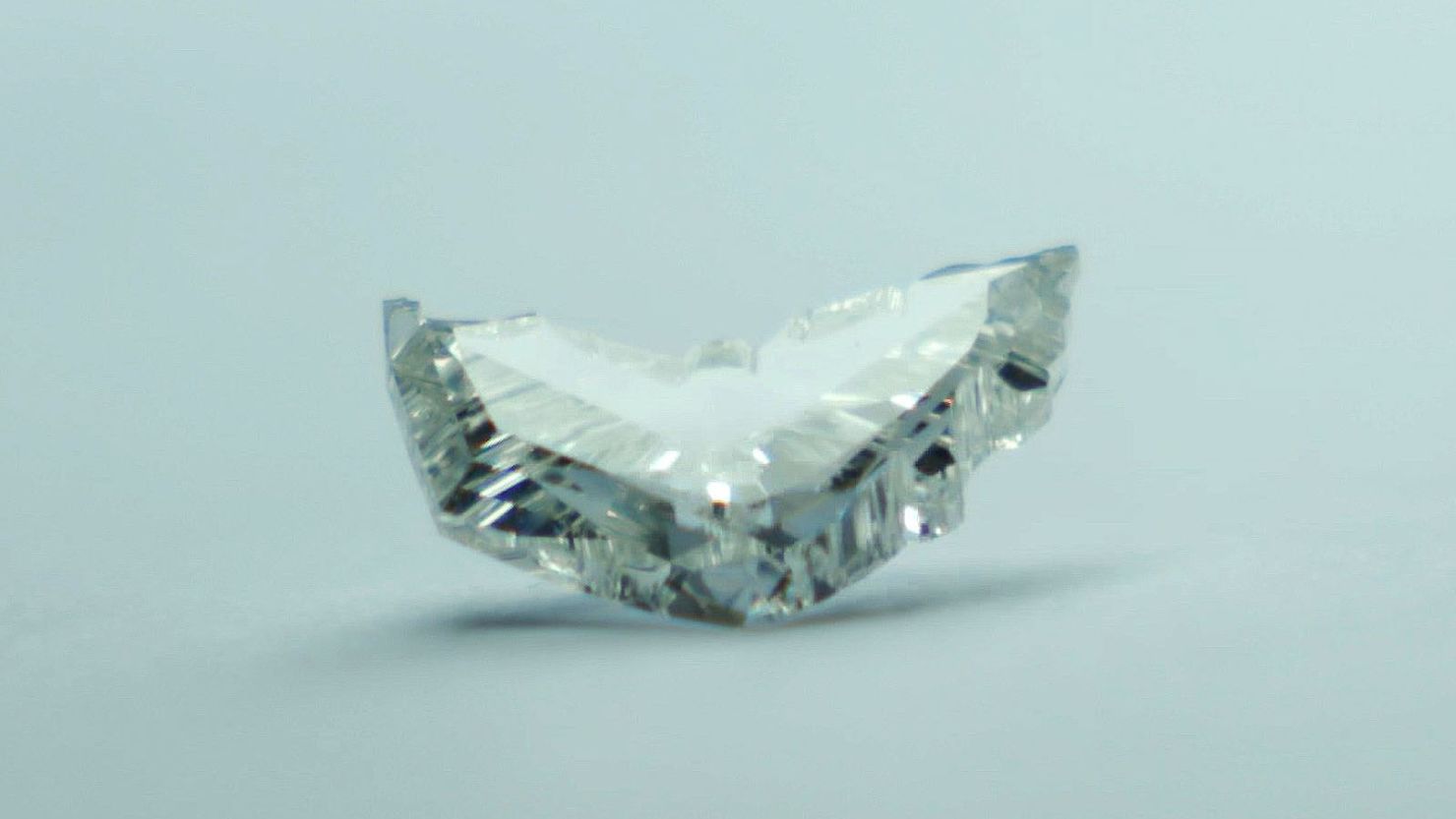
Diamonds are the hardest material on Earth, and finding one in nature is very difficult.
For thousands of years, humans have dug deep into the Earth in search of diamonds, creating some of the world’s largest artificial pits in Russia and South Africa that descend up to 625 meters (2,050 feet) underground.
The intensive process has an impact on both nature and people, with dangerous working conditions and practices that harm ecosystems.
But mining is not the only way to obtain diamonds. The first lab-grown diamond (LGD) was produced in the 1950s, according to the International Gem Society, and the technology has continued to develop, allowing laboratories to grow gem-quality crystals at affordable prices (up to 80% cheaper) without the sustainability and ethical concerns of mining.
And growing diamonds artificially means diamond production can be brought to the most unexpected places, including the desert.
The United Arab Emirates (UAE) is a world leader in diamond imports and exports, but it has no diamond mines. So, entrepreneur Mohamed Sabeg saw the opportunity not only to market diamonds but also to grow them.
In 2022, he co-founded Dubai-based 2DOT4 Diamonds and became the first to produce, cut, and polish lab-grown diamonds in the United Arab Emirates.
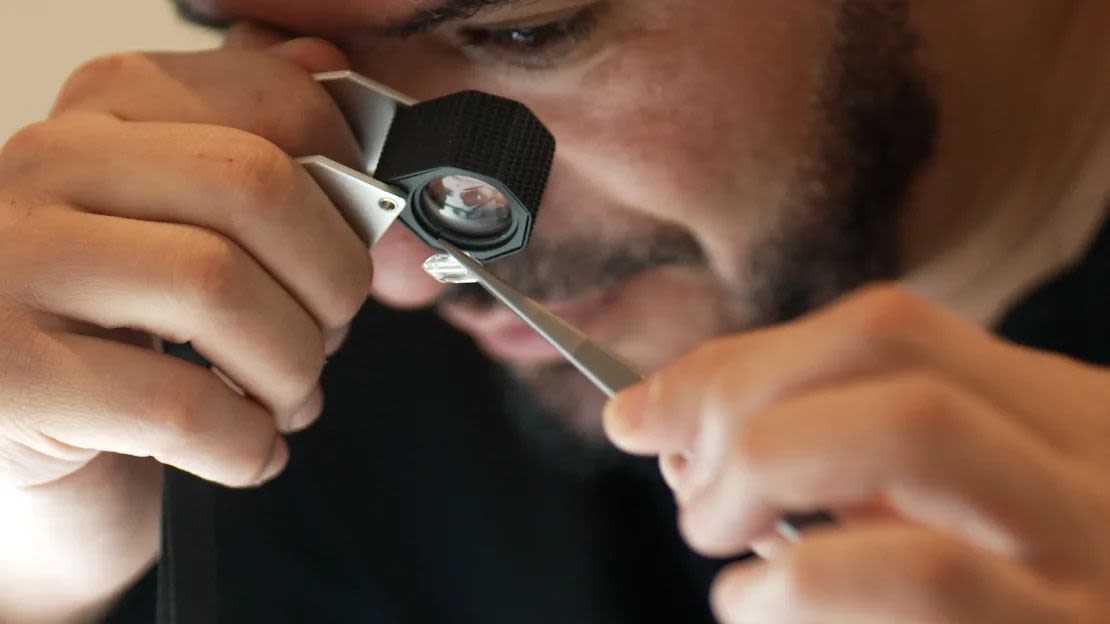
The company’s name, 2DOT4, comes from the refractive index of a diamond: the speed at which light passes through a diamond compared to air, which is about 2.4 times slower.
For Sabeg, having a name related to a physical property of the gem is a representation that the pieces produced in a laboratory are identical to those found in nature.
To grow a diamond, whether lab-grown or mined, you start with a “seed” that is typically between 0.3 and 0.6 millimeters thick, explains Sabeg. (2DOT4 makes its own seeds from internally grown diamonds).
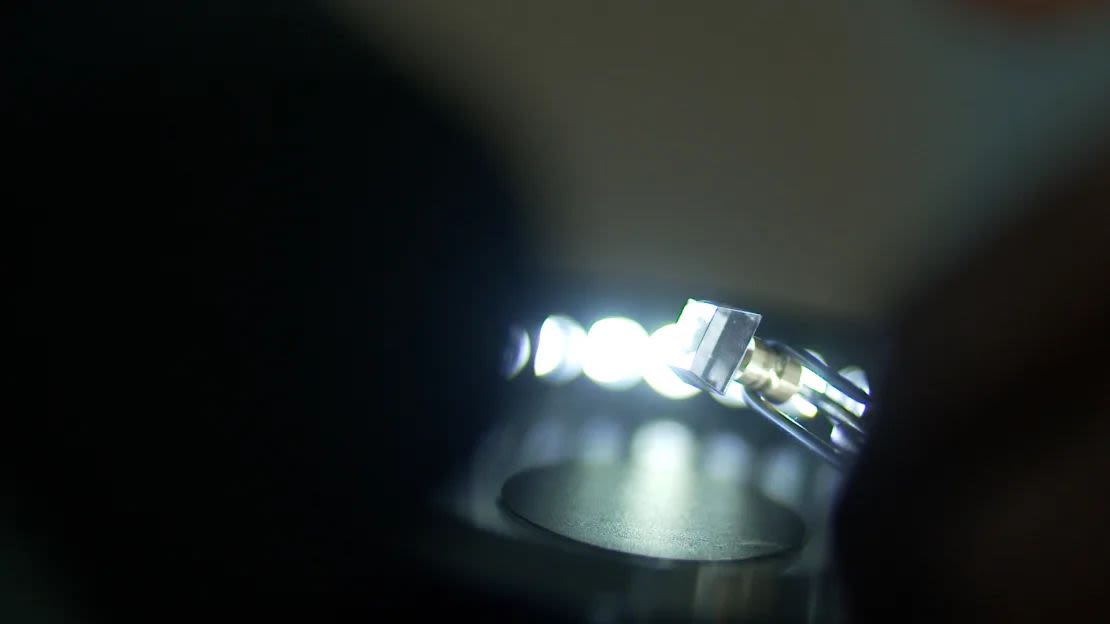
Placed inside a reactor, the seed is exposed to gases such as hydrogen, methane, oxygen, and argon. It also undergoes pressure of up to 180 torrs (about two-thirds of the pressure at the top of Mount Everest) and reaches temperatures of 1,000 degrees Celsius (1,832 degrees Fahrenheit). In this way, carbon is slowly deposited onto the thin slice.
Then, it’s a matter of time for it to grow in volume.
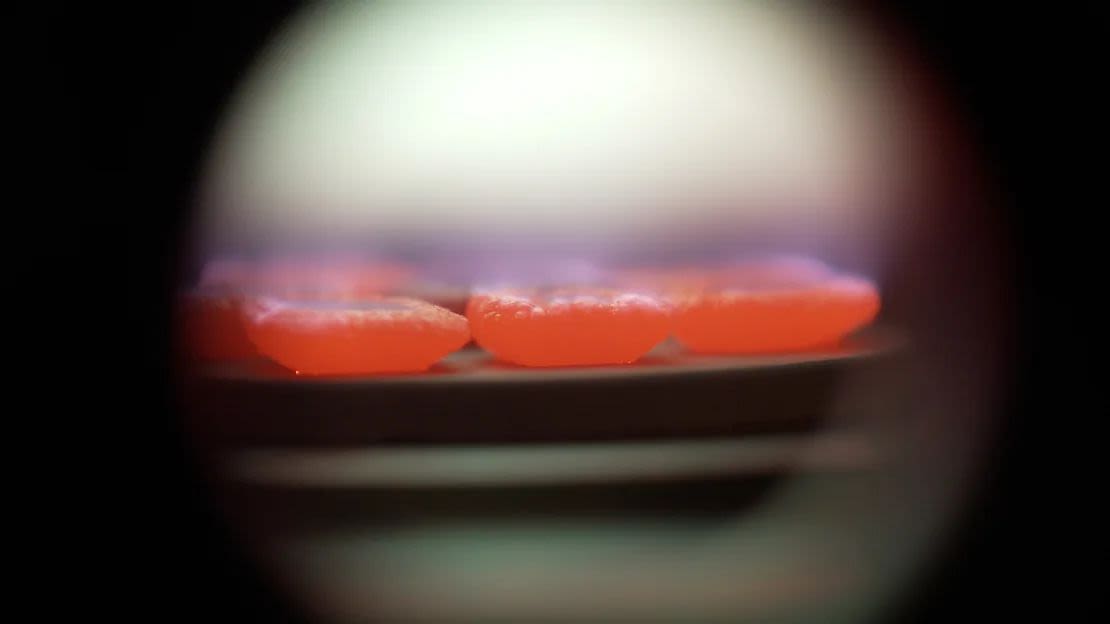
On average, 2DOT4 grows its diamonds at a rate of about 0.01 millimeters per hour. This means that every 24 hours the stone grows in length comparable to the thickness of two sheets of paper.
Once the diamond has grown to at least five millimeters in height, the piece is called a “block” and there are three possible outcomes. It can be cut into more seeds, which will be returned to the reactors to grow more diamonds. Or, depending on demand, 2DOT4 will cut and polish the gem. It can then be sold to jewelers and designers or become an internally designed piece of jewelry.
Currently, the United States, China, and India dominate LGD production, with the latter two accounting for more than two-thirds of global production, according to Paul Zimnisky, a US-based diamond industry analyst and consultant.
Besides jewelry, lab-grown diamonds are used in multiple industries, particularly when it comes to making tools that cut dense materials like concrete, marble, and metals.
India, on the other hand, has long been a leader in diamond cutting and polishing and adopted LGD technology to also launch into production. Last year, the country underwent a tax reform in the sector and pledged additional funding to further expand its man-made diamond industry.
Given the UAE’s status as a major diamond trading hub and its diversification efforts away from oil, expanding into the lab-grown diamond industry could be an important step for its economy, says Ahmed Bin Sulayem, Executive Chairman and CEO of the Dubai Multi Commodities Center (DMCC), a global trade hub that hosted the first Lab-Grown Diamond Symposium.