Editor’s Note
This article offers a glimpse into the opulent world of Mughal-era India, exploring the legendary gems and jewels that symbolized the empire’s immense wealth and refined artistic culture.
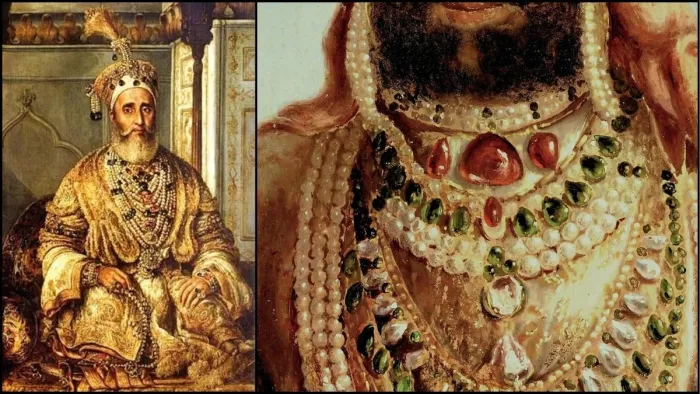
India was not called the ‘Golden Bird’ without reason. It is noteworthy that the Mughal Sultanate ruled here for 300 years. During this period, several emperors held power. They possessed not only immense wealth but also priceless diamonds and jewels in their treasuries. The Mughals were known for their royal and artistic lifestyle. They had a storehouse of various precious gems, such as diamonds, emeralds, rubies, sapphires, and pearls. Let’s learn about some unique and priceless gems from the Mughal era.
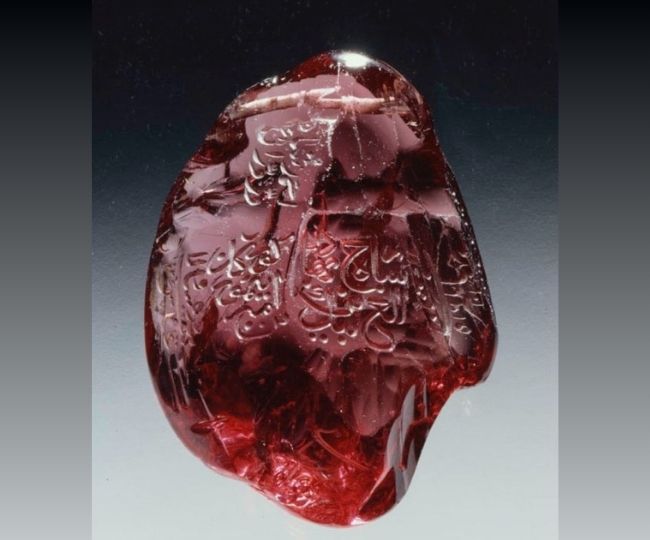
It is known that the British did not just steal the Koh-i-Noor diamond from India but also the ‘Timur Ruby’. This is a 353-carat red-colored mineral. Since it passed through many hands, from Nadir Shah to Shah Shuja and from Maharaja Sher Singh to Dalip Singh, the names of its owners, Mughal emperors like Shah Jahan, Aurangzeb, and Farrukhsiyar, are inscribed on it. After the Anglo-Sikh War in 1849, it was taken by the British and is now part of the United Kingdom’s Crown Jewels.
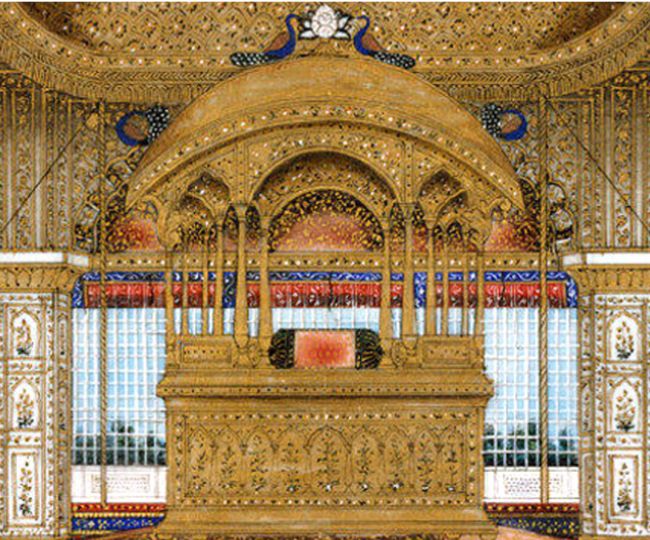
In the year 1628, when Shah Jahan ascended the throne, he ordered Ustad Sadi Gilani to build the Peacock Throne. Made of priceless gems and one lakh tolas of gold, this throne was completed in seven years. Shah Jahan first sat on this Peacock Throne on March 22, 1635. Poems by three major poets, Kalim, Saida, and Qudsi, were engraved on it, and two peacocks were also crafted on top, with gems embedded in their backs. Above the throne was a quadrangular-shaped canopy. Additionally, this throne had three gem-encrusted steps, which Shah Jahan would climb to sit on the throne. It was not only a symbol of Mughal power and glory but was also considered one of the wonders of the world. It is known that the Peacock Throne was looted by Nadir Shah in 1739, and today only a few pieces of it remain. According to media reports, the estimated value of Shah Jahan’s missing throne today is 1 trillion, 35 billion, 9 crore, 43 lakh, 67 thousand, 572 rupees.
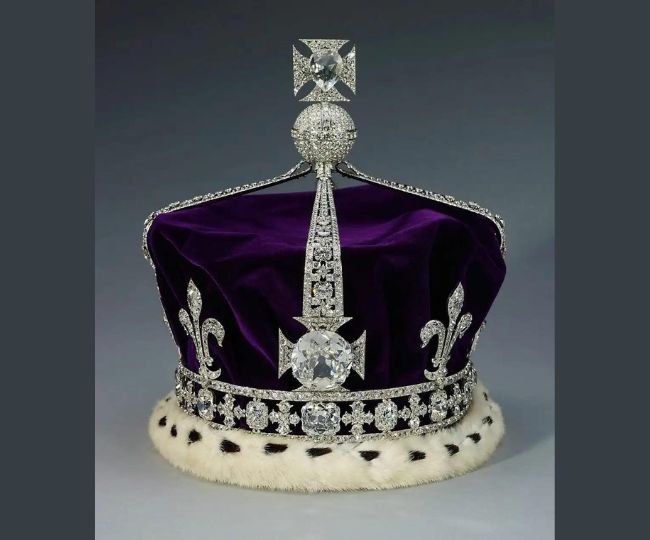
The journey of this diamond began with the Kakatiya dynasty. After that, it passed through the Tughlaq dynasty and reached the Mughals. Looking at history, whoever possessed it initially enjoyed great dominance, but later they had to lose everything. It was mined approximately 800 years ago from the Golconda mines located in the Guntur district of Andhra Pradesh. Initially, its weight was 186 carats, but it was cut several times, and today its original form is 105.6 carats. It is known that this diamond passed through the hands of several Mughal emperors, including Babur, Humayun, Shah Jahan, and Aurangzeb, but the Koh-i-Noor was also taken by the British after the Anglo-Sikh War and is now part of the British Crown Jewels.
This 182-carat pale pink diamond is one of the largest cut diamonds in the world. Its name in Persian means “Sea of Light” or “Ocean of Light”. It is believed to have been mined from the Golconda mines and was part of the Great Table diamond along with the Nur-ul-Ain diamond. Ownership of the Daria-i-Noor was held by several Mughal emperors, including Shah Jahan, whose names were also engraved on it. This diamond was also taken by Nadir Shah in 1739 and is now part of the Iranian Crown Jewels.
The Great Mogul Diamond is also among India’s largest and heaviest gems. When it was extracted from the Golconda mine in 1650, its weight was 787 carats, meaning it was about six times heavier than the Koh-i-Noor. In 1665, a French gem merchant described it as the largest rose-cut diamond of its time. It is known that this diamond was looted by Nadir Shah in 1739 and has been missing since then. However, some scholars believe that this diamond was later cut into the Orlov Diamond, which is now part of the Russian Imperial Sceptre.