Editor’s Note
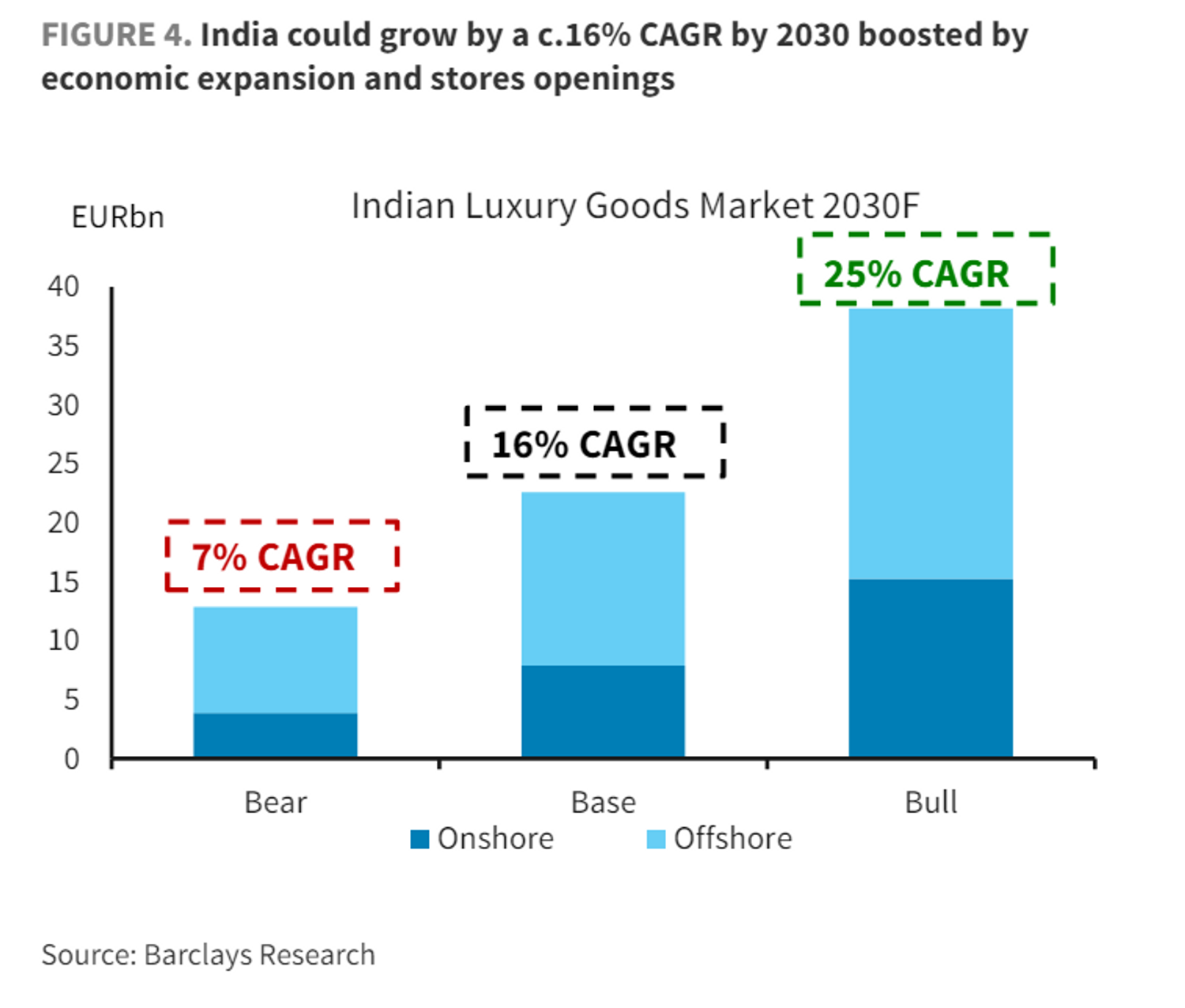
The Indian luxury market is poised for significant expansion, with projections suggesting it could reach up to €38 billion. Driven by a growing consumer base and increased brand investment, this emerging sector presents a major opportunity for global luxury players.
With double-digit annual growth projected until 2030 according to Barclays estimates, India could benefit from a new wave of consumers and multiple brand activations to boost its presence in the global luxury market.
The verdict is clear. As early as 2022, Balenciaga, Valentino, McLaren, and even Galeries Lafayette announced their arrival in India. In recent months, Hermès, Coty, Shiseido, and LVMH have strengthened their foothold through store openings and various investments.
These operations stem from the buzz surrounding the Indian market.
This attractiveness is confirmed by a recent report from Barclays bank, which indicates that the high-end sector in this Asian country could grow by +15% to +25% over the decade. Following these estimates, the luxury market in India could reach between 23 and 38 billion euros. Barclays’ most pessimistic scenario mentions that India’s economic boom will not have major repercussions on the luxury universe, with annual growth of +7%.
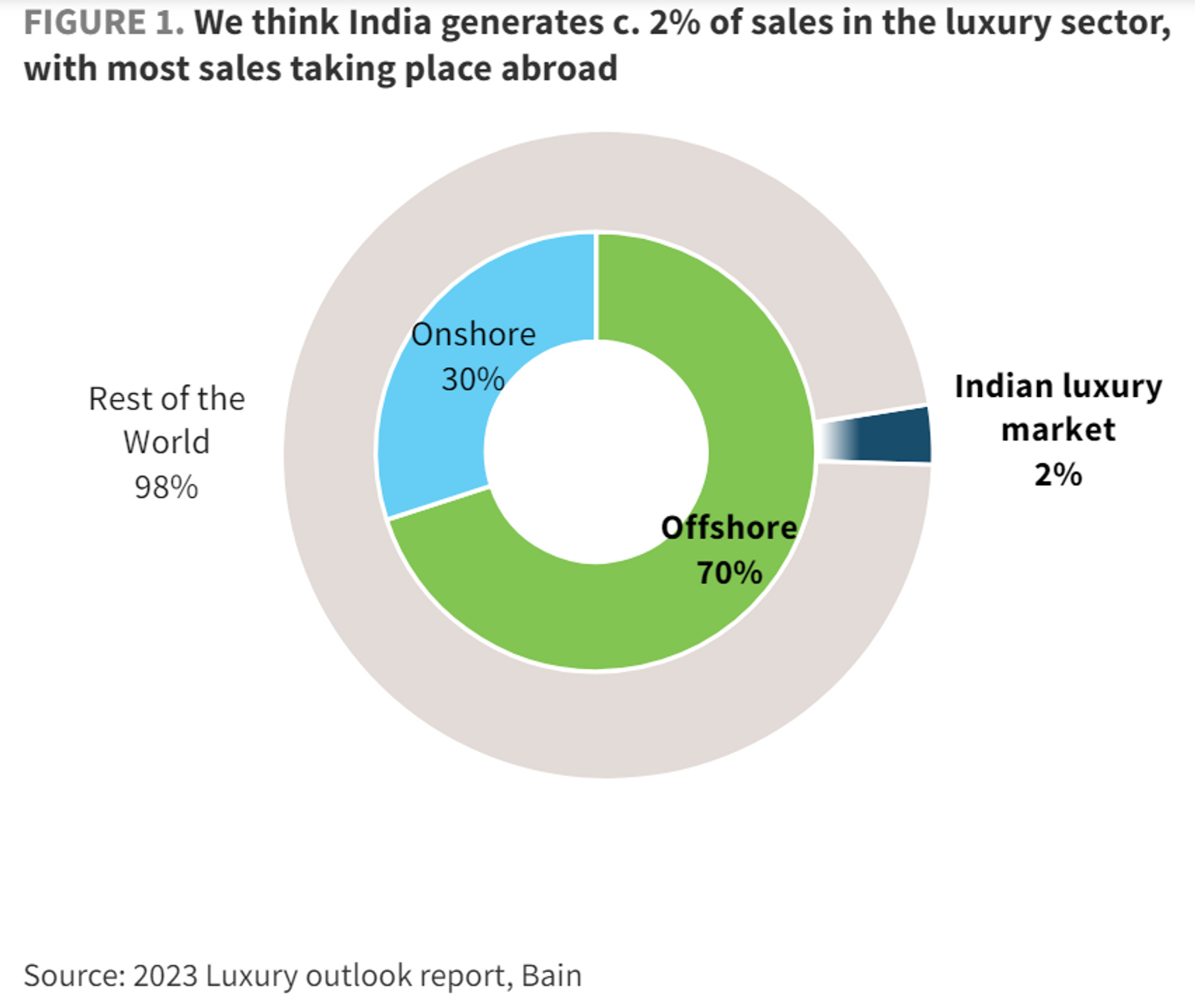
Currently, the market represents about 2% of total global luxury goods sales, or 8 billion euros. These expenditures were made 70% abroad and 30% in India, notably in New Delhi, Mumbai, and Bengaluru. Often compared to China due to their nearly similar population numbers, India is not expected to experience the same expansion in premium products due to a too high level of income disparity among its inhabitants.
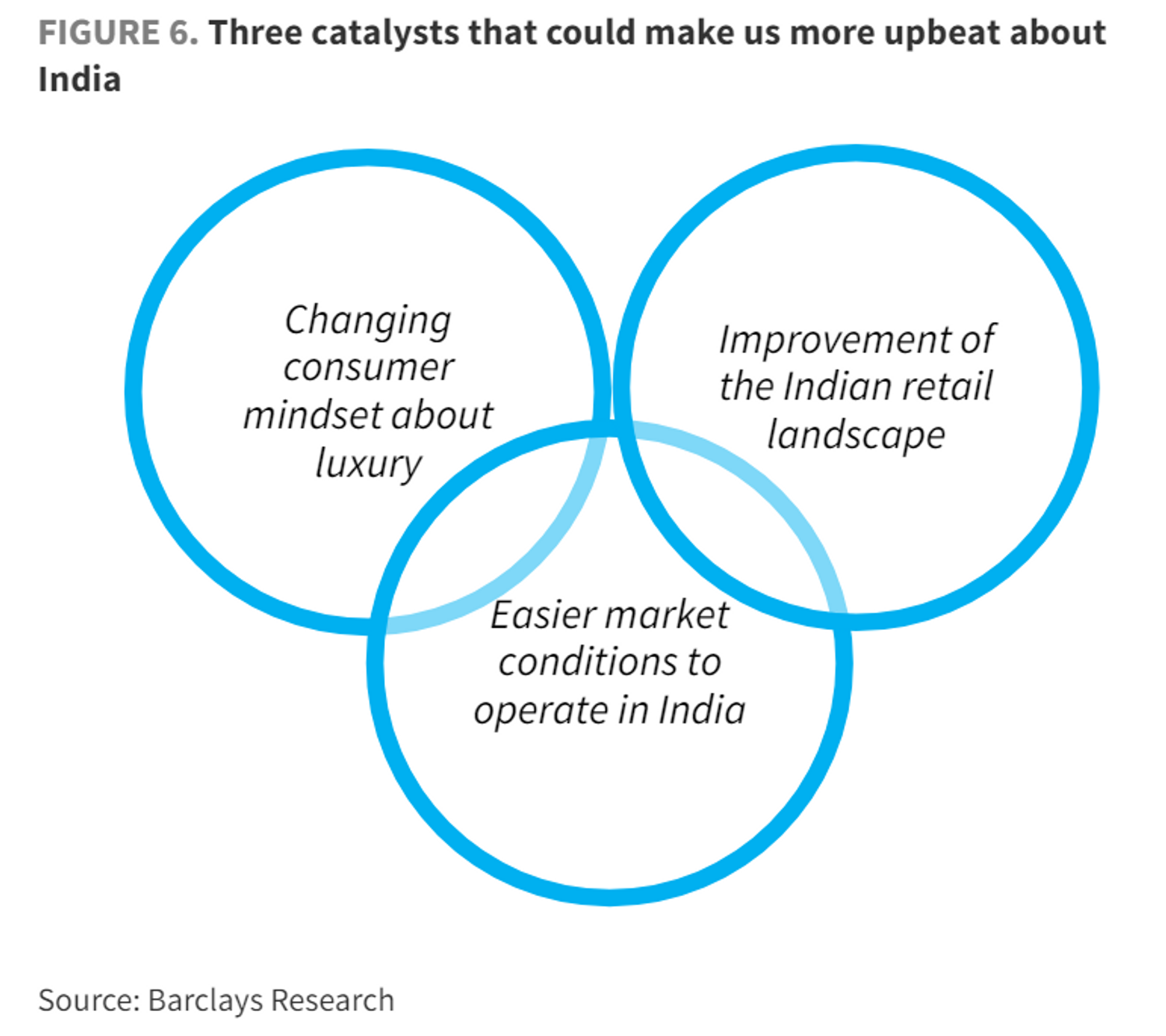
However, the growth of luxury in India in the coming years could be encouraged by a change in customer mindset and brand storytelling adapted to the market. Not to mention the rise of the upper middle class and millennials, true catalysts for overall demand.
First, the great affinity of Indians for gold should benefit jewelry. While local players, especially those related to bridal jewelry, are well established in the country, brands like Cartier and Bulgari could strengthen their sales.
According to the 2023 Deloitte report, the value of Swiss watch exports to India is expected to reach over 400 million Swiss francs by 2028, placing the country in the top 10 Swiss export markets in about ten years.
The cosmetics and accessories sectors should also increase their market share, even though handbags are not yet considered long-term purchases by the majority of the clientele, who are attached to value for money and the notion of investment.
Ready-to-wear and beauty are, however, two more difficult markets for luxury brands to penetrate and should take longer to develop.