Editor’s Note
This article summarizes a new survey from Hearst Fujingaho exploring the motivations behind high-value consumption among affluent female consumers in Japan. The report focuses on luxury goods and services across beauty, fashion, jewelry, and travel.
Hearst Fujingaho has published the second installment of its insight report series under its “Business to Luxury (B2L)” marketing initiative, which focuses on luxury goods and services for affluent consumers. The report is a consciousness survey exploring the reality and motivations behind high-value consumption.
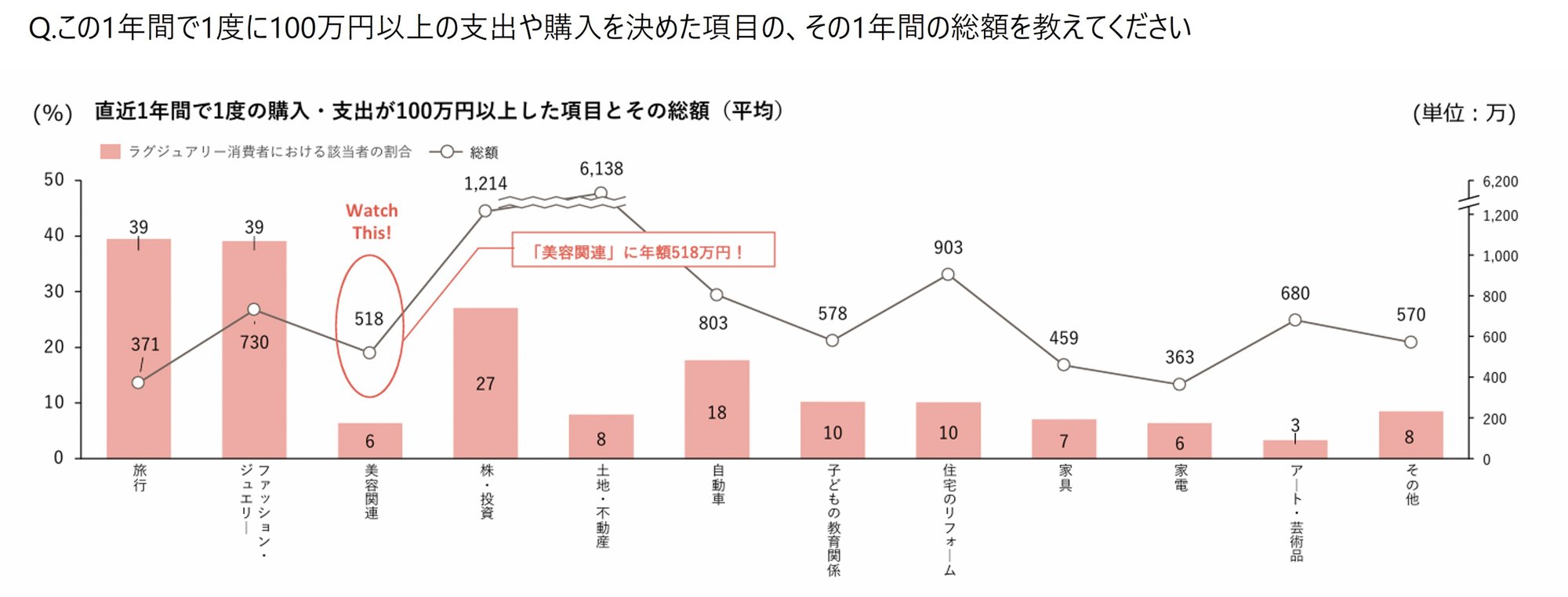
The survey targeted 3,360 female readers of the company’s media and e-commerce members, focusing on three categories: “Beauty,” “Fashion & Jewelry,” and “Travel.” Based on responses to the question, “Have you decided to make a single purchase or expenditure exceeding 1 million yen within the past year?” 1,014 respondents were selected and defined as “Luxury Consumers” for analysis.
The report presents results in three sections. The first section, “Luxury Consumers Possess a Strong Desire for Diverse Forms of Happiness,” reveals responses to the question, “What constitutes consumption that enriches your life?” Answers were derived from desires for self-expression, ambition, achieving social status, pursuing beauty and health, and the desire to escape from daily life.
The second section, “What Luxury Consumers Prioritize When Deciding on Expenditures Exceeding 1 Million Yen,” shows that responses included a mix of rational reasons like “value,” “design,” and “quality,” alongside emotional reasons such as “sparks joy,” “personal preference,” and “heart.” This indicates that the motivations for high-value spending among luxury consumers are both rational and driven by sensibility.
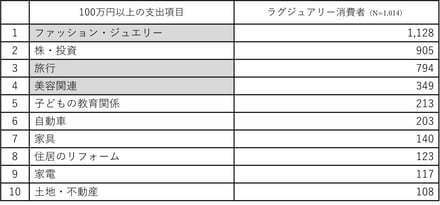
The third section, “Classification of Luxury Consumers’ High-Value Spending,” ranked the number of times respondents spent over 1 million yen within a year by category and compared clustered consumer groups for “Beauty,” “Fashion & Jewelry,” and “Travel.”
The Beauty cluster (325 people) typically has high expenditures on beauty-related items, averaging about 220,000 yen per month. They also showed balanced, high spending in other categories.
The Fashion & Jewelry cluster (390 people) showed a strong tendency to concentrate their budget on this genre, with lower involvement in overseas travel. About 56% responded they “purchase through a dedicated salesperson,” and about 58% said they have “many opportunities for self-expression through fashion and jewelry.” This suggests a preference for personalized communication during purchases, where their individuality and status are understood.
The Travel cluster (299 people) had lower spending on beauty and fashion but allocated an annual budget of about 1.88 million yen for overseas travel. About 56% responded they “want to stay long-term for self-regeneration time.” To the statement, “I want to spend my time at the travel destination doing as little as possible,” about 53% responded “does not apply much” or “does not apply at all,” indicating a preference for active, long-term stays.