Editor’s Note
Copper and gold prices have surged to unprecedented levels, driven by a global short squeeze and sustained market demand. This article examines the factors behind these record highs and their broader economic implications.
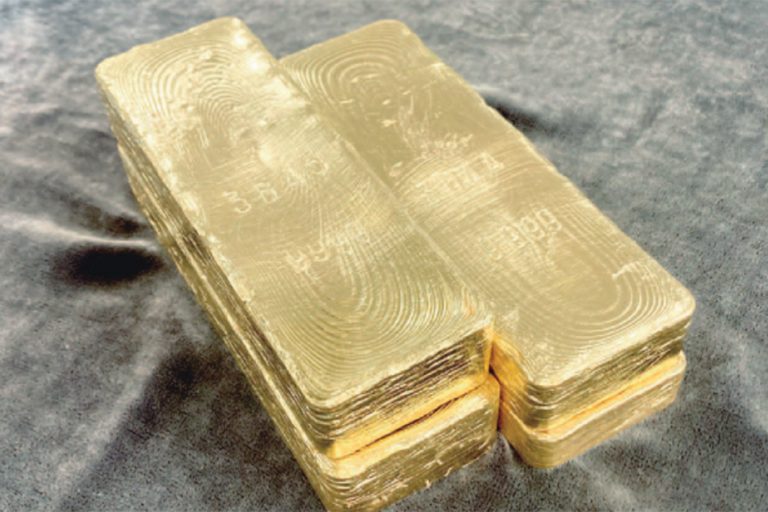
Copper on the London Metal Exchange (LME) reached a record high on May 20, with the spot settlement price (morning selling price) hitting $10,857 per ton. A global short squeeze drove up the market. The copper list price also reached a record high of 1.75 million yen. Gold on the New York Commodity Exchange (COMEX) continued to set new highs, surpassing $2,800 per troy ounce in October.
The planned integration of the foil businesses between Toyo Aluminium (part of the Nippon Light Metal Group) and UACJ Foil (part of the UACJ Group) was abandoned in October this year. The primary reason was that the conditions for the management integration were ultimately not met. Going forward, the foil business strategies for each group will differ: the Nippon Light Metal side will focus on processed foil for heating applications and pharmaceutical packaging materials, while UACJ will concentrate on battery foil.
Nippon Denkai’s petition to commence civil rehabilitation proceedings was approved by the Tokyo District Court on December 9. The company, which boasted top market share in Japan and the US for EV battery copper foil and had been making expansion investments, saw performance deteriorate at its US plant due to intensifying competition. Factors such as reduced sales influenced by the US Inflation Reduction Act also made it impossible to repay borrowings. Total liabilities amount to approximately 14.8 billion yen. The company aims to rebuild under a new sponsor.
Toho Zinc announced a business restructuring plan in December to withdraw from its core zinc smelting business and pivot towards lead and zinc recycling, among other areas. This move comes in response to losses in its resource business and the deteriorating business environment surrounding zinc smelting, prompting a fundamental review of its growth strategy. The company has entered into a business alliance with Hanwa Co., Ltd. for operational support and will raise 7.5 billion yen in funds from sources including Advantage Partners.
The Japanese government has begun serious efforts to tackle non-compliant yards and metal theft. Regarding the issue of non-compliant yards, the Ministry of the Environment established a Yard Environmental Measures Study Group in October to consider specific countermeasures. Movements to enact and implement yard regulation ordinances at the municipal level, such as in Chiba and Ibaraki prefectures, are also spreading. To combat the nationwide surge in metal theft, the National Police Agency has taken action, launching a study group on metal theft countermeasures in September to discuss preventing the distribution of stolen goods and reviewing related laws and regulations.
Mitsubishi Materials acquired the German tungsten products giant HC Stark Holding from a Vietnamese company. The acquisition aims to build a global tungsten recycling system by utilizing HC Stark’s bases in Germany and Canada. HC Stark had previously sold its tantalum and niobium business to JX Metals in 2018, meaning two major Japanese smelters now have prestigious European companies under their umbrellas.
Exports of used batteries (spent lead-acid batteries), a raw material for lead recycling, to South Korea resumed in October. These exports had been completely halted for about five years due to illegal activities discovered in the South Korean secondary refining industry and legal amendments in Japan. According to Ministry of Finance trade statistics, October exports amounted to 630 tons. It is anticipated that competition for collecting used batteries will intensify as more exporters enter the market.
Major non-ferrous product distributor Yamazaki Kinzoku Kogyo made Nishida Metal, another non-ferrous product wholesaler, a wholly-owned subsidiary in March this year. Nishida Metal is one of the few companies in Tokyo handling inventory sales and cutting processing of copper plates. Yamazaki Kinzoku Kogyo aims to achieve synergy effects by combining it with its group network.
Spot purchase conditions for copper, zinc, and lead ores—which determine smelting margins—all turned negative due to ore shortages. Copper was impacted by the suspension of operations at the Cobre Panama mine. Consequently, the benchmark price for copper long-term contract treatment charges (TC) for 2025 is set at a historically low $21.25 per ton, a significant deterioration from $80 in 2024. Japanese smelters, which rely heavily on long-term contracts, will face a challenging business environment next year.
Wire and cable supply tightened as a sense of shortage that began around last autumn in the construction and electrical wholesale markets expanded, and major wire manufacturers successively suspended accepting new orders and providing delivery date estimates. The situation gradually eased after some manufacturers resumed order acceptance and responses in February this year, and the environment has now relatively stabilized. However, for high-voltage products, delivery times can still take up to 8 months at the longest, indicating that the situation remains precarious for some products.