Editor’s Note
This article reports on the passing of Ratan Tata, the revered former chairman of Tata Sons. We have chosen to honor his legacy by focusing on his professional achievements and the profound public respect he commanded, rather than the private details of funeral arrangements. Our coverage aims to reflect the dignity with which he led both the conglomerate and his philanthropic endeavors.
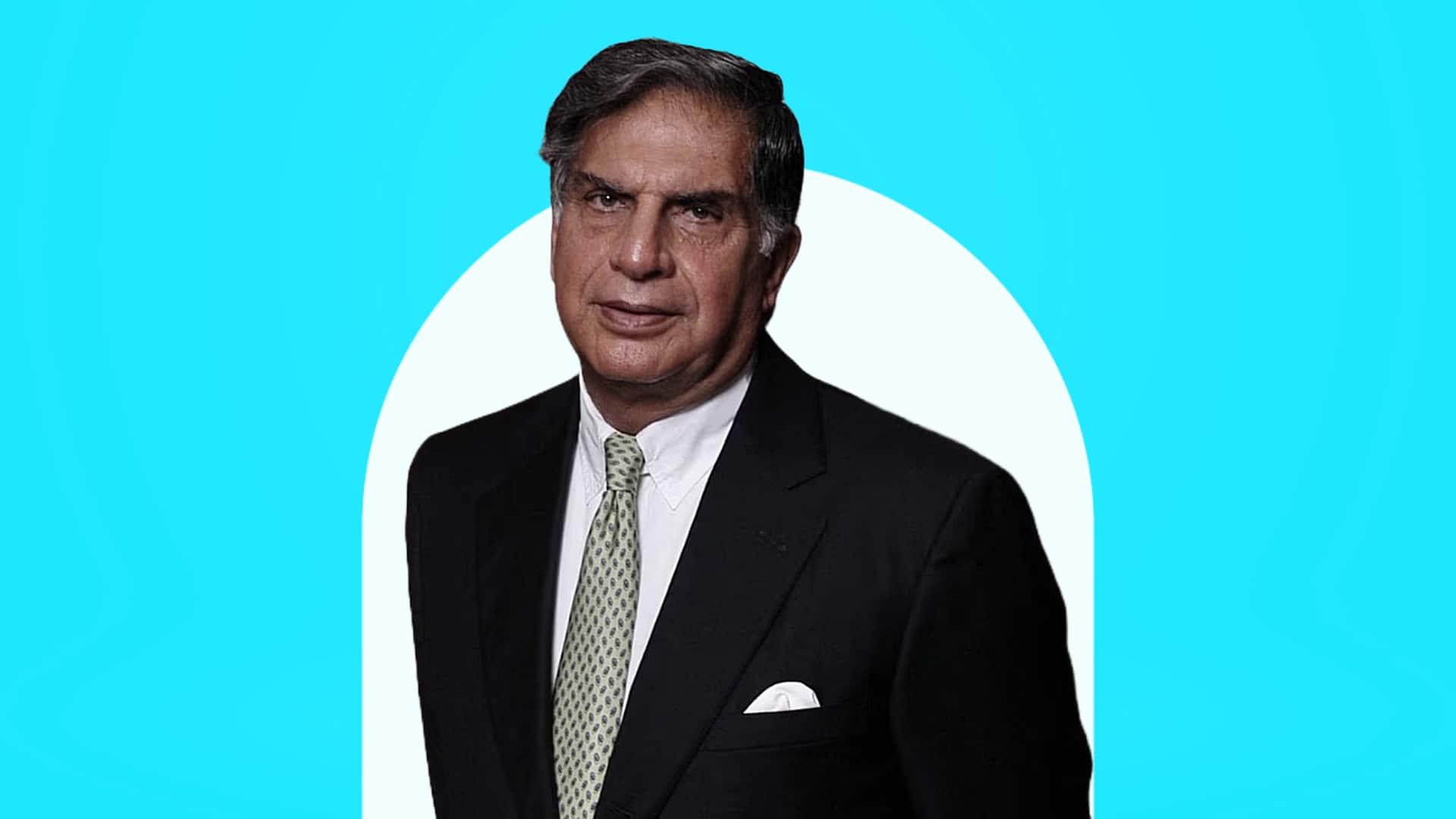
Veteran industrialist and the one known for his kind heart, Ratan Tata, has passed away at the age of 86. His last rites will be performed with state honors in Mumbai.
Born on December 28, 1937, to Sooni and Naval Tata, Ratan Tata witnessed many ups and downs in his life. During his tenure, he took the Tata brand to over 100 countries worldwide.
Let’s find out what his life was like.
What was Ratan Tata’s childhood like?
Naval and Sooni had two sons – Ratan and Jimmy. After Naval and Sooni’s divorce, both were raised by their grandmother, Navajbai R. Tata, in Mumbai.
Navajbai was a matriarchal woman, who was very kind but also strict in matters of discipline. Ratan Tata once said in an interview that he had no friends.
He was forced to learn the piano. He also played a lot of cricket.
Studied in Mumbai
Ratan Tata received his education at Campion in Mumbai, and later at Cathedral and John Connon. He also studied for some time at Bishop Cotton School in Shimla.
After that, at the age of 17, he moved to America, where he studied at Riverdale Country School, New York.
Ratan Tata studied architecture and engineering at Cornell University and Harvard Business School. He spent his time in America from 1955 to 1962.
Never married, but fell in love 4 times
Ratan Tata never married, but he fell in love 4 times. He once said in an interview that when he was associated with an architect firm in Los Angeles, America, he met a girl and fell in love with her.
Meanwhile, in 1962, when his grandmother’s health deteriorated, he came to Mumbai and the India-China war started. Then the girl’s parents refused to send her to India.
Took charge of the company in 1991
When JRD Tata resigned from Tata Sons in 1991, he made Ratan Tata his successor. During this time, he took several tough decisions, including making it mandatory for every company to report to the group office.
Ratan Tata led the company for 21 years, during which the group’s profit increased 50 times and revenue increased more than 40 times.
He played a key role in Tata Tea’s acquisition of Tetley, Tata Motors’ acquisition of Jaguar-Land Rover, and Tata Steel’s acquisition of Corus.
The battle to save the company
In his life, Ratan Tata also had to face two major controversies, which included dealing with arbitrary officials within the company and calming the controversy that arose in the company after retirement.
When Ratan Tata became Chairman in 1991, many officials in the group had been running their fiefdoms under their predecessors within the company for a long time. He put a stop to this.
When he retired in 2012, a controversy arose over the working style of his successor, Cyrus Mistry.
What was the controversy related to Cyrus Mistry?
When Mistry became Chairman in 2012, several decisions became controversial.
Mistry offered to donate 10 crore rupees during the 2014 Odisha elections, which the board rejected. Mistry believed that Odisha has more iron and this would benefit the company.
After this, there was a controversy over the Tata Welspun deal and the agreement with the American fast food company Little Caesars.
In 2016, the board removed Mistry and made Ratan Tata Chairman again.
Tata’s business is spread across many sectors
Tata’s business spans from tea to salt, from buying clothes to driving cars, and from insurance to tourism.
Tata is planting its flag in the fields of finance, automobile, lifestyle, telecom and media, food and beverages, technology, retail and e-commerce, travel, infrastructure, metal, and aerospace.
Tata is working on 3 to 8 products in every sector. Recently, it has re-acquired Air India and started the work of bringing it out of loss.