Editor’s Note
The global luxury goods market has expanded nearly fivefold since 1994, driven largely by European multinational corporations. This article examines the distinctive business models and strategic management that have secured Europe’s enduring dominance in the high-end sector.
The global market for luxury goods has experienced dramatic growth for over 30 years. According to the US consulting firm Bain & Company, its total value (excluding high-end cars) increased from 73 billion euros in 1994 to 362 billion euros in 2023.
Modern luxury business is a new industry based on global brands and large multinational corporations. One of its notable characteristics is the dominance of European companies in this sector. The most important companies are based in France, Italy, and Switzerland.
The competitiveness of these companies is not based solely on the “ability to manufacture high-quality goods,” but on a new marketing strategy that links “creativity” with “high profitability.” The success of numerous European brands demonstrates that even companies not positioned in the high-end market can generate significant profits if they can add “emotional value” to their products.
This series will reveal the key management principles underlying European luxury companies through various case studies. The first installment examines the revival of the “Cartier” brand and its astonishing growth over the past 40 years.
In 1983, a counterfeit watch manufacturing and sales scandal involving Cartier was uncovered in Japan and widely covered by the mass media. The incident took place in Kobe, involving a connection between a yakuza group and the former president of a small import-export company. The latter was involved in importing watch parts from Switzerland and understood the potential for illicit profits by assembling counterfeit watches. Indeed, hundreds of counterfeit wristwatches were sold in various retail stores for about 100,000 yen, nearly the same price as genuine watches at the time.

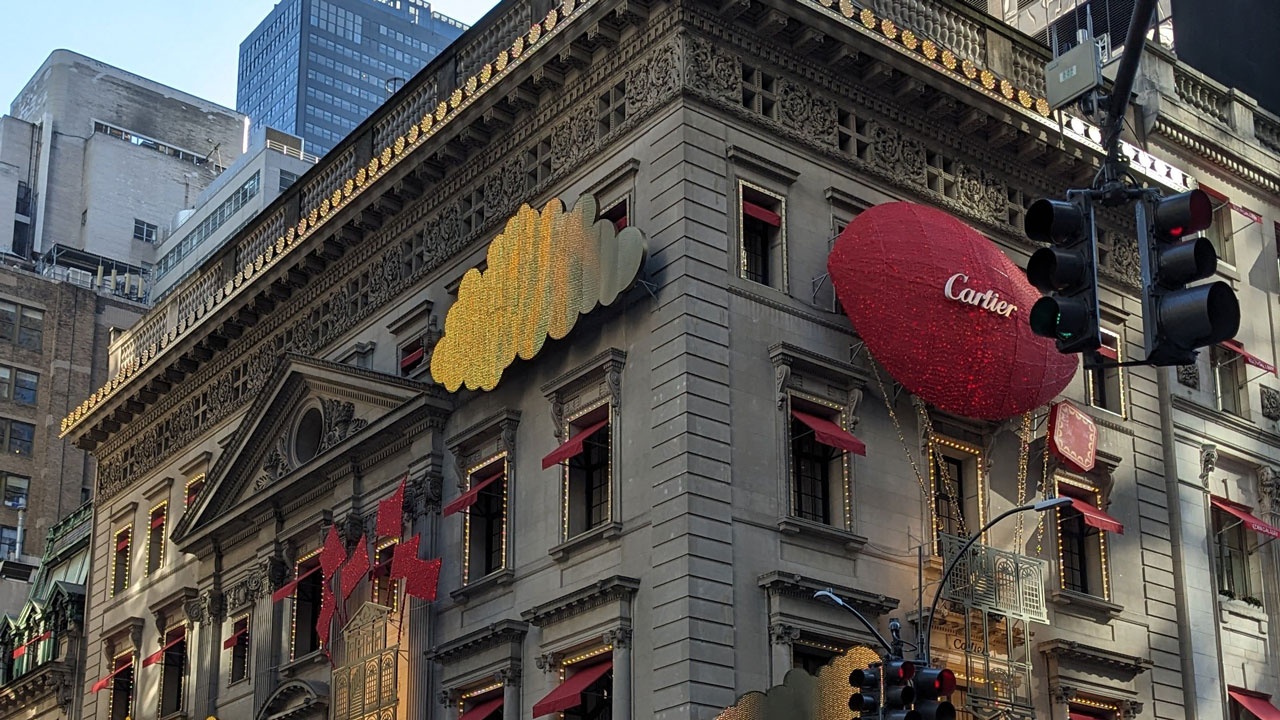
Second, the particularities of Japanese consumers at the time must be considered. Japan, with its strong yen and growing middle-class purchasing power due to economic growth, became the first major market outside Europe and America for European accessible luxury brands. Cartier opened its first boutique in Japan in 1974. Instead of opening a shop within a department store like traditional luxury manufacturers, it established a special store in Harajuku, Tokyo, a trendsetting district.
Founded in 1847, Cartier was a small family-run company until the late 1960s, with three bases in Paris, London, and New York managed by family members. Product development and pricing were largely independent for the three bases, but they shared the commonality of selling luxury goods to the wealthy. This was the traditional business model in European luxury, later defined by management scholars as “exclusive luxury.” Expensive materials were crafted by artisans, often by hand, into unique products for a small wealthy clientele. It was a small-scale, high-margin business in a niche market. Since the first half of the 19th century, many artisans in Western Europe established companies following this business model, manufacturing dresses, leather goods, jewelry, watches, and accessories.
However, entering the 1960s, consumer markets in Western societies underwent significant changes. The younger generation of the wealthy no longer favored traditional luxury goods. Instead, influenced by mass consumer society, they desired products that offered the “emotional value” associated with brands. In the jewelry industry, companies like Tiffany and De Beers rode this wave, making large advertising investments and acquiring many customers. Cartier, unable to adapt to the change, was in a difficult situation with total sales of only $8 million in 1969. Continuous losses led to various parts of the business being taken over by other investors.
French entrepreneur Robert Hocq acquired Cartier Paris, one of Cartier’s three bases, in 1972. Hocq was the owner of Silver Match, a small company specializing in gas lighters, and had been licensed to produce Cartier lighters since 1968. This was the first product sold outside Cartier’s three bases, an attempt by the Cartier family to increase revenue. Hocq, along with Alain-Dominique Perrin, who was a manager at Silver Match, conceived the idea of developing a business in accessories. They named the new line “Must de Cartier” in 1973, launching a wide range of products including lighters, watches, leather goods, pencils, perfume, and sunglasses. For this venture, they established a subsidiary in Switzerland in 1976, with Perrin becoming its president.