Editor’s Note
This article traces the century-long journey of a traditional Chinese craft, from its humble beginnings in Putian to its establishment in Shanghai and Hong Kong. It highlights the dedication of generations of artisans in preserving the intricate art of gold and silver inlay, a testament to cultural heritage passed down through family and skill.
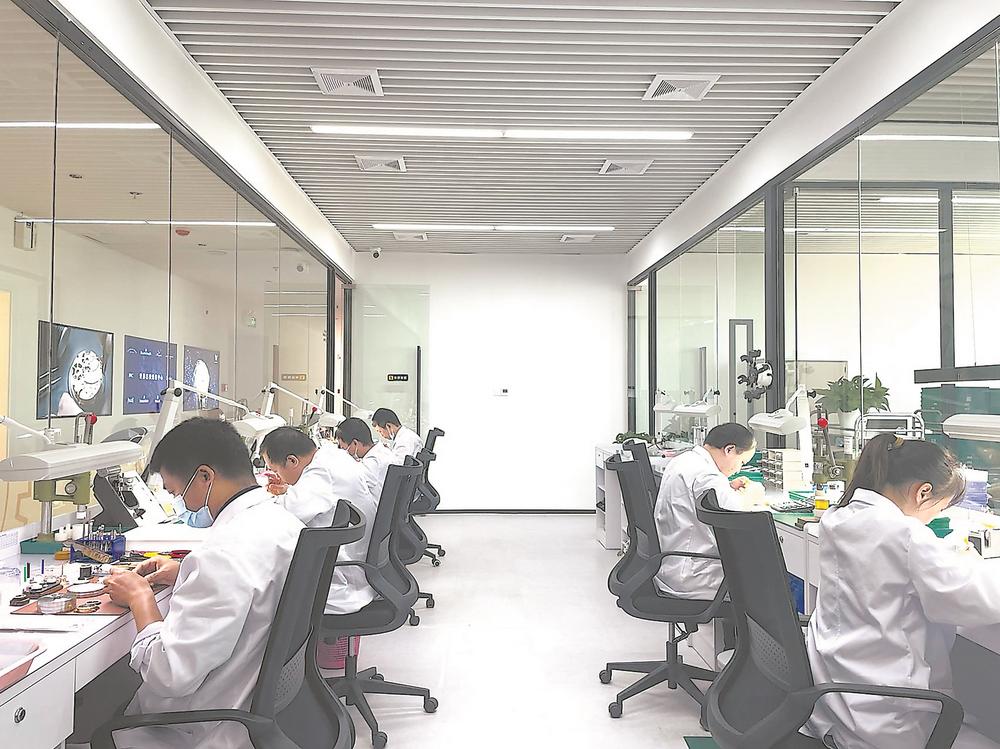
In 1902, 15-year-old Zhang Alu left his hometown in Beigao, Putian, and traveled south to Hong Kong to learn the craft of “gold and silver inlay.” Six years later, Zhang Alu founded the “Huayang” brand in Shanghai and passed the skill on to his son Zhang Ayan and nephew Zhang Ruyi. This ancient craft has been inherited and preserved through the hands of the “second generation of goldsmiths” and the “third generation of goldsmiths.”
Beigao Town, once referred to by Putian locals as a “land beyond the world,” was a poor hometown. Over the next 100 years, craftsmen carrying their tools on their backs left home, relying on small hammers and iron anvils to practice their craft and make a living across the country. Driven by fellow villagers and peers, a “gold-making chain” covering the entire country gradually formed. Today, over 30% of the more than 40,000 gold jewelry retail stores nationwide are operated by people from Beigao, with annual sales exceeding 300 billion yuan, accounting for over 50% of the national market share.
Riding the east wind of the times, generations of jewelry makers have gone from Beigao to the whole country, and have also brought back the famous business card “Putian Gold” that has blossomed everywhere. In 2016, the Putian International Gold and Jewelry Industry Park project, jointly invested and constructed by dozens of leading enterprises in the Putian jewelry, jade, and gold jewelry industry, was launched, announcing that Beigao had upgraded from the “cradle of Putian gold jewelry makers” to the “headquarters of the gold jewelry industry.”
Eight years later, facing new demands for high-quality development, Putian’s “gold makers” are striving to find an opportunity for “two-way empowerment” between how to enhance the brand’s “gold content” and the government’s desire to “make Putian’s stage bigger.”
At noon on May 11th, the temperature in Putian rose to 30°C. In a 30-square-meter old workshop, Lin Xuefen skillfully used a blowtorch to melt old silver jewelry and pour it into a 20-centimeter-high crucible. After the crucible was full, she poured the molten silver into a long mold to cool. She repeated this process for several hours.
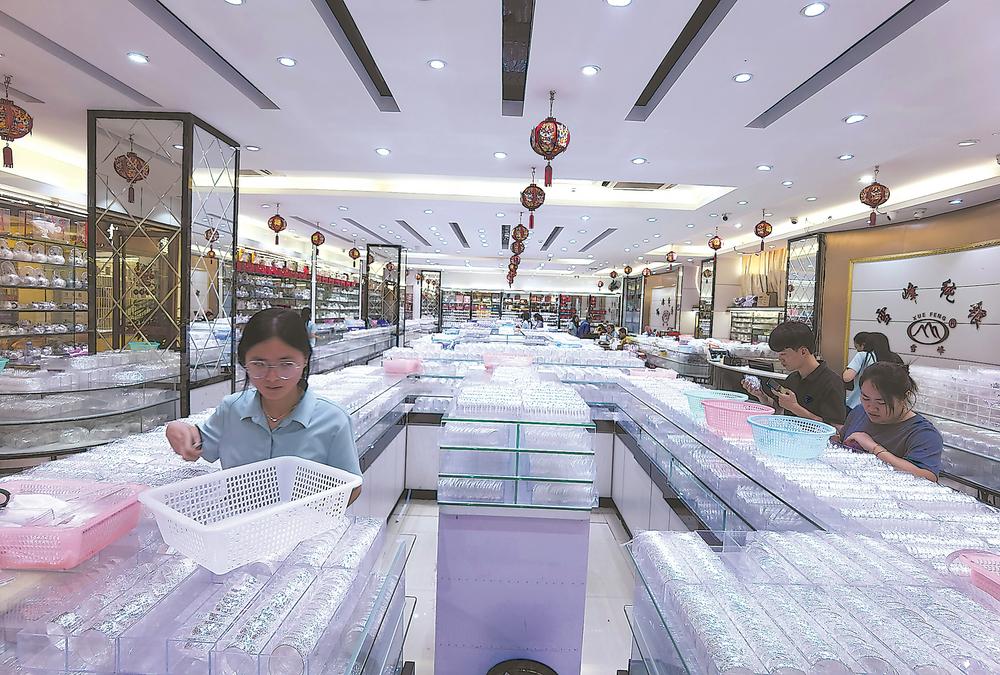
Lin Xuefen is the current master of Fujian Xuefeng Jewelry. Making silver requires experienced processes like smelting, hammering, filing, shaping, polishing, and welding, which she has mastered since childhood. After completing the smelting work, she drove several kilometers from the factory to the exhibition hall in Shangyou Jewelry Town to receive agents who had come from various places to pick up goods.
From the silver craftsmen who traveled far and wide to the suppliers with thousands of downstream wholesalers, from the factory to the exhibition hall, Xuefeng Jewelry presents a complete cross-section of a silver jewelry maker’s path to prosperity, becoming a vivid case of how Dongzhan Street in Licheng District transformed from a barren mulberry field into a land of gold and silver.
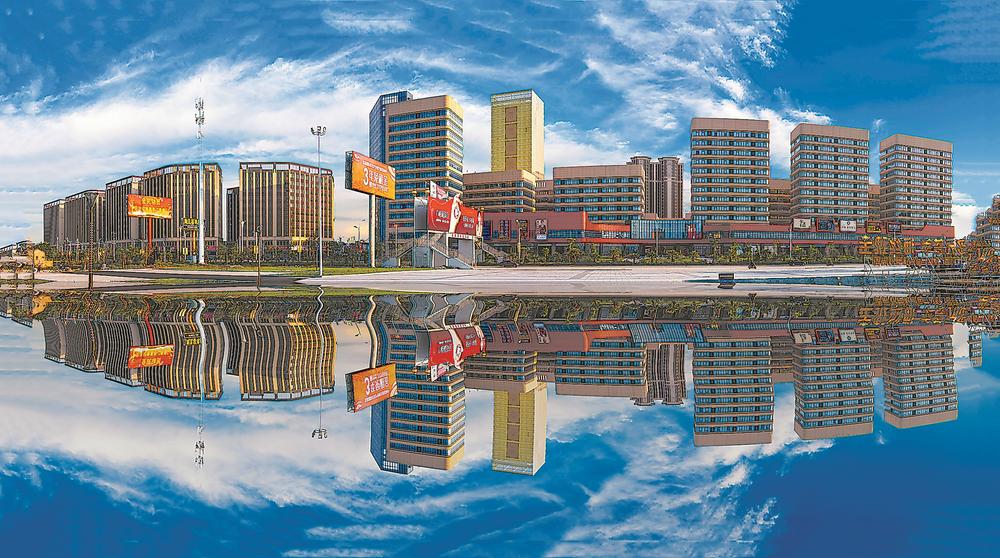
Since 2006, Licheng District has been building a professional industrial park on abandoned mulberry fields—Shangyou Jewelry Town—integrating jewelry manufacturing, craft display, cultural and creative experiences, leisure shopping, and commercial logistics. It aims to attract fellow villagers working outside to return home for investment and entrepreneurship, focusing on cultivating and expanding the gold and silver jewelry industry. After years of development, Shangyou has become China’s third-largest silver jewelry trading market after Shenzhen and Yiwu, with a daily trading volume described as “six tons of white silver in, six tons of white silver out.”
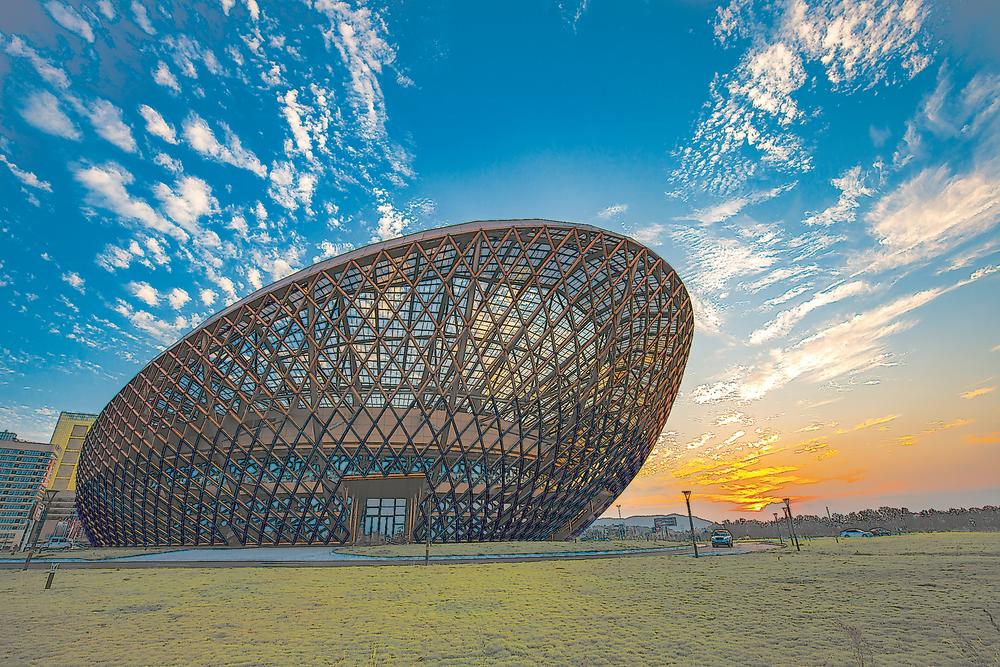
A saying circulates in the gold and jewelry industry: out of 10 gold jewelry merchants, 8 are from Putian, and 7 are from Beigao. At this moment, in Beigao Town, Hanjiang District, about 14 kilometers from Shangyou Jewelry Town, Beigao people are brewing a new idea of a “golden light shining brightly.”
In 2016, Shangyou Jewelry Town was listed by the Provincial Development and Reform Commission as a pilot unit for the “Internet + Silver Jewelry” regional chain transformation and was included in the first batch of key construction characteristic towns in Fujian Province. In the same year, the Putian Municipal Party Committee and Municipal Government proposed the concept of developing the “Gold and Silver Alley” industry and established a leading group for the development of the gold and silver jewelry industry. The creation of the Beigao Gold and Jewelry Small Town was fully launched.
Zhou Weiyi, Director of the Putian Beigao Gold Jewelry City Industry Development Center, introduced that the Beigao Gold and Jewelry Industry Park is divided into East and West Zones. The East Zone project covers an area of about 1500 mu (100 hectares) (750 mu already developed), jointly invested by 191 enterprise groups; the West Zone project covers about 1160 mu, with Phase 2 covering about 320 mu, with a total investment of 1.3 billion yuan, jointly funded and developed by 322 enterprises of the Putian City Gold Association. It is planned to feature gold and jewelry as characteristic industries. After completion, it will complement and develop in coordination with the neighboring “Shangyou Silver Jewelry Small Town” in Dongzhan Street, Licheng District, joining hands to promote the rise of Putian’s “Gold and Silver Alley.”
Since its operation, the Gold and Jewelry Industry Park has attracted 6 leading gold processing enterprises including Xipuni through-gold plating, Jinzhulou, Jinfengcui, and Jiemei; 10 jewelry inlay enterprises including Hengxing, Longfeng, and Hongju; 2 small workshops including Jinbaifa; and 3 electronic factories including Ju’an Electronics Factory. The wholesale exhibition hall has settled 32 exhibitors mainly dealing in silver jewelry and accessories.