Editor’s Note
As U.S. manufacturing investment shifts eastward, this analysis highlights the strategic imperative for South Korea to secure logistics infrastructure on the U.S. East Coast to mitigate emerging supply chain risks.
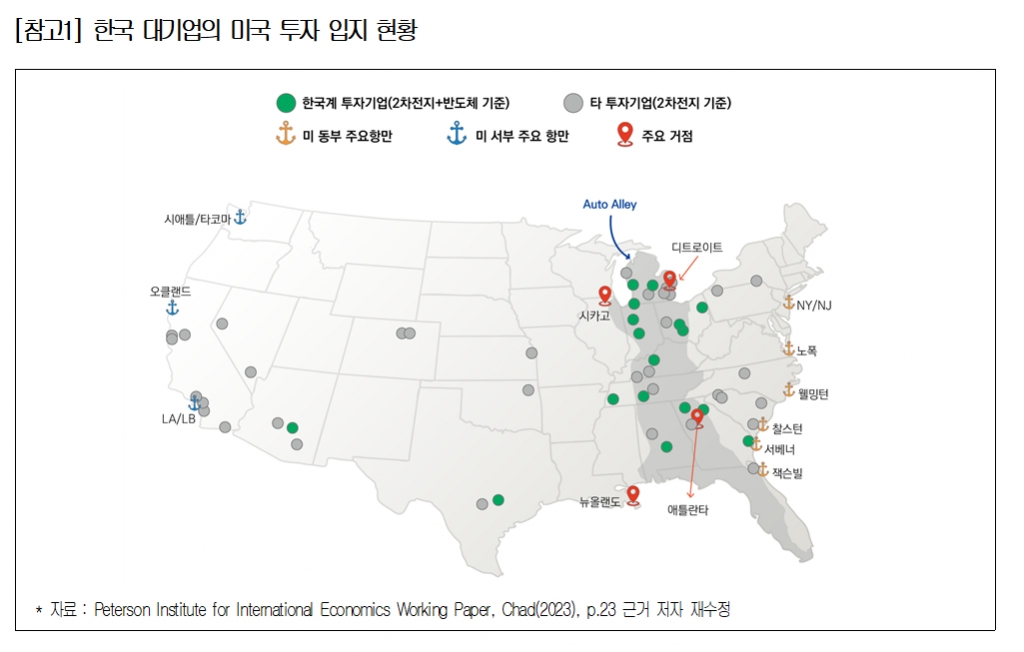
As U.S. manufacturing investment shifts from the West to the East, arguments have emerged that South Korea must secure logistics infrastructure, such as port terminals, on the U.S. East Coast. This is a call for preemptive action to reduce logistics risks.
According to a report titled ‘Changes in Export-Import Logistics and Policy Tasks Due to the Restructuring of U.S. Supply Chains’ published by the Korea Chamber of Commerce and Industry (KCCI) on the 24th, South Korea’s investment in the U.S. has increased approximately 1.8 times compared to pre-COVID-19 levels, rising from $15.8 billion in 2019 to $27.7 billion last year. Korean manufacturing involves large-scale facility investments and logistics for finished products and equipment. Unlike a decade ago, recent investments are concentrated in the U.S. East Coast region. The proportion of manufacturing investment in the U.S. East Coast increased from 55.6% in 2014 to 82.7% in 2023.
While Samsung Electronics has large-scale semiconductor investment plans in Texas, major Korean conglomerates like Hyundai, LG, and SK are focusing their factory establishments in the U.S. Southeast’s “Auto Alley” (a dense region of automotive production hubs stretching north-south from southern Florida to mid-northern Michigan).
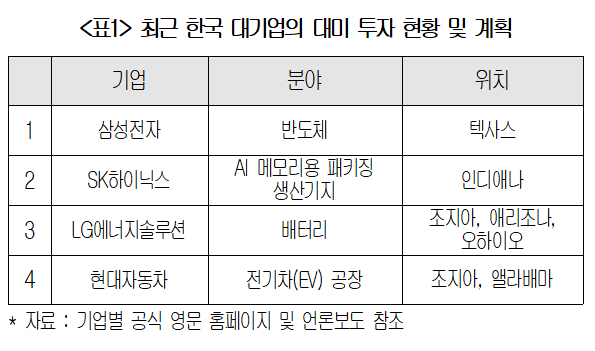
The report analyzed that as congestion at U.S. West Coast ports intensifies and manufacturing facilities are reorganized and dispersed to the U.S. East Coast, Canada, Mexico, and other neighboring countries, the logistics pattern via West Coast ports for the Asia-U.S. route, which persisted for the past 30 years, is diversifying, centering on the Southeast region. The 10-year average annual growth rate of container cargo volume entering through major U.S. West Coast ports like Los Angeles/Long Beach and Seattle/Tacoma ranges from -2.1% to 1.8%, which is lower than the growth rates (3.4% to 7.6%) of major U.S. Southeast ports like New York/New Jersey, Savannah, and Houston.
said Lee Seong-woo, Director of the Korea-U.S. Logistics Supply Chain Center (located in New Jersey) at the Korea Maritime Institute.
![엑소 카이 '깜찍한 표정'[★포토]](https://thumb.mtstarnews.com/cdn-cgi/image/w=496,h=303,fit=crop,f=auto,g=face/21/2026/02/2026020610355536005_1.jpg)
The report noted that demand for using infrastructure such as terminals, warehouses, railways, and roads is increasing, centering on the U.S. Southeast region. It suggested securing foundational facilities like container terminals, logistics centers, and logistics warehouses at strategic hubs in North America as a policy task to strategically respond to changes in U.S. supply chains and global supply chain risks.
When supply chain problems occur, shipping companies prioritize berthing their own vessels at their owned port terminals to handle cargo, delaying vessels from other countries. Therefore, shipping companies that do not own terminals face delayed cargo processing, potentially causing export companies to suffer damages such as penalties and contract cancellations. While Korea previously owned a port terminal at Long Beach, a major U.S. West Coast port, it was sold in 2017. Currently, Korea only owns port terminals in parts of Seattle/Tacoma and has none on the East Coast.
said a KCCI official.

The report also suggested establishing legal systems related to logistics supply chain stabilization, revising financial support systems for overseas business ventures related to logistics supply chains, and operating a win-win consultative body for shippers and logistics companies.
said Jang Geun-moo, President of the KCCI Distribution and Logistics Promotion Institute.