Editor’s Note
This article highlights the strategic opening of the Surat Diamond Bourse in India, a complex now reported to surpass the Pentagon in size. Its development underscores a focused effort to centralize global diamond trade and leverage regional strengths for economic growth.
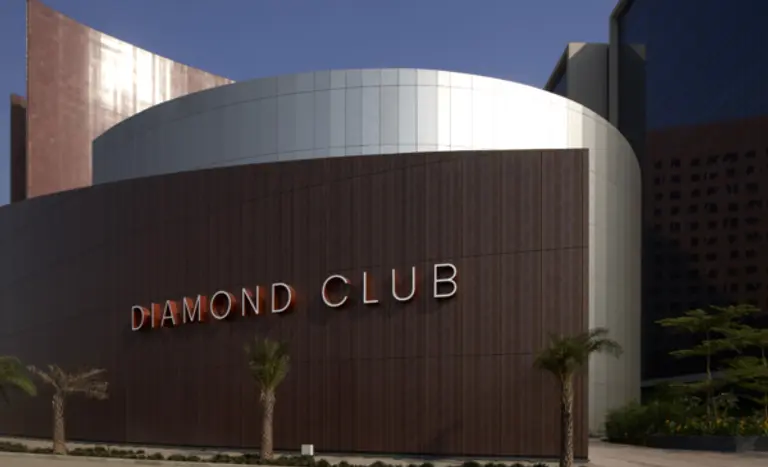
A new office complex surpassing the size of the U.S. Department of Defense (the Pentagon) has been built in Surat, India. It is a diamond exchange. This aligns with the goal of the Indian government and Surat to become the capital and central hub of the world’s diamond trade. Bloomberg reported that this is seen as a smart strategy to enhance the city’s competitiveness by leveraging its strengths.
The Surat Diamond Bourse in Gujarat state has a total built-up area of 620,000 square meters (6.7 million square feet). The construction cost alone amounted to $384 million. This makes it the world’s largest office complex related to diamonds. It is larger than the 6.5 million square feet area of the iconic U.S. Pentagon, which opened in 1943.
Prime Minister Narendra Modi cut the ribbon to inaugurate the exchange complex. PM Modi is seeking a third term in next year’s election and aims for another political symbolic victory in Gujarat, his home state. The opening of the exchange reflects another effort by the Modi administration to economically revitalize Gujarat. It symbolizes a strengthening of efforts to reduce bureaucracy and become more business-friendly.
Mumbai has long been the center of India’s diamond exports. And Surat, as the ‘Diamond City,’ has led in diamond processing. About 90% of the world’s rough diamonds are cut and polished here before being sold to buyers in India, as well as in places like the U.S. and China. A significant portion of the rough stones come from Siberia, Russia, raising concerns due to the Russia-Ukraine war.
The diamond exchange is located within a business district that is part of Gujarat’s pursuit of an International Finance Tech City, raising expectations for other synergies. It consists of nine 15-story towers densely packed with about 4,700 offices. Of these, about 130 offices are already in use.
Its competitor is the 80,000-square-meter Israel Diamond Exchange. Although significantly smaller in scale than the Surat exchange, the Tel Aviv complex is well-established with over 1,000 offices and services including insurance companies, banks, a post office, customs, entertainment, food, and religious facilities. This is the kind of living infrastructure and utilities Surat aims to develop. Historically close to the Arabian Sea coast, Surat was one of the most important trade links between India and Britain, the Netherlands, Portugal, and others.
India’s diamond industry began operations about 60 years ago. Its pace accelerated after the discovery of large deposits during the economic reforms of Australia and India in the 1990s. Mumbai, about 280 km to the south, remained a trading hub due to its good global connectivity, while Surat is a rapidly growing smart city within India.
Surat has continued to grow as a diamond manufacturing hub. Population is flowing in from across the country seeking jobs as polishers. Surat has achieved significant development in governance and infrastructure and is now rated as one of the cleanest cities in India.
In the buildings of Mahidharpura, Surat’s largest market, desks of jewel traders line up. The diamonds they trade form the foundation of Surat’s urban development. While the cost of living is low and businesses are concentrated in the diamond exchange, reducing commuting needs, there is a lack of nearby amenities. Also, the airport connecting to Sharjah, UAE, offers only one international flight. The speedy establishment of infrastructure appears key to Surat’s success.
Geopolitics adds another challenge. Most diamonds processed in Surat are produced in Siberia, and the industry faced difficulties after the U.S. imposed sanctions on Russian diamond miners following Russia’s invasion of Ukraine. A G7 ban on Russian diamond imports is also set to finally take effect on January 1st after delays by importing countries and industry lobbying.