Editor’s Note
This article examines the strategic expansion of major luxury and fashion houses into the high jewelry (Haute Joaillerie) sector, a move that intensifies competition with traditional jewelers. It explores the motivations behind this trend and its implications for the evolving luxury landscape.

In a jewelry sector already dominated by iconic brands, renowned luxury Houses and fashion brands have strategically expanded their activities into Haute Joaillerie in recent years. This diversification puts them in direct competition with traditional jewelers, despite their flexibility in shaping their identity with contemporary values.
In the jewelry industry, where many iconic brands are already present, there always seems to be an opportunity for new entrants. Over the past five or six years, renowned luxury Houses as well as fashion brands have deliberately broadened their scope of activity.
But why are brands that have been present for decades, or even centuries, in the luxury industry suddenly showing interest in the fine jewelry market? According to a McKinsey report, it is expected to reach a retail value of $340 to $360 billion by 2025.
Currently, branded jewelry represents a minority share of the global fine jewelry market, despite the popularity of iconic brands like Tiffany’s and De Beers. However, the McKinsey report predicts that the market share of branded jewelry could reach 25 to 30% by 2025, generating between $80 and $100 billion. This represents a compound annual growth rate (CAGR) of 8 to 12%.
According to another report recently published by Bain & Company and Altagamma, luxury jewelry is expected to see exceptional demand, particularly for extremely sophisticated pieces. The study values this global market at nearly $29.98 billion in 2022.
Expanding into areas other than Haute Couture is a common practice for renowned Houses such as Balmain or Saint Laurent. The success of a fashion brand with a rich heritage relies more on its ability to interpret recognizable house codes within a coherent universe than on its ability to create quality clothing.
However, non-clothing products, such as lipstick, perfumes, or even coffee, allow individuals who could not afford designer bags or dresses to acquire a piece of the brand. In contrast, fine jewelry goes against this logic: those saving up to buy a €1,000 Prada nylon bag are not necessarily interested in acquiring a €57,500 cuff bracelet!
For Louis Vuitton, which launched its first jewelry line in 2001, fine jewelry has been one of the fastest-growing categories in its luxury business. The growing demand has prompted other major fashion houses to leverage their brand value in the jewelry market.
Prada, the Italian brand founded in 1913, launched its first high jewelry line in 2022, emphasizing sustainability to attract Gen Z and millennials.
Gucci opened its first fine jewelry boutique in 2019 and Balmain presented its first jewelry collection in 2022, highlighting the use of recycled and ethical gold. For its part, Saint Laurent launched its first fine jewelry line last May, offering a collection ranging from €690 for a ring to €45,000 for a yellow gold bracelet.
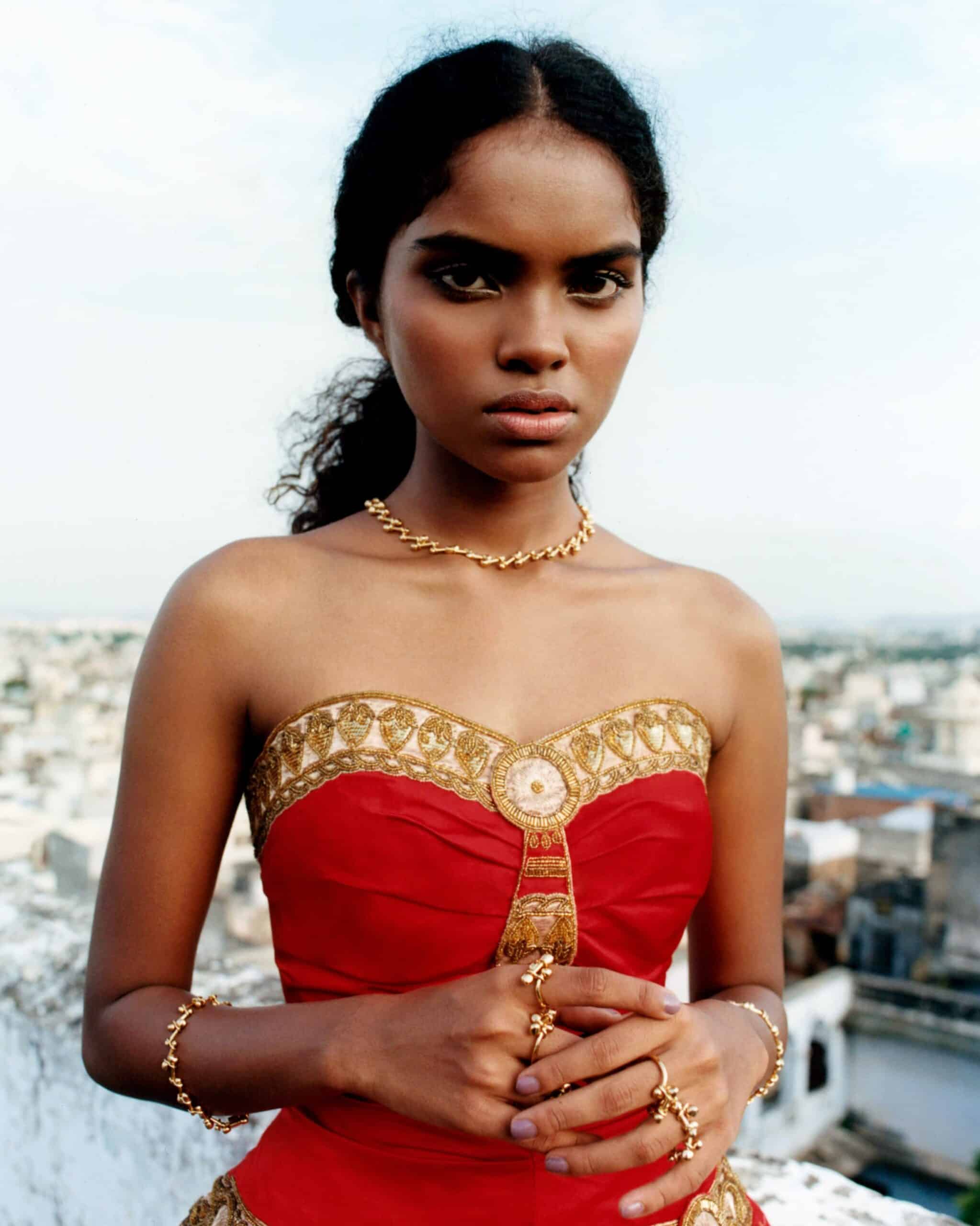
The perfumer Byredo is also broadening its range by unveiling its own high jewelry collection in early November. After exploring the fields of makeup and even leather goods, Byredo is venturing into a new creative territory with this line including necklaces, bracelets, rings, and earrings. Titled “Virassat,” meaning “heritage” in Indian, this first collection is partly inspired by the heritage of founder Ben Gorham. The idea is to explore individual ornamentation and self-expression.
At the heart of this new range are totemic design pieces, mixing gold and silver, where the softness of pearls contrasts with more graphic lines. These true precious amulets unite these two central motifs in signature creations. Handcrafted in Italy, this high jewelry line offers Byredo a new way to express individuality and attract a broader clientele seeking innovation.