Editor’s Note
This article explores the complex challenge luxury brands face in adopting sustainable practices, balancing consumer demand for eco-conscious products with the heritage and craftsmanship central to their identity.
It will not be news to most readers that there has been a definite shift towards sustainably motivated purchasing in recent years. Those businesses that respond to this demand from consumers are reporting increased sales, proving that sustainable practices have the potential to dictate market success. However, integrating sustainability into a business model can prove to be far more difficult where luxury brands are concerned, entrenched in heritage and craftsmanship. In a new report, 10 leading luxury brands have been evaluated across nine crucial metrics to create the Luxury Brands Sustainability Index. Rebecca Butler breaks down the findings…
The luxury industry is founded on the principles of exclusivity and artistry. However, in 2024, luxury brands are being measured against a new yardstick: environmental and social responsibility. This shift has been driven by consumer trends, with modern shoppers seeking transparency and ethical practices, and often making purchasing decisions based on these factors.
Consequently, luxury brands must transcend heritage and exclusivity by integrating sustainability to remain relevant. Luxury businesses are, therefore, being forced to reimagine their approach to everything from supply chain management to product lifecycles, creating a new paradigm where luxury must align with sustainability.
While we are all aware that luxury brands must prioritise sustainability, it can be difficult to understand how these iconic companies are performing, especially when greenwashing is a serious concern. The Luxury Brands Sustainability Index evaluates 10 leading luxury brands – Bottega Veneta, Burberry, Chanel, Dior, Fendi, Gucci, Hermés, Louis Vuitton, Prada, and Yves Saint Laurent – to map out their progress and subsequent impact on people and planet.
Significant Performance Gap: An 11-point difference between top performer Gucci (74) and bottom-ranked Chanel (63) indicates major disparities in sustainability practices.

Strong Social Metrics: Worker welfare and supplier audits show consistently high performance across most brands.
Environmental Challenges: Water usage and product lifecycle management emerge as key areas needing improvement.
Mixed Heritage Performance: Traditional luxury status shows little correlation with sustainability leadership.
The index evaluated 10 luxury brands, allocating a score out of 10 with regards to each of the nine metrics analysed: Worker Wage, Supplier Audits, Working Conditions, Emission Data, Material Sourcing Verification, Water Usage, Sustainable Materials, Product Lifecycle, and Chemical Management.
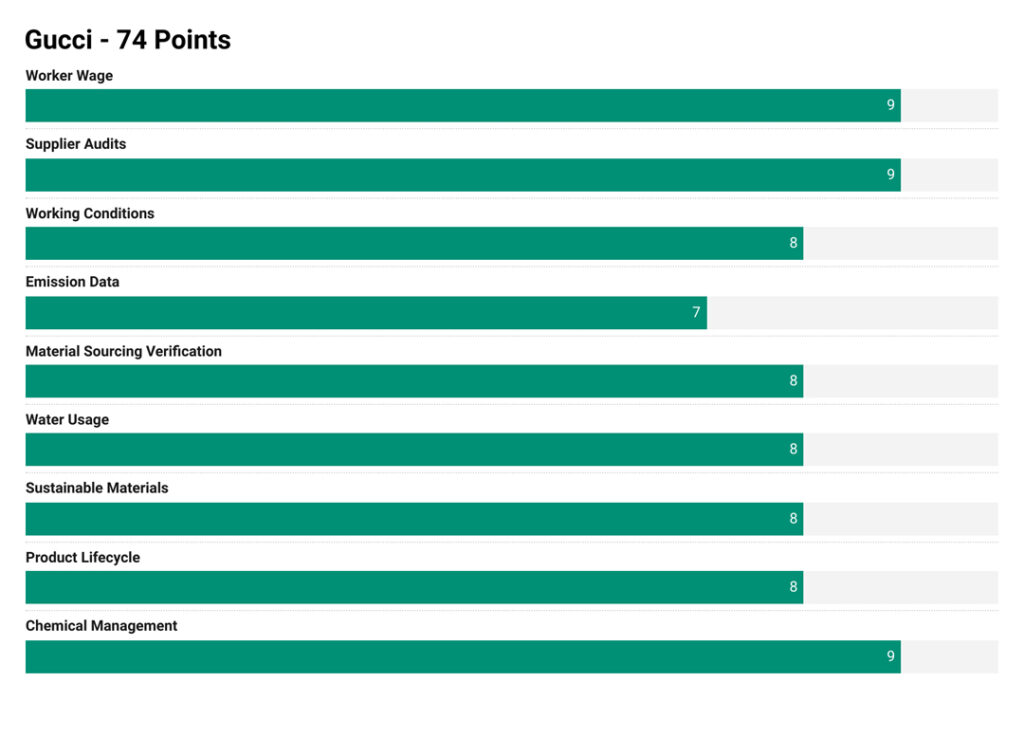
Of the 10 brands evaluated by Classy Leather Bags, Gucci emerged as the top performer with regards to its sustainable efforts, scoring a total of 74. The Italian luxury fashion House showcased its robust commitment to transparency, with particularly high scores in the Worker Wage, Supplier Audits, and Chemical Management categories. Meanwhile, Chanel trailed at the back of the pack, with a score of 63, reflecting challenges when it comes to Worker Wage and Material Sourcing Verification.
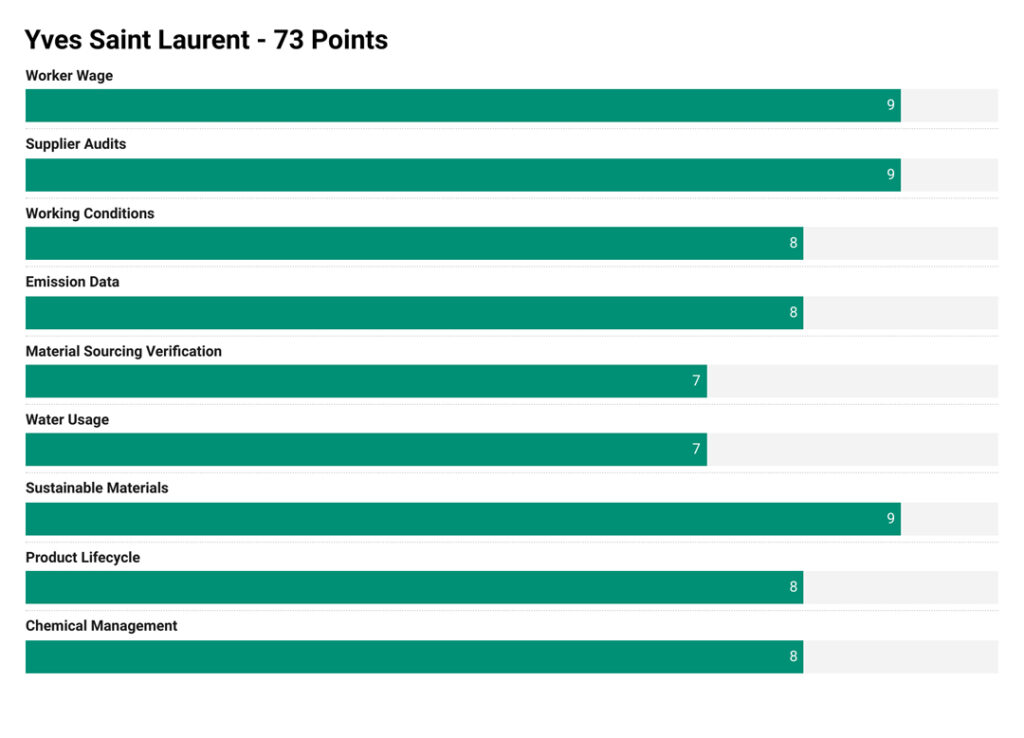
The Maison has made strides in Chemical Management and Working Conditions, but limited sourcing verification and a lack of transparency in comparison with the other luxury brands considered within this index impact its overall sustainability score. Yves Saint Laurent and Louis Vuitton, second and third in the rankings respectively, perform well in ethical sourcing and worker welfare, but face issues in emissions and water management.
Hermés (70) and Burberry (69) both demonstrate strong commitments to Material Sourcing Verification and Supplier Audits, underscoring their dedication to responsible sourcing and ethical supplier relationships. Hermés, however, could enhance its Working Conditions scores, while Burberry has room for improvement in Emission Data.
Burberry tied with Prada in the index, both achieving a score of 69. Despite their similar scores, their strengths differ: Burberry excels in Working Conditions and Sustainable Materials, while Prada shows strong performance in Chemical Management and sustainable sourcing.
The report highlights specific areas where brands struggle. For instance, Bottega Veneta, though part of the sustainability-focused Kering Group, has faced challenges in establishing brand-specific initiatives. The company’s reliance on group-wide policies sometimes overshadows the need for independent strategies in areas like water and waste management.
Bottega Veneta’s Assessment: Limited initiatives specific to water conservation. Lacks a robust individual focus on waste reduction and recycling.
Other brands also show room for growth in environmental management:
General Findings: It has yet to achieve comprehensive water conservation across its global facilities, and some waste management initiatives are still in the early stages.
High-Risk Regions: Limited water conservation measures in high-risk regions. Opportunities for further development in recycling programs and circular initiatives.
Water Footprint: Limited initiatives to reduce water footprint. Product end-of-life and recycling efforts are underdeveloped.
Any consistent readers will know that sustainability is a continuous journey of improvement, and very few brands can be expected to excel in all areas simultaneously – especially not in the early days of their journey towards better practices.