Editor’s Note
This article is a condensed summary of a report by award-winning journalist Julie Zaugg. It examines the harsh realities of sapphire mining in Madagascar and the complex supply chain connecting it to the Swiss watch and jewelry industry.
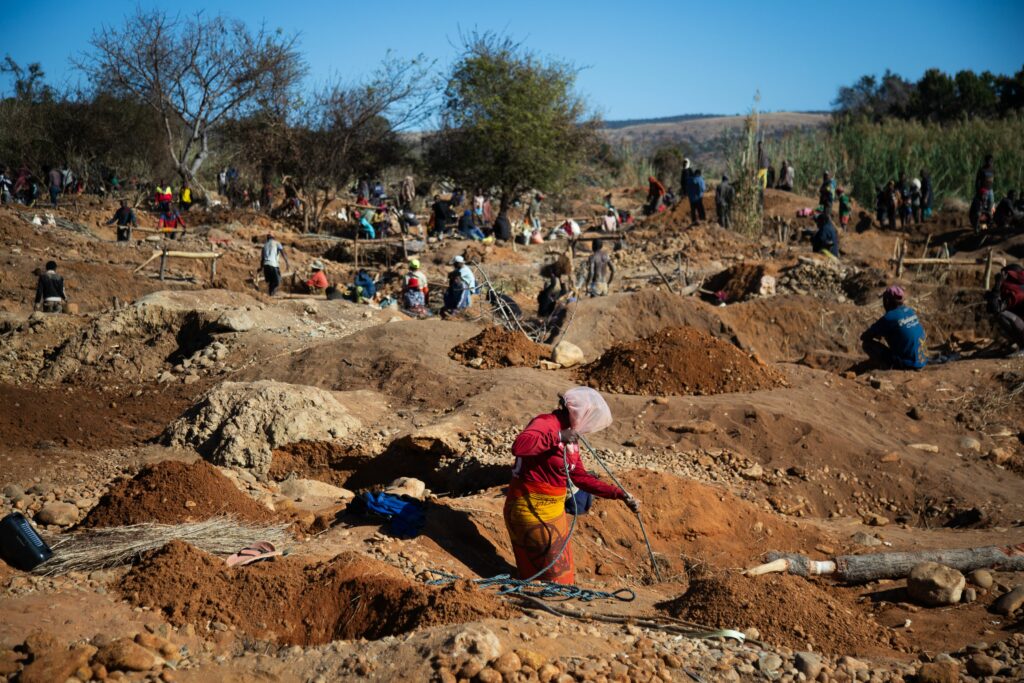
© Julie Zaugg/Public Eye
Madagascar Miners Toil for Swiss Watches
Susanne Aigner / April 15, 2024
Locals mine sapphires under inhumane conditions. The Swiss jewelry trade profits. This is criticized by Public Eye. The following is a heavily condensed summary of a report by Swiss journalist Julie Zaugg, who researched sapphire mining. Zaugg is a winner of the Public Eye Investigation Award.
In Madagascar, a country plagued by droughts and famines, sapphire mining is an important source of income. In the south of the country lies the mining region of Ilakaka in the middle of the savannah – called the “Swiss Bank” by locals. Here, tens of thousands of miners in traditional small-scale mining live alongside several hundred foreign buyers from Sri Lanka, Thailand, and Switzerland. What drives the people is the hope of finding a gemstone.
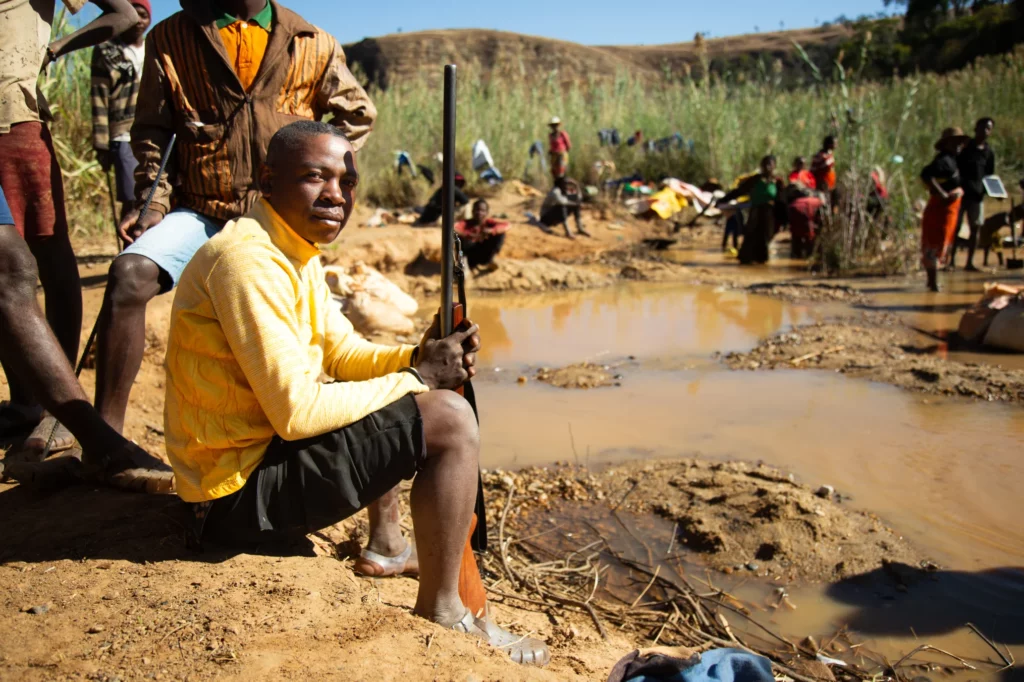
The world’s largest sapphire deposit, covering an area of around 4,000 square kilometers, was discovered in 1998 and is considered one of the most important sources of gemstones worldwide. Thousands of miners dig under the scorching sun in a pockmarked Martian landscape of red earth. Where the gemstone layer lies below the groundwater level, they excavate an open pit with a diameter of about fifty meters. Some workers shovel earth behind them, others pump out the reddish water with sputtering motor pumps. Each team is accompanied by an armed guard.
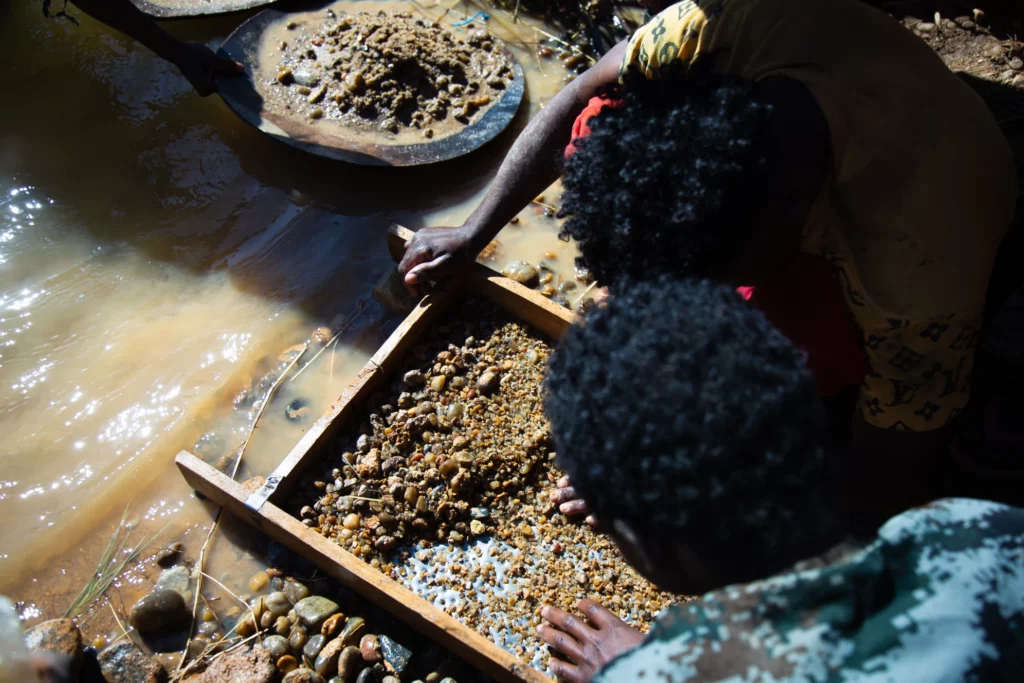
The extracted gravel is packed into sacks and carried on the men’s backs to the river, where it is washed in a sieve. Children from the age of five help their parents sort and wash the gravel mined in the pits. At fifteen, they are considered adults and work in the underground mines. Next to the mine, a village with a few huts made of branches has sprung up. There are no latrines, electricity, or schools.
Other men dig shafts about one meter in diameter. Above each, a primitive pulley with wooden planks is installed, used to lower miners to the bottom of the mine. Fifty-four-year-old Kinawate has also built his own mine on fragile sand and clay soil. Equipped with a torch and an iron rod, he slides down to the bottom of the approximately ten-meter-deep mine. He digs vertically downwards until he reaches the gem-bearing layer, a mixture of pebbles and sapphires, and then clears out horizontal tunnels so narrow that workers have to crawl. Usually, he is underground for four hours before handing over to a colleague.
In some areas, one must dig 30 or 40 meters deep to reach the gem-bearing layer. At this depth, there is a lack of oxygen, and toxic gas bubbles can occur. The miners therefore use a system of plastic bags connected by a hose, which a person on the surface fills with air and compresses to send oxygen into the depths of the mine.
Kinawate searched unsuccessfully for gemstones in his mine for months.
Malagasy traders buy the stones from the miners and sell them at five times the price to gemstone dealers from Sri Lanka or Thailand in the region. Some miners sign a contract with a “patron” from Madagascar or Sri Lanka, who supplies them with rice, oil, and tools. In return, they give him up to 50 percent of the proceeds from each gemstone sold. Others receive a daily wage but no share of the sapphires.
For example, the Sino-Malagasy young entrepreneur Guillaume Ah Thion employs 200 to 250 employees, some of whom live in huts next to the mine. Most of them receive the Malagasy minimum wage of 238,000 Ariary per month (about 47 Swiss francs).
There are no clear criteria for the price of sapphires. The miners also do not know what the stones they search for all day are used for. For this reason, it is not uncommon for them to be offered a price that is 50 percent too low.
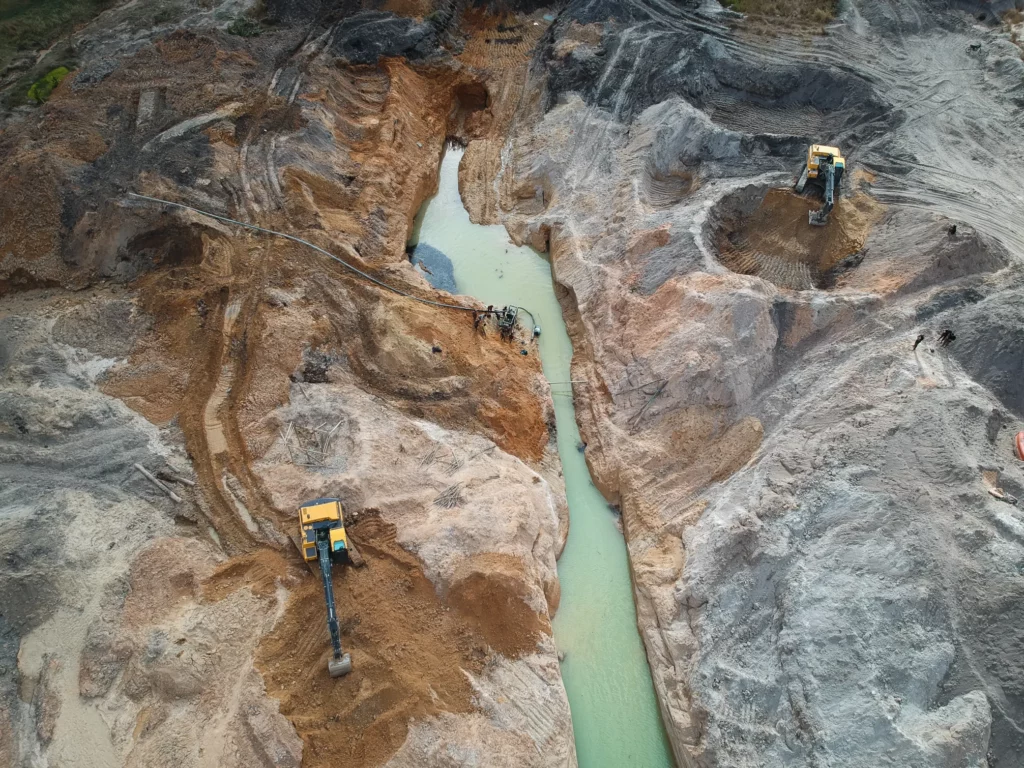
Gemologist Vincent Pardieu explains to Public Eye that most gemstones near the surface have now been mined. Only large-scale, mechanized mining could reach sapphires at greater depths. According to the residents of Ilakaka, the water level in the wells has dropped since Guillaume Ah Thion began large-scale mining operations with his company five years ago. He claims to have known nothing about this but concedes that his mines have lowered the groundwater level in some “isolated” spots. The entire valley near Ilakaka has been dug up. In the process, the forest along a river was destroyed.
The Be Mandresy mine was only recently opened.
Search keywords: Sri Lanka Sapphire Trade Report