Editor’s Note
This article examines the complex supply chain behind the sapphires used by Swiss luxury brands, tracing them to artisanal mines in Madagascar. It highlights the stark contrast between the high-value jewelry market and the challenging, often exploitative conditions at the source.
Swiss jewelry and watch brands now source the majority of their sapphires from Madagascar. However, the Madagascan state and the miners who extract these valuable gemstones by hand under inhumane conditions hardly benefit from these treasures, which are mostly exported with the help of bribery. A field study.
In addition to buyers from Sri Lanka and Thailand, who have come in droves since the beginning of the rush, several Swiss nationals also settled in Ilakaka during this wild phase. As reported in a 2000 SRF documentary, a man from Zurich, who had made his fortune trading gemstones in Tanzania, flew there once a week from the capital Antananarivo.
recalls Vincent Pardieu, a French gemologist who has been observing the Ilakaka deposit since its beginnings.
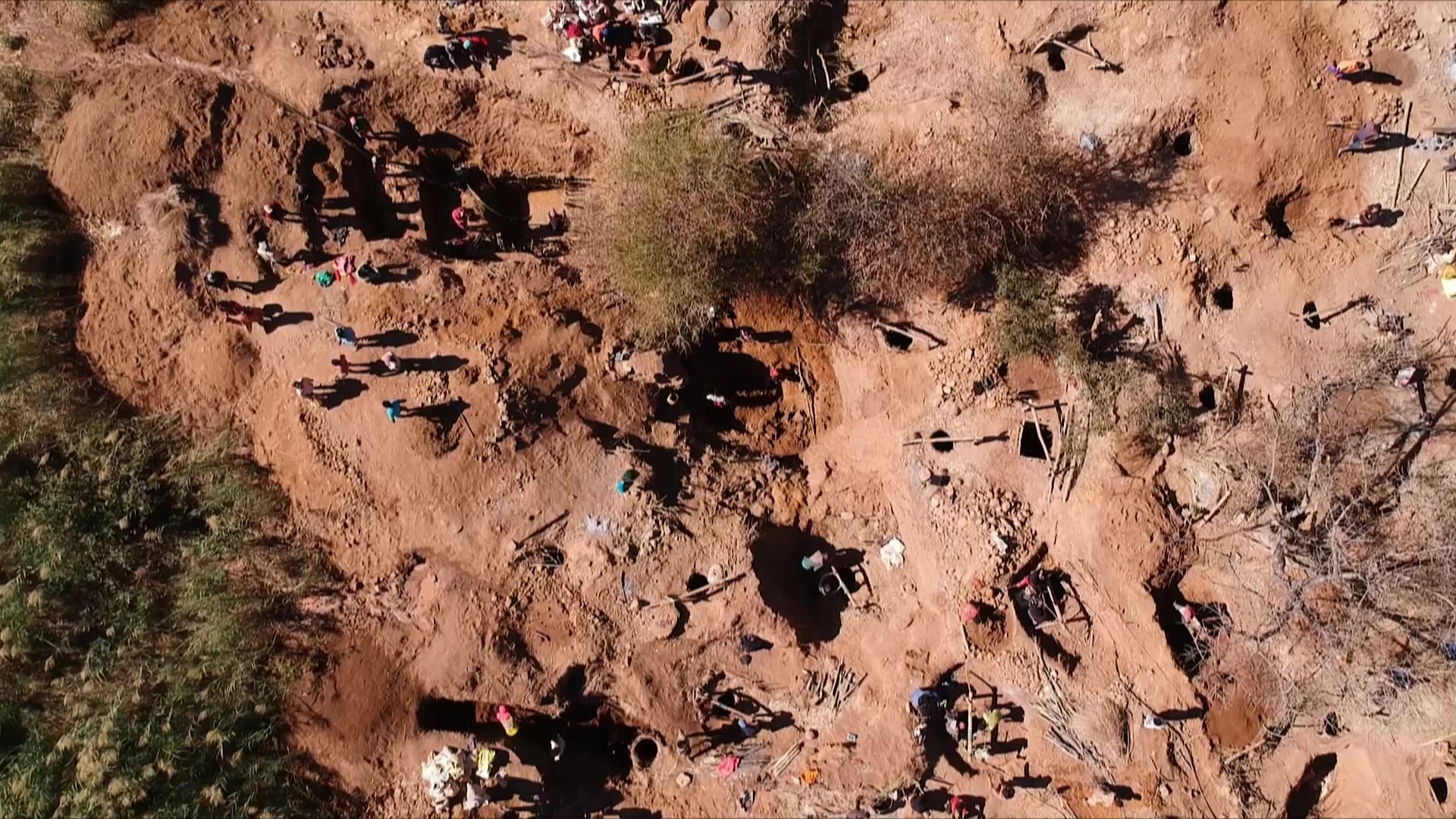
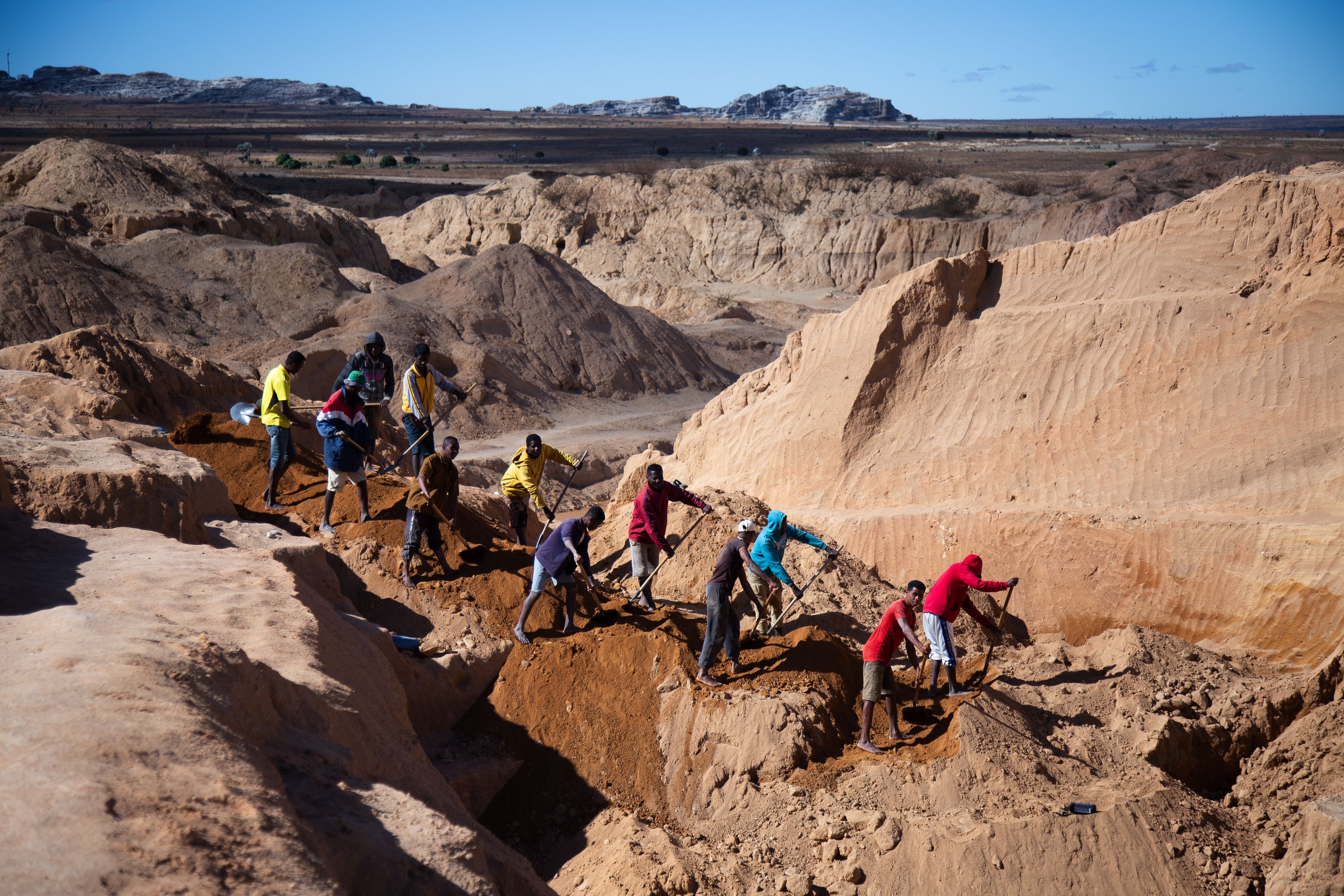
A Martian landscape unfolds before us: red earth, pitted with countless holes. The shafts have a diameter of 100 centimeters; above each, a primitive pulley with wooden planks is installed, used to lower miners to the bottom of the mine. When they come back up, covered in gray dust, they look like zombies from another world.
Others dig with shovels and pump out the reddish water with rattling motor pumps. Each team is accompanied by a guard with a rifle who oversees the work. The extracted gravel is filled into sacks and carried on the men’s backs to the river, where it is washed in a sieve in the hope of finding a gemstone.
reveals Robelfin, a 30-year-old miner in an Iron Man T-shirt, pointing to small colorful stones.
he jokes. Until three weeks ago, Robelfin worked as a bartender at a beach club in Mangily. He came here because, like many others, he heard rumors about a new sapphire mine.
It is called Be Mandresy and was opened just three weeks ago. A local farmer found a sapphire and then called his extended family. The news spread like wildfire, and nearly 1000 miners are now prospecting in this area in the savannah of southern Madagascar. On the road there, a bumpy gravel track two hours from the RN7—the country’s only paved road—one regularly encounters overcrowded bush taxis, their roofs laden with the meager possessions of those who also dream of finding sapphires.
Next to the mine, a village with huts made of branches has sprung up. In large pots, women prepare food over the fire. Children, some with bloated bellies, play tag. The older children have gone to the river to help their parents sieve the gravel. In this village, which has mushroomed overnight, there are no schools, no electricity, and no latrines.
The mine lies in the heart of the Ilakaka mining region, a 4,000-square-kilometer area that hosts one of the world’s largest sapphire deposits. Discovered in 1998, it is now one of the world’s most important sources for these gemstones, also for major Swiss jewelry and watch brands.
Tens of thousands of artisanal small-scale miners live there alongside a few hundred foreign buyers. They come from Sri Lanka and Thailand, but also from Switzerland. These intermediaries export the rough stones, bypassing official channels and using bribes, to Sri Lanka and Thailand. There, the stones are cut and resold at a large profit before reaching the hands of luxury goods manufacturers, including the Geneva-based conglomerate Richemont (which owns brands like Cartier), the Lucerne-based company Bucherer (recently acquired by Rolex), Harry Winston (part of the Swatch Group), or the Lucerne jeweler Gübelin.
After extracting earth and gravel from the ground, the miners of Be Mandresy wash it in the river under the watchful eyes of their armed colleagues.