Editor’s Note
This regulatory update from Argentina’s Nuclear Regulatory Authority aligns national standards for transporting radioactive material with the latest international IAEA regulations, reinforcing safety protocols for package handling and approvals.
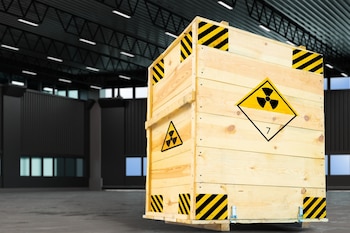
The Nuclear Regulatory Authority (ARN) of Argentina has formalized Resolution 704/2025, which incorporates Revision 4 of Standard AR 10.16.1 “Transport of Radioactive Material,” aligning it with the International Atomic Energy Agency’s (IAEA) SSR-6 Regulations.
This update introduces renewed requirements for package movement, multilateral approvals, and technical documentation, strengthening operational safety in the transport of radioactive substances used in medical, industrial, and research sectors.
According to the resolution, Revision 4 replaces previous requirements and establishes new guidelines for certification, package design, maintenance, and interaction between competent authorities during transit. The standard also unifies criteria for import, export, and internal movements.
To avoid impacts on service continuity, the ARN established a transitional scheme. Packages approved under previous versions—especially those regulated between 1996 and 2012—may only be used until December 31, 2025, after which they must be updated to meet the requirements of the new edition. Packages approved under the 1985 or 1990 frameworks may continue operating, subject to multilateral approval by the various authorities involved in the route.
The ARN clarifies that the transition will not require new safety assessments already conducted: holders must submit updated documentation using current forms, including corresponding technical annexes. The authority will conduct an administrative review and issue new approval certificates. This mechanism allows for maintaining the operational continuity of radioactive cargo transport while adopting regulatory changes.
Furthermore, the update represents an opportunity to improve traceability throughout the logistics chain. Adopting international criteria facilitates interoperability between jurisdictions, simplifies multimodal transport planning, and enables clearer coordination with terminals, warehouses, and operators managing this type of cargo under strict protocols. Standardizing processes reduces administrative risks and expedites inspections at origin, in transit, and at destination.
While the volume of radioactive materials is small within total cargo transport, their handling requires technical precision, strict compliance, and enhanced traceability. Resolution 704/2025 directly impacts:
– Land and air transport companies that move radioactive packages.
– Medical centers that operate diagnostic and treatment equipment.
– Industries that use irradiation or calibration sources.
– Laboratories and scientific institutions that import or export regulated material.
The regulatory update aims to reduce risks, harmonize criteria with other countries, and ensure that documentation aligns with standards applied in international logistics chains, which facilitates approvals, inspections, and cross-border authorizations.
The resolution also confirms that approval holders must pay the corresponding regulatory fee for the analysis and issuance of new certificates under the updated regime.
Adopting requirements consistent with those of the IAEA allows Argentina to sustain transport operations under a framework compatible with that used by regulatory authorities worldwide. This facilitates the validation of approvals for international transit, cooperation for exports and imports, and access to homologated documentation in specialized logistics circuits.
The strengthening of regulation comes in a context where traceability, the integrity of the transported package, and radiological safety are critical elements for the reliability of the logistics system and for sectors that depend on these supplies.