Editor’s Note
Chinese scientists have created a synthetic diamond that surpasses natural ones in hardness and thermal stability. This breakthrough in materials science promises significant advancements for high-tech industries, from manufacturing to electronics.
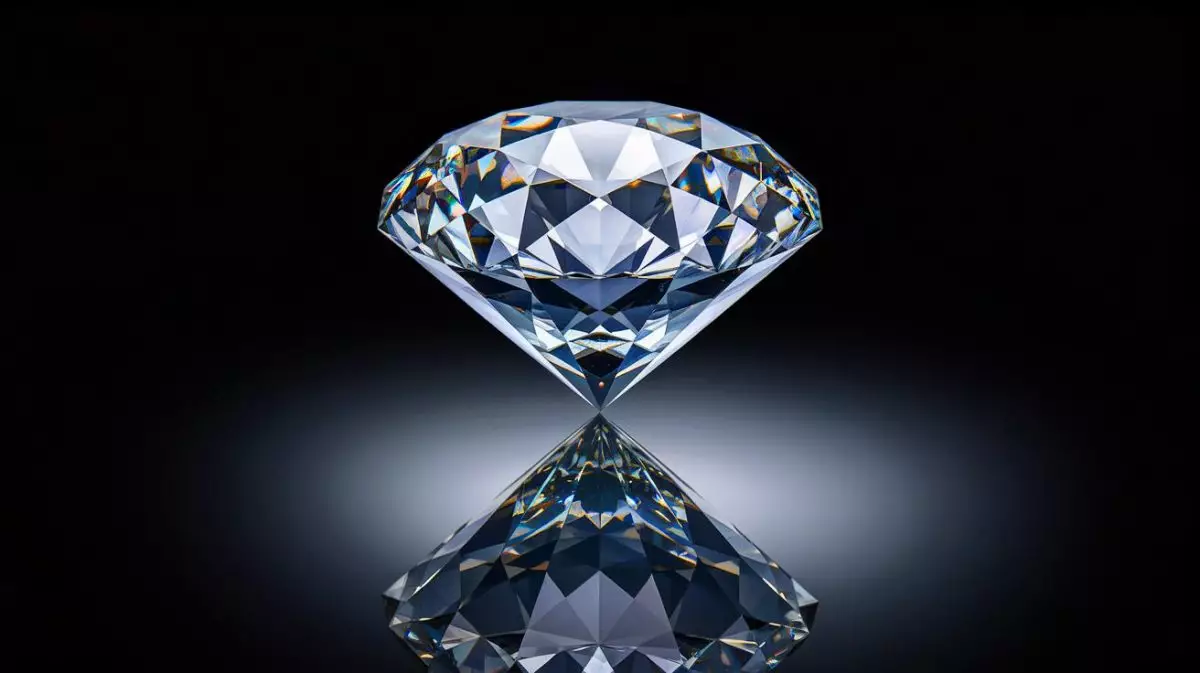
Chinese researchers have synthesized an ultra-hard diamond with a hexagonal structure, tougher than natural diamonds. This “super diamond” is 40% harder and exhibits superior thermal stability, making it ideal for advanced industrial applications. Chinese advancements mark a key milestone in materials research, offering new technological opportunities. The unique properties of lonsdaleite could transform cutting and polishing sectors, and even electronics due to its potential conductivity.
The first ultra-hard diamond, known as lonsdaleite, was discovered in the Canyon Diablo meteorite in Arizona in 1967. Although this discovery generated significant interest, artificially recreating this diamond has always been a challenge for scientists. However, Chinese researchers have developed an innovative method to synthesize nearly pure hexagonal diamonds from graphite. These synthetic diamonds are distinguished by their high quality and exceptional physical properties.
These lonsdaleites are 40% harder than natural diamonds and exhibit thermal stability superior to nanodiamonds, which measure less than 100 nanometers. These characteristics make these diamonds a promising material for numerous industrial applications. The researchers have also gained valuable insights into the conversion of graphite to diamond under high pressure and temperature, opening opportunities for the manufacturing and use of this unique material.
Although this Chinese advancement is impressive, it is not the first time hexagonal diamonds have been created in a laboratory. In 2021, American researchers had already reported creating hexagonal diamonds large enough to measure their stiffness using sound waves. According to Travis Volz, co-author of the American study, these lab-made diamonds had considerable potential in various industries, particularly those requiring advanced materials.
American research also revealed that hexagonal diamonds could be harder than cubic diamonds, making them a superior alternative for mechanical, drilling, or any other applications where cubic diamonds are traditionally used. Furthermore, another author of the American study mentioned that hexagonal diamonds could be used in applications such as engagement rings, offering an interesting alternative to traditional diamonds in certain markets.
The exceptional properties of hexagonal diamonds, such as their hardness and thermal stability, make them ideal candidates for advanced industrial applications. They could revolutionize sectors such as cutting and polishing, where material resistance and durability are crucial. However, despite their potential, large-scale production of these diamonds remains a challenge.
Researchers must still overcome technical obstacles to make lonsdaleite production economically viable. Moreover, integrating these diamonds into existing industrial processes will likely require adjustments and further innovations. Nevertheless, recent progress offers a promising glimpse into the future of ultra-hard materials and their potential impact on various industries.
Chinese researchers are no strangers to breakthroughs in the field of diamond materials. Last year, a collaboration between institutions such as Zhengzhou University, the Henan Academy of Sciences, Ningbo University, and Jilin University led to the development of diamonds capable of conducting electricity. Traditionally, diamonds, although the hardest known natural materials, are excellent thermal conductors but cannot conduct electrical charge.
These advancements show that China is at the forefront of diamond materials research. The ability to produce diamonds with electrical properties opens new possibilities for electronics and other high-tech applications. These innovations could transform how we use diamonds in modern technologies and industrial sectors.