Editor’s Note
This article examines the shifting landscape for Colombia’s famed emerald industry, highlighting a significant drop in export revenue and the multifaceted challenges prompting a strategic reevaluation to maintain its global standing.
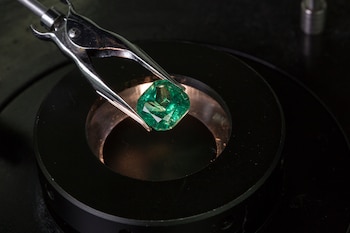
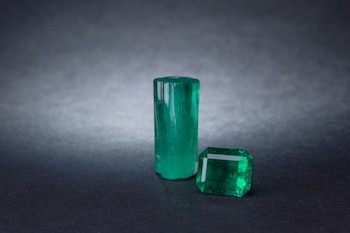
Colombian emeralds are facing a transformative scenario in their productive and commercial sector, marked by declines in exports, geological and commercial challenges, and the search for new strategies to sustain the competitiveness and international prestige of these gems, which are globally recognized for their quality, color, and purity.
Between 2023 and 2025, the value of exports has decreased from USD 182 million to USD 116 million, according to official data from Fedesmeraldas. However, the downward trend has been recorded for over 12 years.
2025 has been one of the most difficult years, resulting from a combination of structural and cyclical factors, including the non-renewable nature of emeralds and changing international trade conditions.
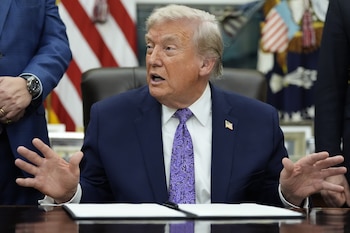
A key aspect of this decline has been the impact of tariffs imposed during the administration of Donald Trump, whose validity continues to affect the trade flow with the United States, the main destination market.
Regarding the effect of international conflicts, Óscar Baquero, president of Fedesmeraldas, stated:
Baquero highlighted that despite these circumstances, Colombian emeralds continue to lead in value per carat over their competitors, allowing the country to maintain a solid presence in the global luxury goods market.
Regarding concerns about a possible depletion of deposits, Guillermo Galvis Morales, president of the Colombian Emerald Exporters Association (Acodes), explained in an interview that the sustained decline over the last 12 years is mainly due to “the geological difficulty and the scientific difficulty in finding emerald deposits.”
Morales emphasized the need to increase investment in technology and industrial development to reverse the trend, adding:
Regarding employment and labor dynamics in the sector, Morales pointed out that the reduction in exports has indeed impacted job creation, although transformation and added value have partially cushioned the impact in recent years. He warned, however, that this model does not constitute a sustainable solution and that it is essential to stimulate direct investment to develop the production chain from its primary base.
Regarding measures adopted to stabilize exports and overcome the adverse tariff context with the United States, Morales indicated that current strategies focus on increasing promotion and generating greater added value in the finished product. He highlighted that these efforts have allowed them to compensate, in some periods, for the annual loss of between 6% and 7% in exported volume, although he insisted on the relevance of improving tariff conditions with the United States due to its role as an international redistribution center.
According to Morales, the axes of the international emerald market are distributed across four main regions: the United States, Europe, the Middle East —with special relevance for India and the United Arab Emirates—, and Southern Asia, particularly China, Indonesia, and Thailand.

Regarding domestic trade, Morales assured that the buying and selling of emeralds in the country has been growing gradually.