Editor’s Note
This glimpse into Hainan’s pearl processing industry highlights how imported raw materials are transformed into high-value jewelry for the domestic market, showcasing a link in China’s consumer and trade networks.
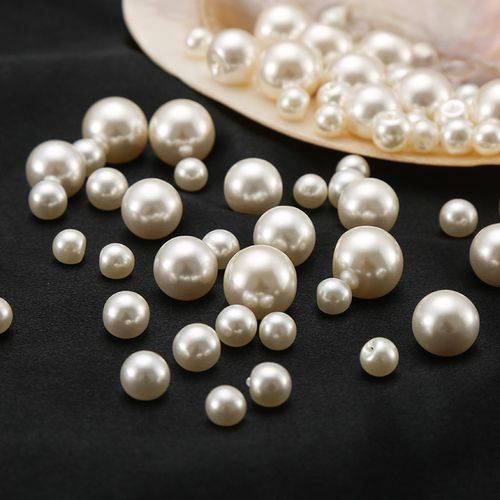
Under the bright lights of the production workshop at Hainan Jingrun Pearl Technology Co., Ltd., seawater pearls sourced from places like Indonesia and the Philippines flow through workers’ fingertips. After sorting, designing, and setting, they are transformed into exquisite pieces of jewelry, sold from Hainan to the mainland Chinese market.
Following the island-wide customs closure of the Hainan Free Trade Port (FTP), the continuous release of policy dividends such as “zero tariff, low tax rate, simplified tax system,” and trade and investment liberalization and facilitation has attracted pearl industry chain enterprises to gather here, promoting the industry’s upgrade towards high-end and internationalization.
The turning point began with the implementation of the Hainan FTP’s “Processing Value-Added Goods for Domestic Sales Exempt from Tariff” policy. This policy encourages enterprises in encouraged industries to process imported materials in Hainan; if the value-added exceeds 30%, the goods can enter the mainland market upon “secondary line” entry exempt from import tariffs.
On the first day of the island-wide customs closure, Hainan Haili Pearl Co., Ltd. (“Haili Pearl”) completed the processing value-added and tariff exemption procedures for a batch of imported pearls. The company’s chairman, Zhang Shizhi, explained to reporters: “This batch of seawater pearls was imported from Japan with a value of 101,000 yuan. With the help of this policy, the comprehensive tariff rate at the customs import link dropped from 51.92% to 25.56%. After processing and selling to the mainland, it is estimated to save about 26,000 yuan in costs.”
Lu Licheng, Deputy General Manager of Hainan Jingrun Pearl Technology Co., Ltd., expressed that what benefits enterprises more are the customs facilitation measures.
In response to enterprise feedback on pain points such as the need for pearl-by-pearl valuation and complex declaration procedures, Haikou Customs innovatively launched a “two-step declaration” model. This allows enterprises to release goods without having to fill in all declaration items at once, greatly improving logistics turnover efficiency. Lu Licheng said that the company has thus changed its previous procurement model via Hong Kong third parties, establishing direct procurement channels with high-end pearl suppliers in Australia, Japan, the Philippines, etc., further reducing procurement costs.
The policy dividends are not limited to the pearl industry but also cover fine jewelry sectors such as gemstones and diamonds. Recently, a batch of jade bracelets processed from imported Russian jade raw materials by Hainan Wuse Guangwen Cultural Development Co., Ltd. smoothly cleared customs at the Haikou Meilan Airport “secondary line port,” becoming the first batch of jade products to benefit from Hainan FTP’s processing value-added policy after the customs closure.
As the core carrier for the layout of Hong Kong’s Chow Tai Fook Jewellery Group in Hainan, the company is building a diamond and gemstone industry park covering 93 acres in Haikou’s Jiangdong New District. It aims to create a professional industrial cluster integrating international diamond rough trading, gemstone raw material trade, storage, processing, trading, design, cultural tourism, and testing and appraisal, covering the entire chain from raw material import to finished product circulation.
The industrial cluster effect is also evident in the Sanya Yazhou Bay Science and Technology City. Haili Pearl is accelerating the construction of the Huangjin (Gold) Jewelry Industry Park, expanding the full-process production capacity of “precious metal molding + pearl setting + fine product manufacturing”; it is actively cooperating with the Guangdong Jewelry and Jade Trading Center to carry out bonded trading cooperation, linking industrial resources in the Guangdong-Hong Kong-Macao Greater Bay Area to form a regional coordinated development pattern.
A single pearl connects the chain from overseas procurement, Hainan processing to global sales, reflecting the broad prospects of the Hainan Free Trade Port in promoting industrial upgrading and connecting international markets.
Haili Pearl leverages the “zero tariff” advantage to more conveniently introduce global high-quality raw materials and advanced craftsmanship, cultivating high-end product lines. At the same time, Hainan jewelry enterprises are actively exploring the integrated development model of “industry + culture + tourism,” combining Hainan’s positioning as an international tourism consumption center to create a new consumption scene integrating cultural exhibition, personalized customization, and immersive experience, promoting the deep integration of jewelry culture and tourism consumption.
In Lu Licheng’s view, relying on policy and location advantages, Hainan is expected to attract high-quality resources from the global pearl industry chain to gather, gradually developing into an international high-end pearl trading and design processing center.