Editor’s Note
This article highlights a significant milestone in India’s private space sector. The establishment of a dedicated, end-to-end additive manufacturing facility by Agnikul Cosmos represents a strategic move to advance domestic production capabilities, reduce costs, and increase supply chain independence for critical aerospace components.
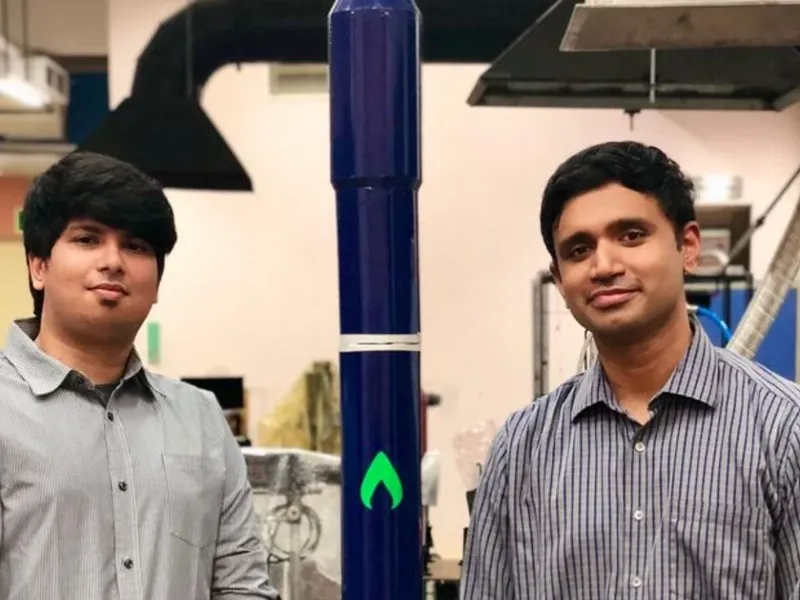
Private space-tech company Agnikul Cosmos announced on Monday the launch of a state-of-the-art additive manufacturing facility specifically for aerospace and rocket systems. This facility offers a fully integrated framework encompassing design, simulation, printing, post-processing, and finishing. Its aim is to enhance quality, reliability, and supply chain resilience while reducing the manufacturing cost of products for the space sector by up to 50 percent.
For the first time in India, this facility also enables the 3D printing of aerospace and rocket components up to one meter in height. By making the production of these parts possible, Agnikul can now deliver fully flight-ready hardware in just a few days. This will significantly accelerate development timelines and expand the scope of items that can be produced through 3D printing.
Srinath Ravichandran, Co-Founder and CEO of Agnikul Cosmos, said this.
Moin SPM, Co-Founder and Chief Operating Officer of Agnikul Cosmos, said this.
Agnikul already holds a US patent for a single-piece 3D-printed rocket engine. This facility will help the company print a one-meter engine and generate seven times more thrust compared to previous designs.
With this facility now operational, the company can prepare this engine in just a few days and at its own level. This will foster large-scale innovation.