Editor’s Note
The recent imposition of significant US tariffs on Indian goods, analyzed in this article, presents a substantial challenge to a key pillar of India’s economic strategy. As the nation seeks to solidify its role as a global manufacturing hub, these trade barriers, particularly in critical sectors like gems and jewelry, underscore the complex realities of international commerce and the fragility of export-dependent growth models.
US tariffs: A major blow to India’s export ambitions
In August, the US imposed unprecedented tariffs on Indian goods, nearly 50% in some cases. The move was seen as a major blow to India’s export ambitions.
The timing was particularly difficult as India has been aggressively pursuing a manufacturing and export-led growth strategy to become a global production hub.
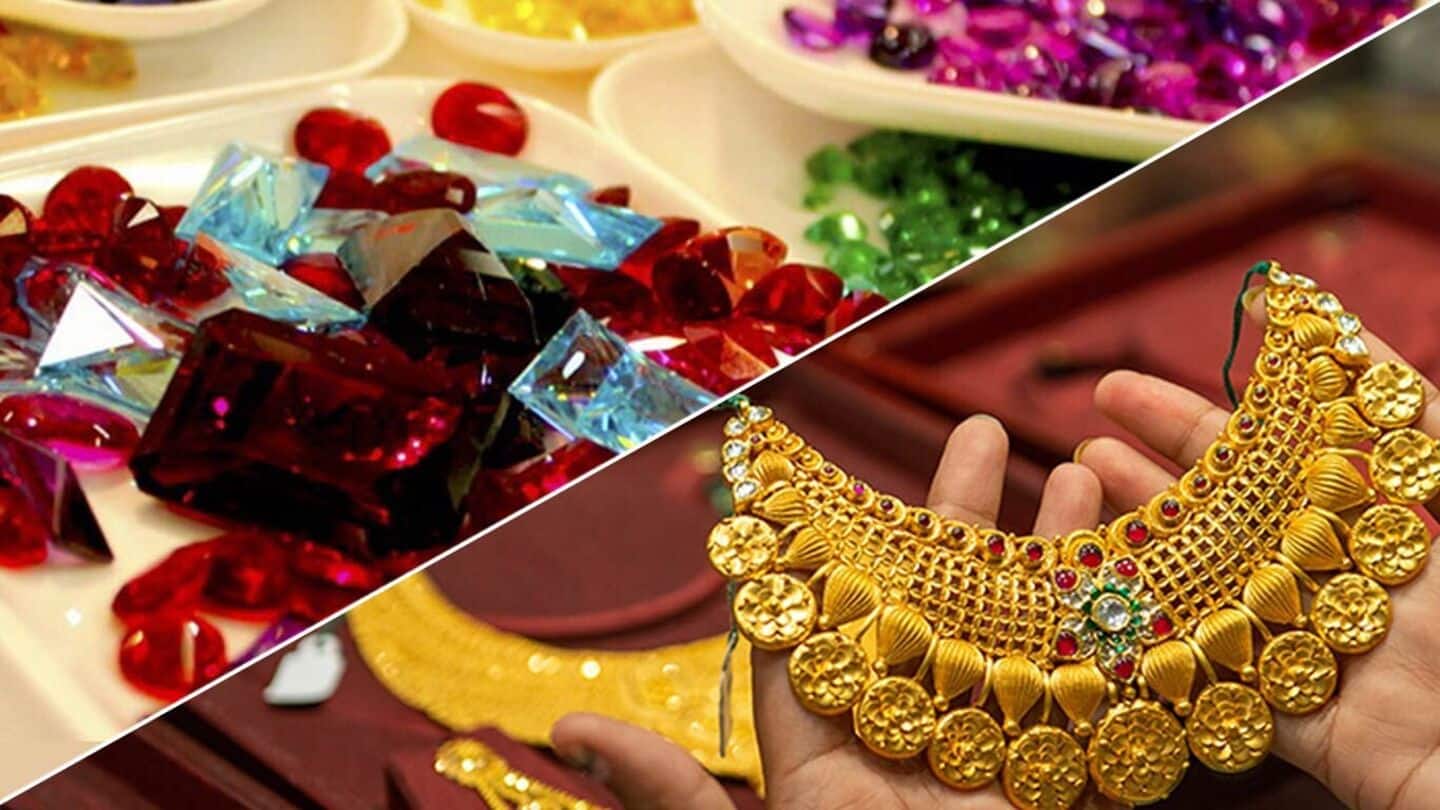
Among the sectors most affected by these tariffs was gems and jewelry due to its heavy reliance on the US market.
Gems and jewelry sector’s initial response to US tariffs
Despite fears of job losses and a decline in orders, the gems and jewelry sector is showing early signs of resilience against the new tariff regime.
According to data from the Gem and Jewelry Export Promotion Council (GJEPC), India’s gems and jewelry exports surged by 19.64% year-on-year to $2.5 billion in November 2025, up from $2.1 billion in November last year.
This growth indicates that the sector is slowly adapting to market changes caused by US tariffs.
Resilience amid tariff challenges
The GJEPC chairman Kirit Bhansali said markets are stabilizing and demand is picking up in Hong Kong, China, and the Middle East.
Exports of gold-studded jewelry have also surged due to increased job work demand within India, indicating supply chain adjustments may be sustaining export volumes despite external headwinds.
India’s seafood sector’s response to US tariffs
The trend in gems and jewelry mirrors what has already happened in India’s seafood sector.
Indian seafood exports, especially shrimp, were also expected to take a hit under US tariffs.
However, exporters quickly diversified by reopening access to Australia and the European Union after years, and expanding exports to Russia and other emerging markets.
This diversification has helped the sector mitigate tariff impacts and maintain export momentum.
CareEdge’s report on India’s gems and jewelry exports
A recent report by CareEdge found that while exports to the US fell sharply, the decline was partially offset by increased shipments to the UAE, Hong Kong, and China.
However, it is too early to tell if this is a structural shift in India’s export markets or just a short-term adjustment.
The resilience seen in select export sectors has coincided with improving trade indicators.
India’s merchandise trade deficit narrows sharply
India’s merchandise trade deficit narrowed sharply to $24.53 billion in November from $41.68 billion in October, according to Commerce Ministry data released on Monday.
The contraction was largely driven by lower imports of gold, oil, and coal.
However, merchandise exports rose strongly, reaching $38.13 billion in November, up 19.38% year-on-year (YoY), indicating that India’s export engine has not stalled despite a challenging global trade environment.