Editor’s Note
This article explores a jeweler’s journey to sourcing recycled and Fairtrade gold, highlighting the practical challenges and ethical commitments behind sustainable luxury.
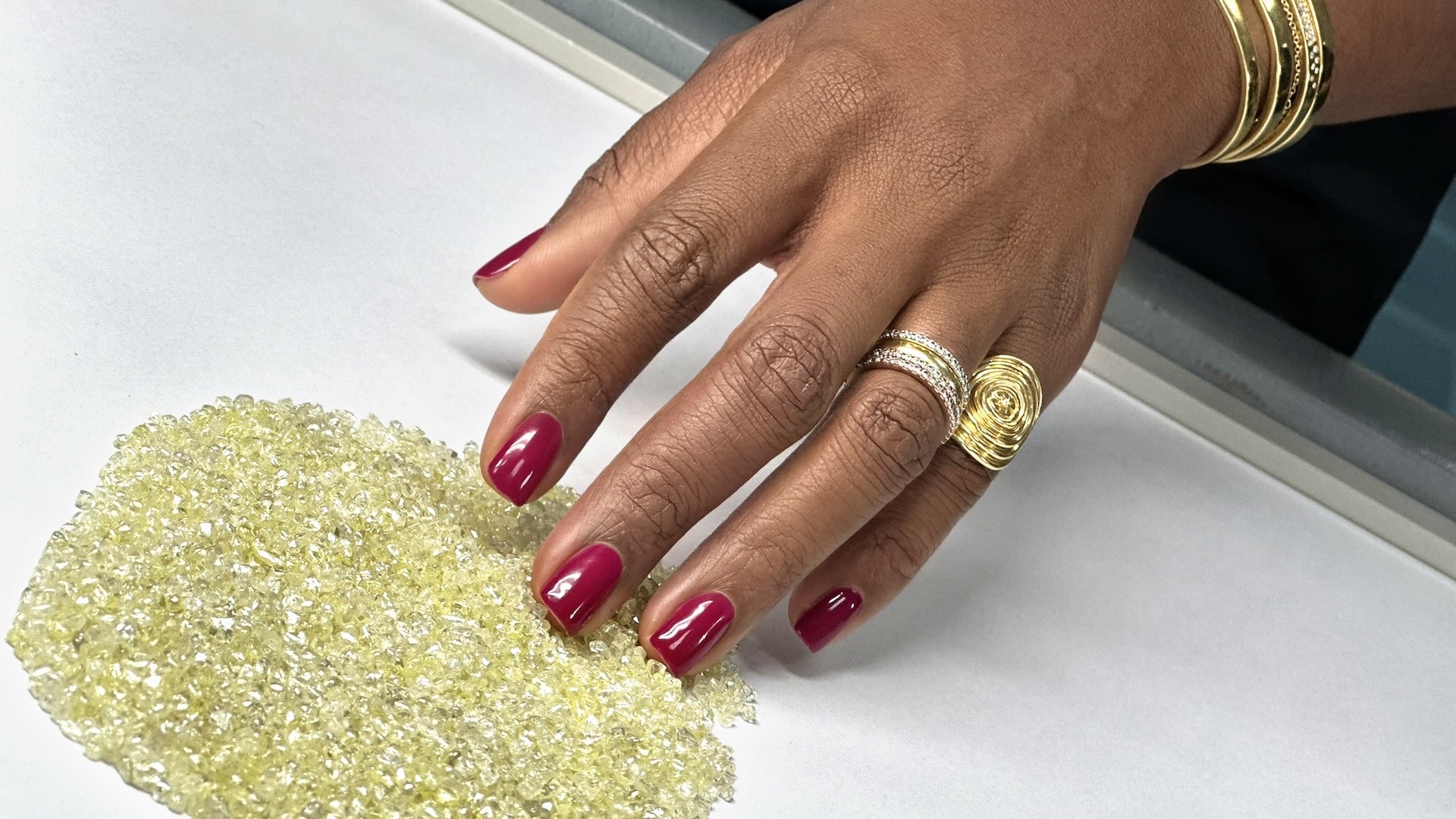
At first, I wasn’t sure how to source recycled gold, it took time to secure a supply chain. Five years ago, I found workshops using recycled gold, and now I have my jewelry made at these workshops in Chicago, New York, and India. It’s slightly more expensive than regular gold but it’s part of my story.
Sometimes I’ll recycle and reuse a client’s metal in the workshop, or I work with a small caster who recycles in house. I also use Fairtrade gold.
A key tenant of sustainability is not overproducing, keeping everything small batch, so I mainly make to order. This gives clients the ability to choose the stones and make it custom. All my jewelry is handmade in our London workshop using recycled gold and diamonds that I personally select or antique stones.
My gold suppliers have certifications, such as the Responsible Jewelry Council (RJC) or Fairmined, reflecting their commitment to sustainability and ethical practices. A significant portion of my creations features recycled gold. This is a meaningful step toward reducing the demand for new mining and minimizing the environmental footprint associated with gold production.
I have used recycled and Fairmined gold and am moving towards Single Mine Origin gold for 100% of the collection.

You’ll love the designs and the backstory.
By Jill Newman | July 11, 2025
There’s more to diamond jewelry than its sparkle. More designers are committed to creating socially conscious and sustainable jewelry through practices which include responsibly sourced stones, ethically mined gold, and crafted in workshops that adhere to a code of conduct that protects its workers and minimizes its carbon footprint. That might not sound sexy, but it gives jewelry a feel-good factor that is priceless.
Jill Newman is a jewelry authority, editor, and storyteller with over 25 years of experience, having reported from diamond mines in Africa, cutting workshops in India and Belgium, and ateliers around the world.
She serves as Editor-at-Large for the Natural Diamond Council, with additional bylines in The New York Times, Town & Country, Elle Décor, and Robb Report.
