Editor’s Note
This review examines a film described as a “masterpiece of deconstruction and reconciliation,” exploring its political project and its poignant reflection on determinism in modern life.

The king of melancholy, since “Oslo, August 31st,” has been distilling the angst of a generation. “Sentimental Value” is a masterpiece that carries a political project of deconstruction and reconciliation. A raw diamond offering as many perspectives as narrative threads, it invites us to make peace with the role determinism plays in our prefabricated lives.
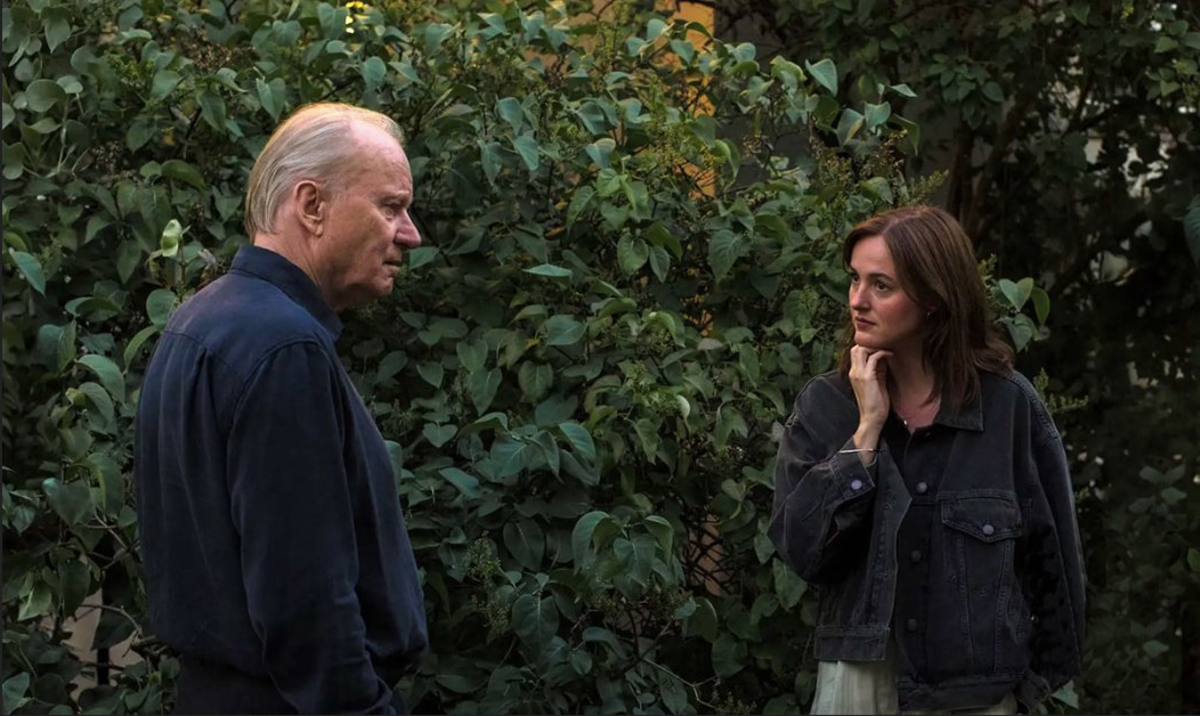
Joachim Trier gives prominence to his female characters, delving deeply into each one, giving them depth and complexity. The film contradicts our expectations and our premature attempts to confine a character to a single role. We might want to classify the Hollywood actress Rachel Kemp as naive; her discernment catches us off guard. Nora’s radiant face is merely the social mask for a profound inner emptiness. The younger sister, Agnès, proves more capable of conflict than her initial avoidances suggested.
Trier also twists our confirmation biases through diegetic twists. After a heated exchange, we are not surprised to find Nora utterly devastated, crying on the floor by her bed. But the film pulls back, traps us; the assumptions we make in advance are constantly thwarted. This is also a way of opposing the fatalism of determinism.
As a hyperbolic representation of patriarchy, the father-director dictates, directs, and commands – a professional deformation. His daughter should star in his film, quit theater, write herself, be free, stop letting roles be dictated to her, stop being perpetually irritated if she doesn’t want to end up alone. The injunctions pour down, contradictory and sharp: Gustav Borg, a director before being a father, saturates the narrative space. But the retort also flies, stinging.
It’s almost imperceptible. At first, you think you might have dreamed it, but no, repetition confirms the initial intuition. After the most intense scenes, Joachim Trier leaves a few seconds of black screen: no music, no fade, pauses to create emptiness, like an emphatic blink. It’s a way of carving out breaths for us after the most emotionally taxing scenes. The Norwegian filmmaker gives us time to appreciate the thickness of the moment, to grasp its paths and depths. These freeze-frames, these small pauses of meaning, these grounds ripe for delayed epiphanies continue after the film. Time stops, hands pause, gaze drifts, and we find ourselves replaying a scene from the internal projection room. We finally grasp a directorial pirouette, we observe an argument or a rehearsal from another angle. Perhaps he, she, we also meant to say that.
As if Trier, even in his programmatic screenplay, had anticipated that within us too, revelations would gradually and spontaneously settle. In fits and starts, the film continues to reveal its secrets in the hours and days following viewing. It’s a long-term cognitive experience, comparable to a kind of regular flood. A slow and progressive realization, like a rising tide measured with a pencil on the verticality of a doorframe. As a child grows, the gauge of understanding fills. Joachim Trier’s film gives us a leg up, delivers the chromatography of a family, its colors that are revealed and others that, with time, fade.
But then, could one suspect him of perfecting the totalitarian dream of every director-dictator in his filming? Dictating through appropriation not only the choreography of the actors but also that of the spectators? Sowing reflective moments through narrative insemination? Reigning as master over bodies as well as minds? It’s more complicated than that. Joachim Trier’s film, beneath its guise of an essay on toxic masculinity and the devouring domination of fathers, is an ode to self-determination.
Who draws the script of an existence? The house that shelters a childhood? A voice-over that believes itself omniscient? The small, mute internal screenwriter of a spectator? The actors who pour their words and bodies into a story? Or the objects that decorate time with sentimental value?