Editor’s Note
An official investigation has revealed that a 30-second window to apprehend the thieves behind the Louvre jewel heist was missed, highlighting a critical lapse in the security response.
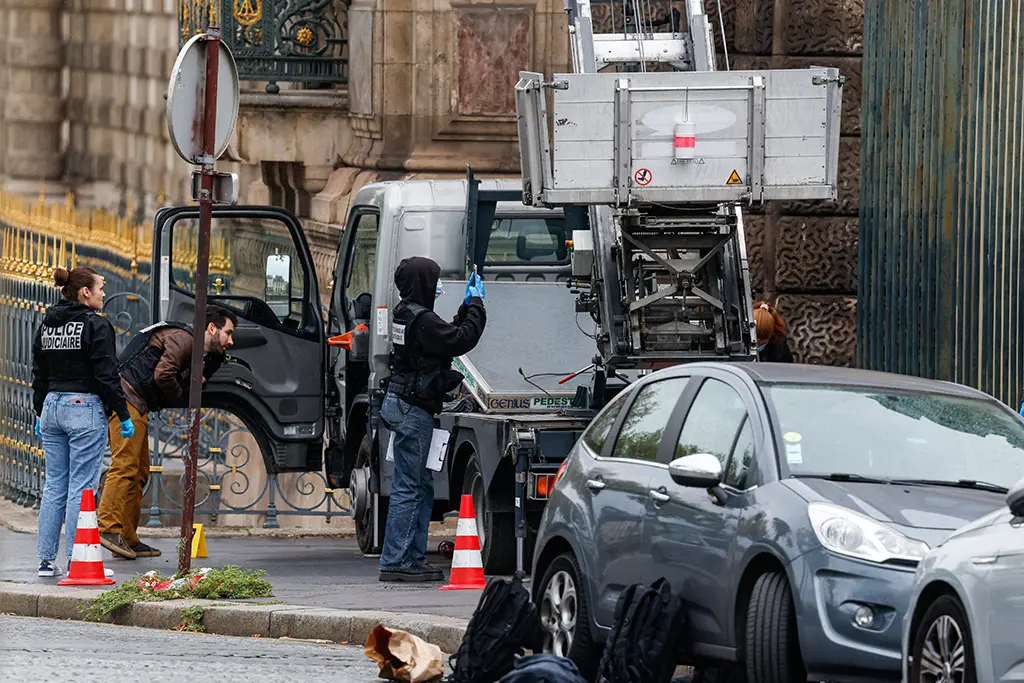
An administrative investigation confirmed this Wednesday that the escape of the thieves who stole jewels from the Louvre in Paris on October 19 could have been prevented within thirty seconds, according to hearings held at the Senate.
declared Noël Corbin, Inspector General of Cultural Affairs and one of the report’s authors.
From the beginning of the hearings, senators insisted on the importance of those few seconds that could have changed the outcome of the heist. The president of the Senate’s culture commission, Laurent Lafon, recalled that
He also emphasized that
The rapporteurs also stressed that the theft was not the result of a string of bad luck. Laurent Lafon estimated that this burglary
and
These conclusions are based on several prior audits whose findings were consistent.
The precise sequence of the theft was traced using surveillance cameras. Pascal Mignerey, from the Security, Safety, and Audit Mission at the Ministry of Culture, detailed that the exterior camera
But the footage was not monitored live, and when a security control room agent activated it, the perpetrators had already left the Apollo Gallery.
The technical explanations provided to senators describe a video surveillance system incapable of providing real-time alerts. Laurent Lafon specified that
For the officials deployed that night, these failures represented lost time that was impossible to recover.
Senators also highlighted internal disorganization concerning the management of security audits. According to Noël Corbin, investigators were
by
within the museum during the change of presidency in 2021, upon the arrival of Laurence des Cars. An audit conducted in 2019 by the jeweler Van Cleef & Arpels, which had identified all the weaknesses of the Apollo Gallery, had notably not been communicated to the new management.
Despite these flaws, some officials managed to limit the risks around the site. Noël Corbin indicated that
However, the report’s conclusions fit into a severe assessment: for Laurent Lafon, they point to
On the judicial front, the amount of economic damage was specified by the Paris prosecutor Laure Beccuau. She declared:
a sum
but which
adding that the criminals
this sum
The day after the heist, the Minister of Culture Rachida Dati ordered an administrative investigation and announced several
including the installation of
devices around the museum. These decisions were validated during an emergency board meeting, but they have not appeased the unions, who are still waiting for staff reinforcements while the museum faces a gallery closure due to damage and a call for a strike by staff.
Hearings at the Senate will continue. The commission must hear the former president of the Louvre, Jean-Luc Martinez, whose term (2013-2021) saw the completion of security audits now described as alarming. His successor Laurence des Cars will then be heard. For the senators, the challenge is now to establish the chain of responsibilities that led to losing those thirty decisive seconds, which have become the symbol of a weakened security system within the world’s most visited museum.