Editor’s Note
This article highlights a key provision of the new India-UK Free Trade Agreement, which eliminates tariffs on jewelry exports—a major opportunity for Rajasthan’s gem industry.

Following the signing of the historic Free Trade Agreement (FTA) between India and the United Kingdom, Rajasthan’s gem and jewelry industry is poised to gain a significant advantage in the export sector. Under this agreement, all tariffs on precious and costume jewelry have been eliminated.
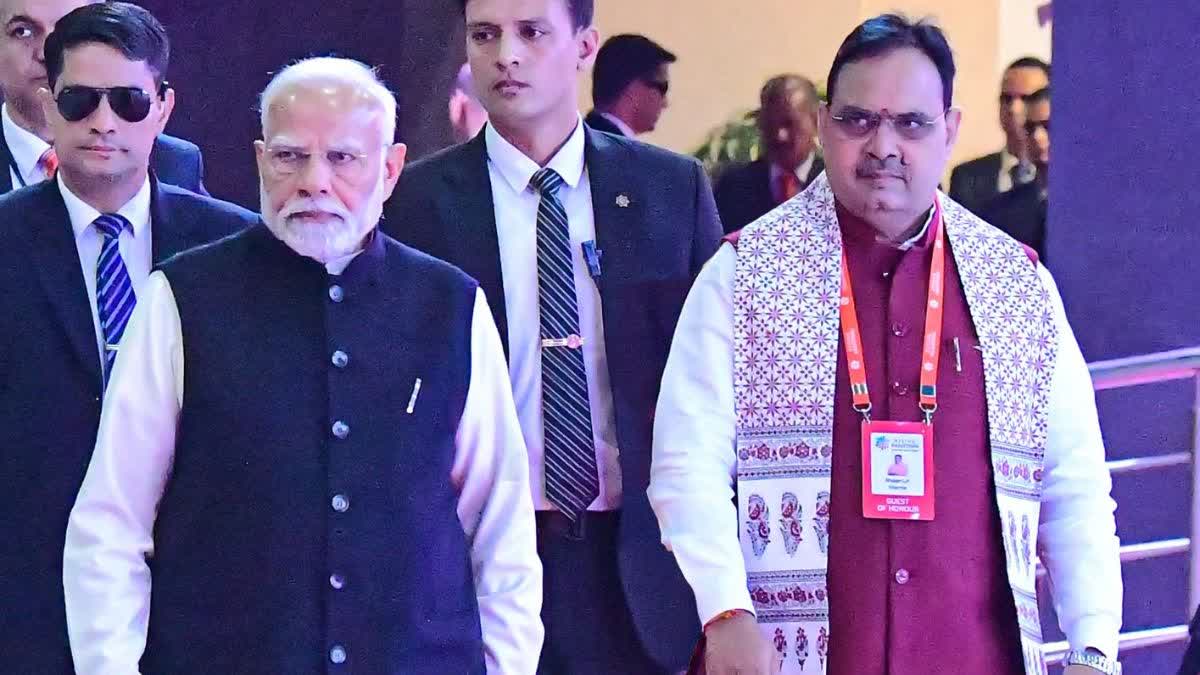
Signed by Prime Minister Narendra Modi and UK Prime Minister Keir Starmer in London, the agreement will grant duty-free access to the UK market for 99 percent of India’s exports, providing fresh impetus to bilateral trade between the two nations. This will be particularly beneficial for Rajasthan, as its gem and jewelry producers will now be able to export to the UK at zero tariff rates. In a statement issued on Saturday, Chief Minister Bhajanlal Sharma said the India-UK FTA will give new wings to Rajasthan’s gem and jewelry exports. The textile and apparel, marble, handicrafts, engineering, and auto parts sectors will also benefit from zero tariffs.
Chief Minister Bhajanlal Sharma commented on the India-UK FTA, stating that under the visionary leadership of Prime Minister Narendra Modi, national interest has always been paramount in the country’s trade agreements. He said this agreement will prove to be a significant milestone in the country’s global economic diplomacy and will promote international trade opportunities.
Currently, exports of jewelry made from precious metals from India attract customs duties ranging from 2 to 4 percent, while jewelry made from base metals attracts a 4 percent duty. All these duties will become zero once the FTA comes into effect. The agreement eliminates duties on items including pearls, precious and semi-precious stones, precious metals, and imitation jewelry.
CM Bhajanlal explained that Rajasthan’s textile industry will also benefit from zero-duty access to the UK market, as import duties previously ranged up to 12 percent. This change will boost export potential by Rs 4500-7000 crore. Specifically, in the apparel and home textiles sector, Rajasthan will be able to compete more effectively with neighboring countries of India. The world-renowned stone and marble industries of Makrana and Kishangarh, the state’s cement manufacturing units, and traditional Rajasthani furniture and bedding manufacturing units will also benefit from this FTA.
The CM said that significant opportunities will also open up for the handicraft sector, including Rajasthan’s traditional paintings, pottery, and metal crafts. Growing demand from the UK’s luxury market and the South Asian diaspora community will be supportive. Rajasthan’s engineering goods will also benefit from lower tariffs and gain better access to the UK market. The FTA will also boost exports of auto parts with local value addition rules. Honda’s Tapukara plant exemplifies the state’s manufacturing capability in this area, from where products like engine parts and crankshafts are exported to the UK and other countries.
It is noteworthy that under the leadership of Chief Minister Bhajanlal Sharma, the state government is set to organize the ‘Rising Rajasthan’ Partnership Conclave-2025, following the ‘Rising Rajasthan’ Global Investment Summit-2024. Scheduled for December this year, this conclave will strengthen trade partnerships between India, the UK, and other countries, and will also demonstrate how the government is promoting collaboration with industries, multilateral organizations, and startups. The conference will also highlight the progress of previously signed MoUs and the socio-economic changes brought about by industries in Rajasthan.