Editor’s Note
Glencore has suspended a major environmental investment in Quebec, citing failed negotiations with the provincial government. The decision puts the future of the Horne Smelter and its operations at risk.
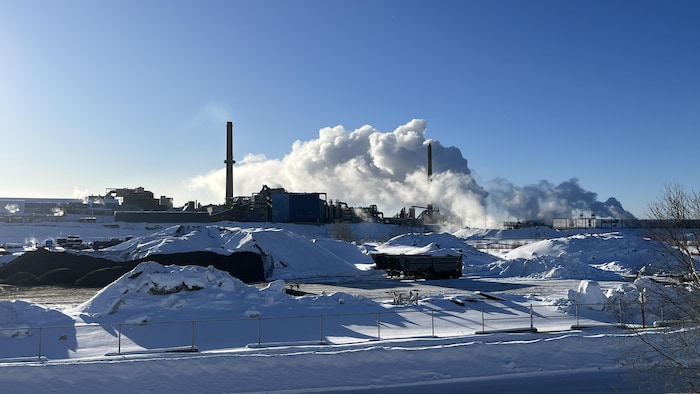
Due to a failure to reach an agreement with the Quebec government, the company Glencore announces the suspension of its $300 million investment in the Horne Smelter in Rouyn-Noranda aimed at reducing pollutant emissions. Company executives are on-site to announce the news to employees. By March 2027, the Smelter will be unable to comply with the terms of its permit, meaning the plant will be threatened with closure.
In a press release, Glencore Canada announces it is forced to immediately suspend all investments related to emission reduction and upgrade projects at the Horne Smelter and to deploy a demobilization plan, effective February 3, 2026. At the CCR Refinery in Montreal, investments will also be reduced in the medium term.
Since the summer of 2025, Glencore Canada says it has undertaken several approaches with the Quebec government to ensure the sustainability of its operations in Rouyn-Noranda and Montreal-East.
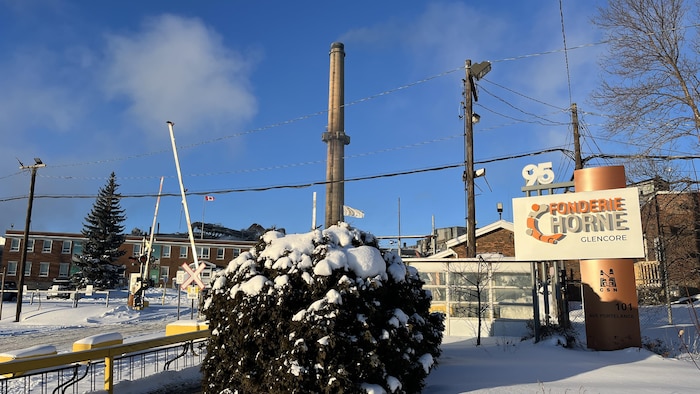
Glencore Canada emphasizes that it was prepared to commit to major investments: $300 million for emission reduction and nearly $700 million for facility upgrades to ensure competitiveness, totaling nearly $1 billion over five years. The company adds that it would be irresponsible to authorize an investment of such magnitude without assurance regarding the Horne Smelter’s ability to continue operations within a predictable and realistic long-term framework.
Thus, Glencore Canada says it has clearly communicated two conditions to the government on multiple occasions: adjusting the current ministerial authorization to allow for the full implementation of the emission reduction plan according to a realistic timeline, and confirming a stable regulatory framework for the coming years, at least for the duration of the next authorization, including maintaining a target of 15 ng/m3 for arsenic.
While awaiting this regulatory certainty, Glencore Canada says it is open to exploring other mechanisms, including financial ones, to reduce the short-term risk associated with investments of this scale. But according to the company, the necessary conditions are not in place to allow Glencore Canada to move forward, despite sustained efforts from both parties.

Glencore Canada says it is proud of the progress made in recent years. Between 2022 and 2024, the average concentration of arsenic in ambient air measured at the Horne legal station decreased by 46.5%. In 2024, 99% of the urban area of Rouyn-Noranda had a concentration equal to or less than 15 ng/m3, the company points out.
The Horne Smelter indicates it continues its operations in accordance with the current ministerial authorization. However, without the realization of the planned projects, it will become impossible to achieve some of the targets it will be subject to starting March 2027, signals Glencore Canada. The situation will need to be reassessed in the coming months, according to the company.
The United Steelworkers union (Syndicat des Métallos) receives the news with anger and desolation. The union’s director, Nicolas Lapierre, accuses Quebec of signing the death warrant for the copper sector in Quebec.