Editor’s Note
As Kering expands its Generation Award to new markets and sectors in 2025, this initiative underscores the luxury group’s strategic investment in sustainable innovation. The awards spotlight startups that align with Kering’s long-term vision, demonstrating how corporate programs can drive industry-wide change.
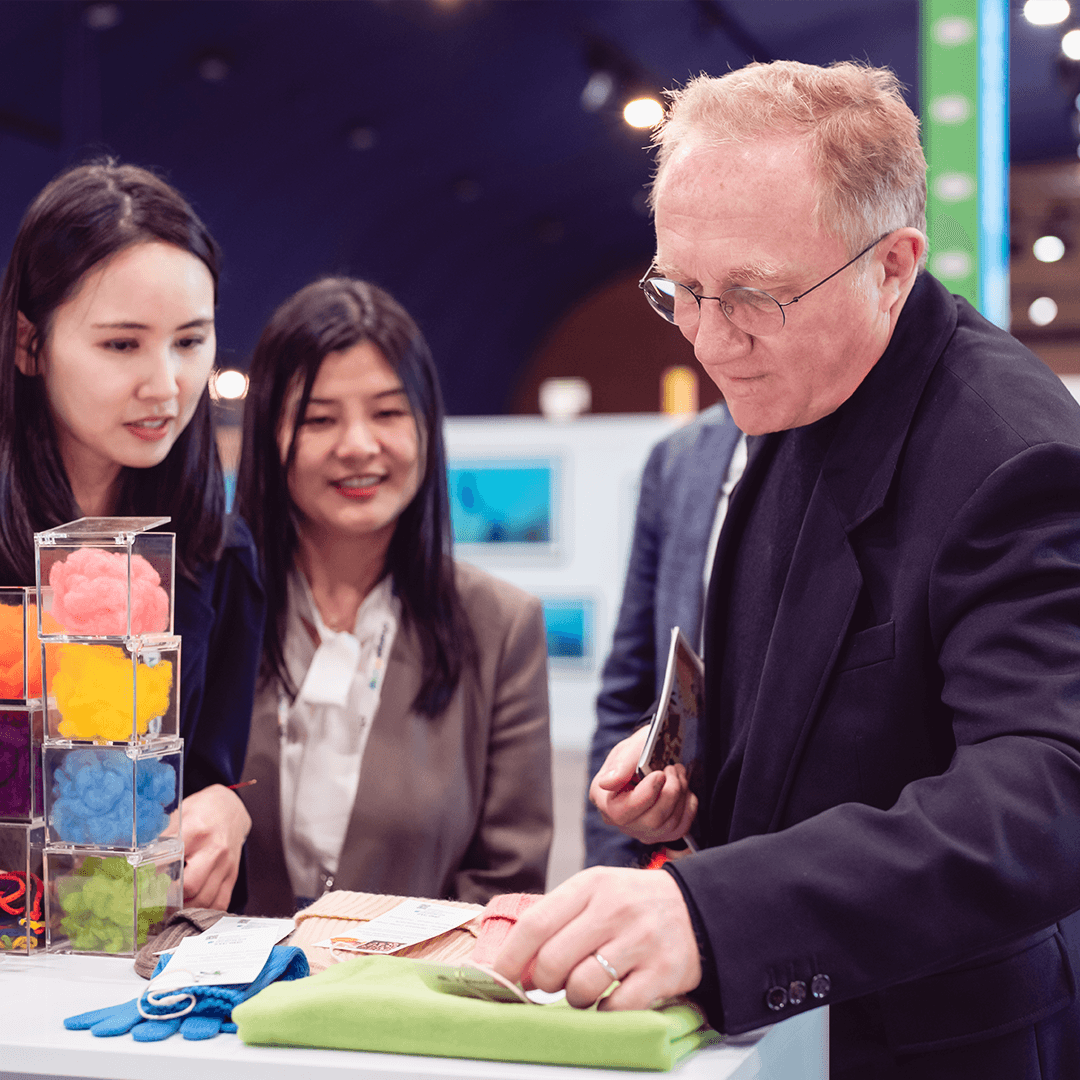
2025 marks the fourth edition of the Kering Generation Award in China and the expansion of the initiative into Japan, Saudi Arabia, and the global jewelry sector. Focusing on startups, the awards are an important, forward-looking part of the Group’s business strategy. Discover the story behind the Kering Generation Award and how it supports the Group’s decade-long pronounced commitment to sustainability.
It is Monday, October 14, 2019, in Shanghai, as Kering Chairman and CEO François-Henri Pinault steps onto stage to present the first Kering Generation Award. Under the spotlights are three Chinese start-ups, awarded for their innovations in addressing sustainability challenges in the textile value chain. The moment was also an important step for the Group itself towards its goal of ensuring sustainable innovation is embedded and accelerated in the luxury fashion industry.
François-Henri Pinault, Chairman and CEO of Kering
Six years later, the award acts as a growth catalyst for the next generation of sustainable luxury, identifying, rewarding, and supporting startups around the world, while promoting innovation and creativity and expanding Kering’s ideals.
explains Marie-Claire Daveu, Kering’s Chief Sustainability and Institutional Affairs Officer. “This will benefit not just the Group, but the entire luxury industry.”
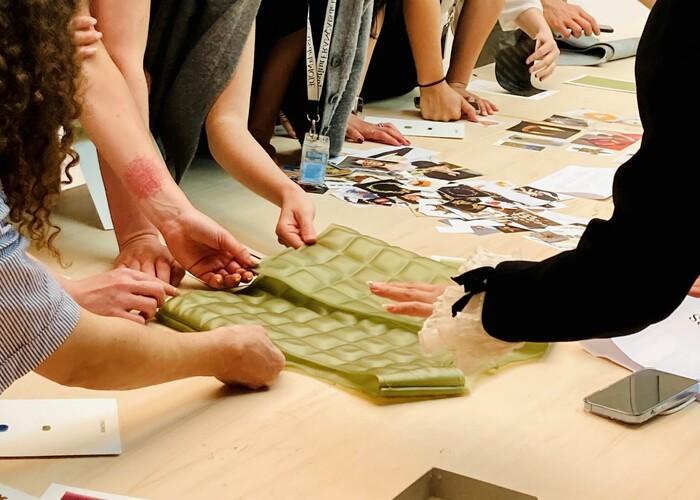
Discussions between Marie-Claire Daveu and François-Henri Pinault focused on shaping and securing a sustainable future of the luxury fashion and beauty sector, gave birth to the Kering Generation Award. Asia, an important luxury hub for both businesses and consumers and a key region for innovation, was the logical place to start.
Under Daveu’s leadership, the competition identifies startups with innovative ideas and strong potential. A jury composed of industry leaders, local Kering CEOs, and an advisory board evaluates participants through interviews and presentations. Approximately two months are allocated to select judges and participants, with the awards presented one year later during the Shanghai Fashion Week.
Three winners are chosen based on concrete criteria for their projects: innovation, potential for commercial success, technical maturity, relevance to fashion and beauty, and social and environmental impact. Each winner spends a week in Paris with Kering experts, visiting the Houses, and pitching potential funding sources. In addition, the first-place winner receives a €100,000 project grant.
The Kering Generation Award was launched in partnership with the Plug and Play Fashion Accelerator – itself a startup founded in Silicon Valley in 2016, now a well-established operator of four innovation centers in China: Beijing (headquarters), Shanghai, Chongqing, and Shenzhen.
The first edition’s three winners were selected from more than 50 applicants:
– **Melephant**, in first place, provides natural dyes from organic waste in a circular, no-waste system.
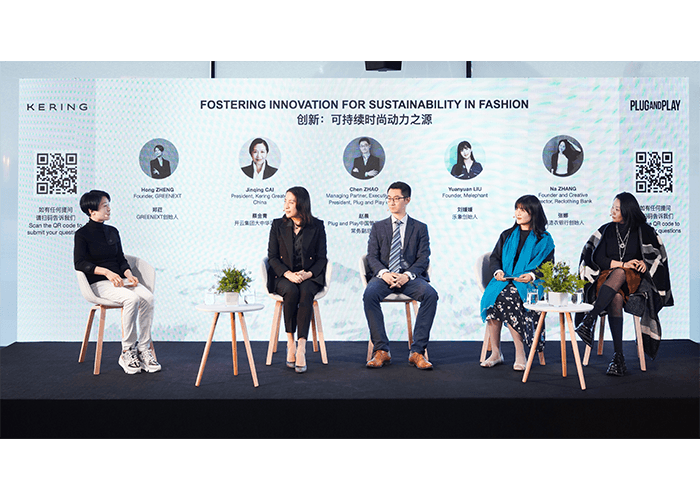
– **Heyuan** makes innovative water treatment technology for printing and dyeing.
– **FeiLiu Tech**, in third place, focuses on AI-adapted supply chain optimization that helps avoid over-production.
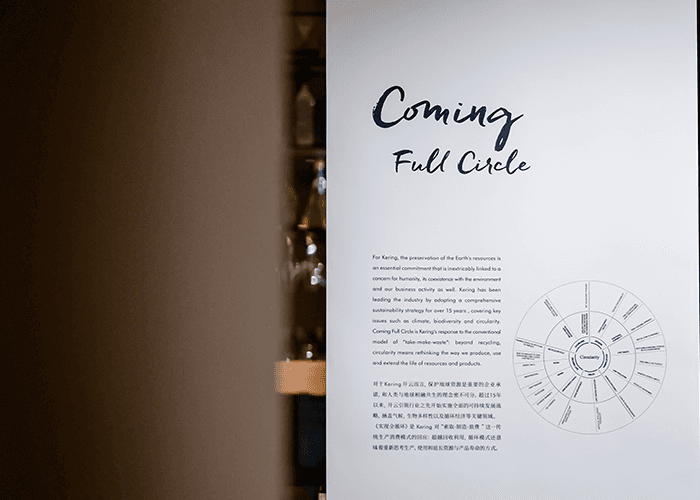
Each competition has its own theme, based on local concerns that can be solved by developing the region’s strengths. Following the award’s debut focusing on Supply Chain issues, the Kering Generation Award in China has considered “Biodiversity and Beyond,” focusing on the development of green innovation and the conservation and restoration of biodiversity in the fashion industry (2021); “Coming Full Circle,” evaluating how circularity is accomplished through the five Rs: redesign, reuse, recycle, regenerate, and recognition (2023), and “Pioneering Water Positive Impact in Luxury” (2025).
opines Anne-Gaëlle Lamort, Kering Sustainability Innovation Lead, and coordinator of the Kering Generation Award. “It involves cross-collaboration from regions or provinces, for example, who supply that resource.”
In Japan, the debut theme of “Sustainable Fashion and Beauty” addressed the key phases of product lifetime: raw materials, product manufacturing, retailing, and consumer engagement. Kering partnered with global innovation platform CIC Tokyo; nearly 130 companies applied.
The award ceremony has become a Shanghai Fashion Week staple, with its fourth awards ceremony taking place this year (2025). The award has now been launched in Japan (2024) and Saudi Arabia (2024). A separate Kering Generation Award for the jewelry industry was introduced in 2024.
A separate Kering Generation Award X Jewelry was introduced in 2024. Participants – 10 universities and academies specializing in jewelry and sustainability, as well as established start-ups in the sector – were asked to design jewelry that transforms waste into something valuable. One notable entry unveiled an Innovative Capsule using Cofalit®, the most recycled matter in existence, obtained by upcycling industrial waste through a unique vitrification process.