Editor’s Note
This article provides a clear introduction to the 17 rare earth elements, explaining their critical role in modern technology and listing their scientific names.
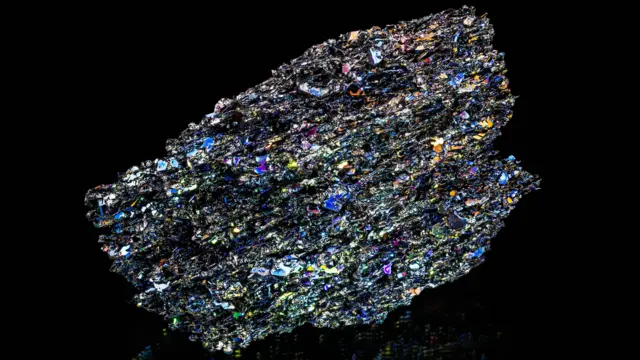
The term “rare earths” collectively refers to 17 chemically similar elements that are widely used in modern technology and industry.
These elements are essential for the production of smartphones, computers, medical equipment, and more.
They include: Sc – scandium, Y – yttrium, La – lanthanum, Ce – cerium, Pr – praseodymium, Nd – neodymium, Pm – promethium, Sm – samarium, Eu – europium, Gd – gadolinium, Tb – terbium, Dy – dysprosium, Ho – holmium, Er – erbium, Tm – thulium, Yb – ytterbium, Lu – lutetium.
These minerals are called “rare” because they are very rarely found in pure form, but deposits of some of them exist worldwide.
However, rare earths are often associated with radioactive elements, such as thorium and uranium, and their separation requires the use of many toxic chemicals, making the extraction process sometimes difficult and costly.
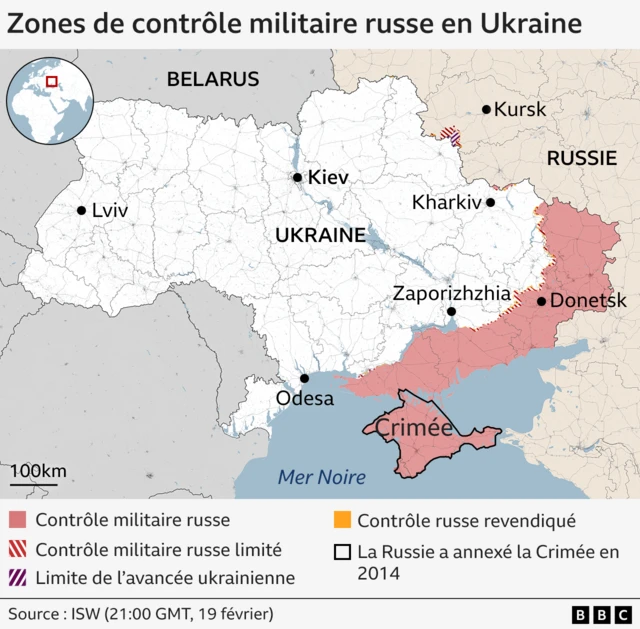
Ukraine possesses 21 of the 30 substances that the European Union (EU) defines as “critical raw materials,” representing about 5% of global reserves.
Most areas containing these elements are located in the southern part of the Ukrainian crystalline shield, mainly under the Sea of Azov. Most of these territories are currently occupied by Russia.
However, there are still promising projects in the Middle-Bouzh region, as well as in the Kyiv, Vinnytsia, and Zhytomyr regions.
Regarding other important Ukrainian mineral resources, according to Forbes Ukraine, about 70% of them are located in the Donetsk, Dnipropetrovsk, and Luhansk regions. Many of them are therefore in territories invaded and still occupied by Russia.
In addition to rare earth minerals, Ukraine also has so-called critical minerals, such as lithium.
According to the Ukrainian government, the country has about 450,000 tons of lithium reserves. Lithium is not mined, although there have been projects to do so.
Russia has occupied at least two lithium deposits: Shevchenkivske in the Donetsk region and the Kruta Balka complex deposit in the Berdyansk region.
Lithium deposits in the Kirovohrad region remain under Ukrainian control.
The United States’ interest in controlling the production of rare earths, and even critical minerals, is largely due to competition with China, which currently dominates global supply.

In recent decades, China has become a leader in both the extraction and processing of rare earth minerals, accounting for 60-70% of global production and nearly 90% of processing capacity.