Editor’s Note
This article highlights a key intervention at a recent international forum, where a World Gold Council advisor emphasized the critical need to integrate and standardize responsible practices within global mineral supply chains. The call for greater coherence between various ESG frameworks and certification systems underscores an ongoing industry challenge as demand for sustainably sourced materials grows.

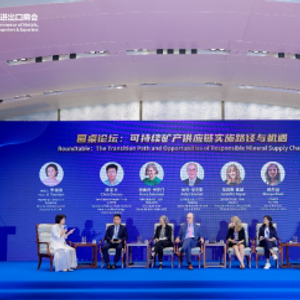
On September 24, Peter Sinclair, Senior Advisor at the World Gold Council, participated in the 2025 International Forum on Sustainable Mineral Supply Chains, hosted by the China Chamber of Commerce of Metals, Minerals & Chemicals Importers & Exporters in Xiamen. During the roundtable discussion on “Implementation Pathways and Opportunities for Sustainable Mineral Supply Chains,” Sinclair pointed out that while responsible practices and ESG standards have achieved significant mainstream adoption within the industry over the past 15 years, the current fragmented landscape of multiple standards is creating market confusion. The proposed Integrated Mining Standard aims to consolidate four major existing standards to propel the industry towards a new, more efficient and transparent phase of sustainable supply chains.
During this process, various sustainable mining standards have played a crucial guiding role. Currently, multiple systems exist in the market: some are mineral-specific, such as the well-known Copper Mark; others are broadly applicable, like the standards from the International Council on Mining and Metals (ICMM); and there are also regionally based initiatives, such as those from the Mining Association of Canada (MAC). Each of these standards has made significant contributions to advancing the industry.
This is precisely the original intent behind proposing the concept of the Integrated Mining Standard. We cannot be content with the status quo but should actively move towards the next phase—integrating several existing major standards into a more unified, clearer, and more efficient framework. As the World Gold Council, we are deeply aware of the unique position of gold in the global economy and strategic reserves, and we feel a profound responsibility in promoting industry standard-setting and policy coordination. We are not negating past efforts; on the contrary, we aim to ‘build upon this foundation to reach greater heights,’ uniting all parties to form a stronger collective force.
Standardization is not the ultimate goal but a powerful tool for elevating the overall level of the industry and building future sustainable supply chains. We firmly believe that through collaborative efforts, we can simplify complexity and jointly chart a clearer, more efficient path. This will not only empower the specific practices of each company but also contribute to the long-term sustainability of the global mineral supply chain.