Editor’s Note
This article outlines Google’s expansion of its Gemini AI tools for educators, making them free for all Google Workspace for Education users. The suite aims to streamline administrative tasks, allowing teachers to focus more on instruction.
Last year, we began bringing the capabilities of Gemini to Google Classroom to help educators use AI for their common teaching tasks. Today, we’re announcing that our suite of educational AI tools — Gemini in Classroom — will now be available to all educators with Google Workspace for Education accounts, free of charge. Gemini in Classroom includes more than 30 new features to help educators spend more of their time on the art of teaching. We’re also announcing teacher-led AI experiences for students, reflecting our continued efforts to provide more safe, responsible AI tools that also give students agency to learn in the ways that work best for them.
Starting today and rolling out globally over the coming weeks in English, educators with Google Workspace for Education accounts will be able to generate content with Gemini from a central destination in Classroom. With access to more than 30 AI tools, educators can get help kickstarting lessons, brainstorming ideas and differentiating content for students.
Early pilot participants have already been sharing how much impact Gemini in Classroom is bringing to their day-to-day.
— Mariam Fan, a language and robotics teacher.
— Mike Amante, Technology teacher.
— Chris Webb, on using the rubric generation tool for math classes.
After providing the target grade and topic, educators can get a first draft of a lesson plan and further refine it with the help of Gemini. They’ll also get suggestions for relevant videos and can generate a quiz or hook based on the lesson plan.
Educators will also be able to collaborate with Gemini using starter prompts for the Gemini app that help with common tasks. Here, Gemini provides real-world examples related to the topic they’re teaching. They continue the conversation until they’re able to find an example that will resonate with their 7th grade students.
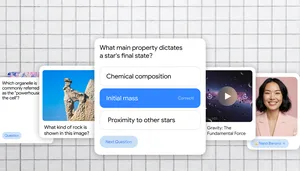
An educator can input the target grade level and topic, then get a draft of a quiz based on learning objectives. From there, they’ll be able to export the quiz to Google Forms.
We’ll continue partnering with educators to explore how Gemini can be helpful across Google Classroom – especially across assigning and grading workflows. To try out new features, such as getting suggested feedback for writing assignments, sign up for the AI track of our Google for Education Pilot Program.
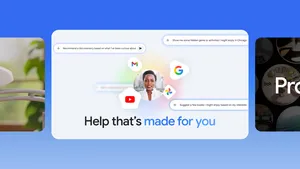
In the coming months we’ll be launching teacher-led AI experiences for students — grounded in Classroom materials. Using NotebookLM and Gems right from within Classroom, educators can create interactive experiences to empower student learning, curiosity and agency.
Teacher-led NotebookLM in Classroom: Educators can select resources from their class and instantly create an interactive study guide and podcast-style Audio Overviews for students, grounded only in the materials educators upload.
Teacher-led Gems in Classroom: Educators can create Gems, which are custom versions of Gemini, for students to interact with. After educators select Classroom resources to inform the Gem, they can quickly create AI experts to help students who need extra support or want to go deeper in their learning.
To accompany a reading assignment introducing new biology concepts, the educator included a “Quiz me” Gem to support student comprehension and understanding.
Classroom will include four Gems templates to help educators get started: Study partner, Quiz me, Brainstorm partner and Real-world connector.
Here, an educator is creating a study guide students can chat with, including a podcast-style Audio Overview with NotebookLM, to help students prepare for a test. Educators can highlight the NotebookLM resource at the top of the Classwork page so they’re always available for extra practice, support and learning opportunities.
Today, we’re equally excited to announce our plans to release some of the most requested features by educators for tracking student progress and creating unique learning experiences using Google Classroom:
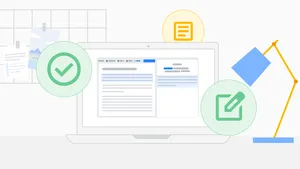
Track progress against learning standards and skills: In the coming months, educators will be able to tag coursework with relevant learning standards or skills, and view new analytics of student performance. To start, Classroom will include U.S. K12 national and state learning standards published on 1EdTech Consortium’s CASE® Network 2 (Competencies and Academic Standards Exchange®), including NGSS, ISTE, ACT, among others. Soon, Classroom will include learning standards from additional countries.