Editor’s Note
This article explores a fascinating quirk in the Pokémon games: how a simple, personal feature like nicknaming your creatures can, in very specific circumstances, have a direct impact on battle mechanics and strategy.
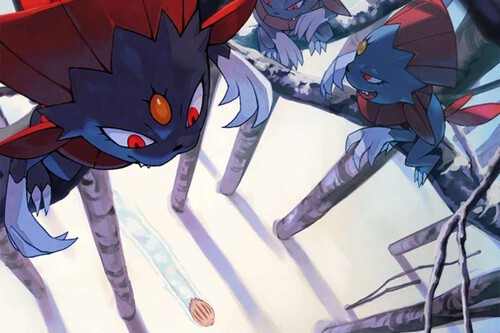
Traditionally, the mainline RPGs in the Pokémon series have allowed you to nickname the creatures you add to your collection: it’s a simple and innocent way to give them a little extra personality and truly make them your own. Game Freak has not intended to give them any mechanical value, of course, but there are some very specific instances where those names can make the difference between victory and defeat.
Years ago, for example, an instance went viral where someone named their Flying-type Arceus “Arceus-Steel” to trick the opponent into missing Ground-type attacks, to which it is immune. That was a meme that didn’t go further, but from YouTube comes a video from the channel Jimothy Cool, a true authority in the realm of Pokémon single battles, recalling an occasion where nicknames had a certain depth.
During the era of Ruby, Sapphire, and Emerald (third generation), some competitive players would nickname their Pokémon if they had a creature on their team that had learned the move Beat Up. To understand the reason, we first need to delve a bit into this latter technique, which isn’t easy because, as the content creator rightly recalls, its mechanics have varied slightly over time.
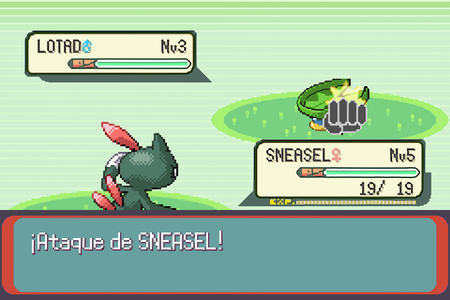
But the general idea is that when using Beat Up, all healthy Pokémon on the team—those not fainted or suffering negative effects—contribute by launching a weak attack each, using particular formulas in damage calculation. This was especially useful during the third generation because at that time, this attack ignored the defender’s Effort Values and Natures; making it a good way to pierce the powerful Blissey.
Be that as it may, the GBA games carried an unfortunate side effect for Beat Up: the text box narrated the development of Beat Up in too much detail. Specifically, it listed all the Pokémon on the attacking team that participated in its execution; so that one could read “Pikachu’s attack! Sneasel’s attack!” during the animation. And this mechanic forced people to nickname their entire team, for several reasons.
One of them is that in the third generation, the concept of Open Team Sheets (OTS) did not yet exist—a format where the two players agree to show their teams to each other before starting to play; and consequently, part of the game consists of not revealing the team’s Pokémon until it is strictly necessary: whoever knows the opponent’s tools knows how to force them into unfavorable switches or manipulate the course of the game.
The mechanics of Beat Up encouraged gen3 OU players to nickname their Pokémon to avoid accidentally revealing their entire team to the opponent, but this in turn creates another similar situation where not having nicknames also tells your opponent that none of your Pokémon know Beat Up, and therefore they have a free pass to play Blissey without fear of facing this threat. Because of this, both those who use Beat Up and those who don’t ended up giving random nicknames (even if they were just numbers) to their creatures.
Smogon, the fan community dedicated to regulating the popular OU format, ended up cutting the Gordian knot and directly patching the problem in their simulator to prevent everyone from having to nickname their Pokémon because of a move that wasn’t even that common in the first place. In later generations, Beat Up has fallen out of popularity.