Editor’s Note
This article explores the unique geochemical processes that form skarn deposits, highlighting their significance as sources for a diverse range of metals and gemstones.
The extra chemistry involved in creating skarn deposits makes them a different story; there you can find decent concentrations of elements like tin, tungsten, manganese, copper, gold, zinc, lead, nickel, molybdenum, and iron. Apparently, the name comes from what they called waste rock in an old Swedish iron mine. The interesting chemistry—remember: acidic fluid meeting basic, carbonate rock—also makes skarn deposits a good place to look for certain gemstones, like garnet, tourmaline, topaz, beryl, and even corundum, the mineralogist’s name for rubies and sapphires. Just as quartz comes in many colors depending on what trace elements are contaminating the basic crystal of SiO₂, corundum, or Al₂O₃, can take different colors as well. Rubies are red due to chromium contamination, for example.
In the last edition of our ongoing series on how planets get ore—those wonderful rocks rich in industrial minerals worth mining—we started talking about hydrothermal fluid deposits. Hydrothermal fluid is the very hot, very salty, very corrosive water that sweats out of magma as it cools underground and under pressure.
We learned that if the fluid stays in the magma chamber and encourages the growth of large crystals there, we call that a pegmatite deposit. If it escapes following cracks in the surface rock, it creates the characteristic veins of an orogenic deposit. What if the fluid gets out of the magma chamber but doesn’t find any cracks?
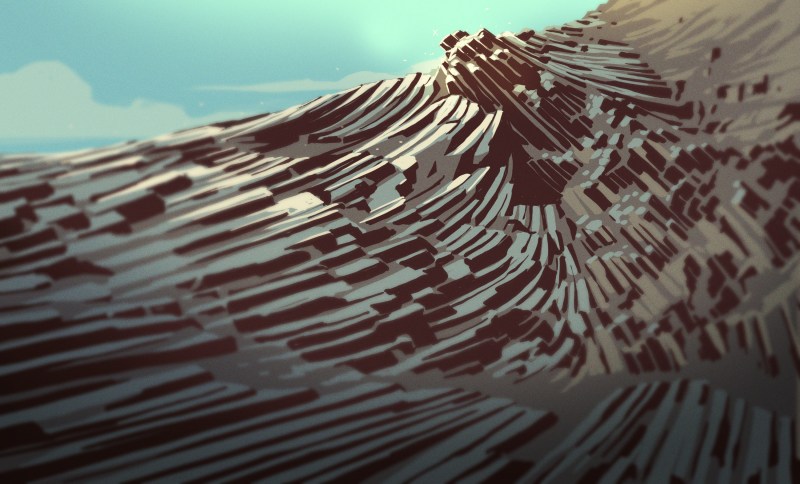
Perhaps the surrounding rock is slightly permeable to water, and the hydrothermal fluid can force its way through, eating away at the base rock and remineralizing it with new metals as it goes. That can happen! We call it a porphyry deposit, particularly in igneous rock. It’s not exactly surprising that a hydrothermal fluid would find igneous rock: the fluid is volcanic in origin, after all, just like igneous rock. (That’s the definition of igneous: a rock of volcanic origin.) Igneous rocks, like granite, tend not to be terribly reactive, so the fluid can diffuse through relatively unchanged.
Igneous rocks aren’t the only option, though. If the hydrothermal fluid hits carbonates, well, I did mention it’s acidic, right? Acid and carbonates are not friends, so all sorts of chemistry happens, such that geologists give the resulting metamorphic formation a special name: skarn. Though similar in origin, skarns are often considered a different type of deposit, so we’ll talk about the simpler case, diffusion through non-reactive rocks, before getting back to the rocks that sound like an 80s fantasy villain. (Beware Lord Skarn!)
In terms of ore deposits, humans have only started to exploit porphyry deposits relatively recently. Quite a few metals can be laid down, but a mine digging into a porphyry deposit is almost certainly chasing copper, to feed the industrial machine’s voracious appetite for the red metal. There’s generally going to be gold mixed in, and make no mistake; it’s not going to get left in the ground, but these are first and foremost copper mines.
Indeed, the gold, and lead, zinc, silver, and molybdenum that can also be present, are too diffusely mixed in with the copper to be left alone even if you wanted to. The copper, too, is very diffuse; these ores are low grade, with concentrations better measured in ppm than percent. That’s a consequence of the hydrothermal fluid spreading out through the rock, rather than concentrating its metals inside small veins.
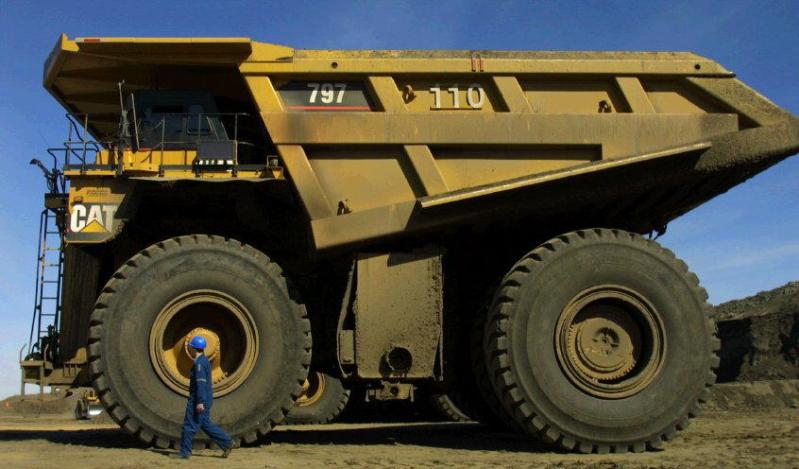
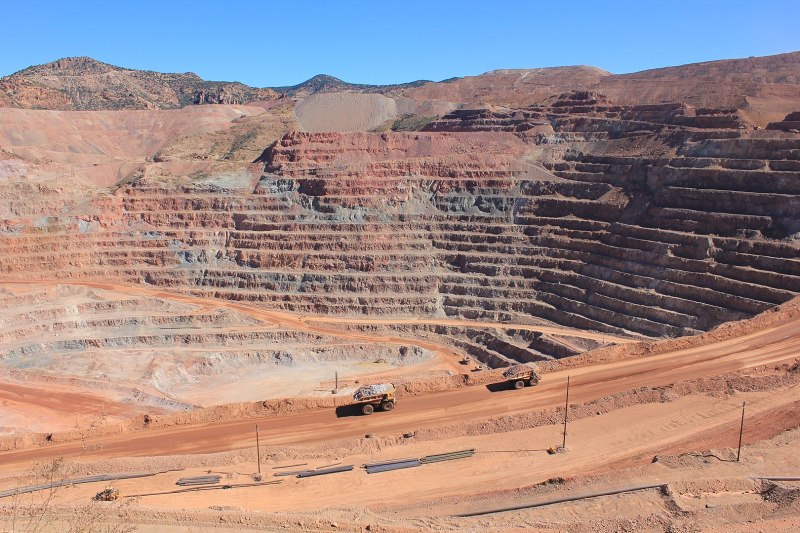
It’s the low grade that explains why nobody bothered to call porphyry deposits ore until relatively recently: without explosives and powered earth moving equipment, the economics make zero sense. Mines in porphyry deposits tend to look like the one pictured: huge open pits, with equally huge equipment.
That isn’t to say these deposits were completely unknown; the stone that gives the deposits its name, porphyry, was quarried in antiquity. The difference between mining and quarrying in this context is that when you mine an ore, you’re going to refine it into something else; when you quarry rock, you’re going to use it as is. So an operation taking granite out of the ground and cutting it into slabs for countertops is a quarry; if they crush it and start doing chemistry to extract lithium, then it’s a mine.
Indeed, the birthing chambers in the Imperial Palace at Constantinople were walled in purple porphyry. The palace and the Porphyra, as it was called, are long gone, but an echo remains in the English language phrase “born to the purple”. To be born in the purple room was to be born into power, wealth, and privilege, which is how we use the phrase today. Still, for all that power, the Roman Empire couldn’t hope to do anything with porphyry other than use it as wallpaper or in sculpture. The metals were too diffuse; thus it was not ore.

There’s a decent chance we might find porphyry deposits on other planets, particularly Mars—but since other types of deposits with more concentrated ores will also be available, it’s not likely they will be mined for a very long time. As on Earth, simple economics will demand that any potential settlers “high grade” the planet—that is, take the higher grades of material first. If there were still large chunks of native copper, nobody would be building hundred-tonne trucks to dig up porphyry.