Editor’s Note
As demand grows for electronics that can withstand extreme conditions, synthetic diamond emerges as a promising material due to its superior thermal and electrical properties. This article explores its potential to overcome the limitations of conventional semiconductors in high-power applications.
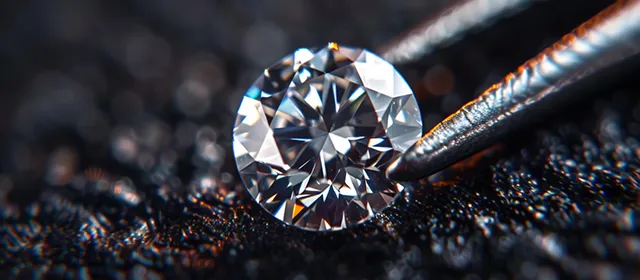
Demand for electronic and photonic devices that operate at high power densities, high frequencies, high temperatures, and in harsh environments continues to intensify. Conventional semiconductor materials such as silicon, silicon carbide (SiC), and gallium nitride (GaN) face thermal, breakdown, or reliability limits as power scales upward. Synthetic diamond offers a compelling alternative because of its exceptional thermal conductivity, wide electronic bandgap, and optical transparency across wide spectral ranges. Recent advances in fabrication, integration, and material control have accelerated its viability in high-power electronics and photonics.
Synthetic diamonds, typically grown by chemical vapor deposition (CVD) or high pressure high temperature (HPHT) techniques, combine exceptional thermal, electrical, and optical properties. Synthetic diamond heat spreaders and substrates already find use in electronics for high power lasers and RF devices.
Thermal conductivity of diamond exceeds 2000 W/m·K in high purity single crystals, significantly outperforming copper or other heat sink materials. This high thermal conductivity enables rapid removal of heat at the device level, reducing junction temperature and allowing higher power densities.

Diamond’s wide bandgap (≈5.5 eV) supports high breakdown fields and low leakage currents at elevated temperatures. Combined with high carrier mobility (especially for holes in doped diamond) and excellent dielectric strength, these traits enable devices that sustain high voltages, operate at elevated temperatures, and maintain low off-state conduction. The rise of diamond-based transistors in high-power electronics springs from precisely these attributes.
Optical transparency of synthetic diamond spans from ultraviolet to far infrared, making it favorable for photonic windows, lenses, and optical substrates in high-power laser systems or photonics architectures. Its mechanical strength, chemical inertness, and resistance to radiation also make it suitable in extreme or harsh environments.
Photonics integration benefits also from quantum-grade diamond films. In 2025, IonQ announced a breakthrough in synthetic diamond thin films that are quantum-grade and compatible with semiconductor fabrication. This permits diamond to integrate into photonic interconnects and devices in quantum systems.
Integration compatibility with existing semiconductor processing, a need for wafer bonding, packaging, lithography compatibility, and yield management presents engineering challenges. IonQ’s reported progress in bonding synthetic diamond films onto standard substrates like silicon and silicon nitride represents a step forward in integration.
Although synthetic diamond excels at thermal conduction, devices still require external cooling, package design, and thermal interface management. The design of heat sinks, packaging, and thermal paths must account for the diamond substrate’s mechanical and thermal expansion properties.

IonQ’s 2025 announcement of synthetic diamond thin films compatible with semiconductor foundry workflows signals momentum in photonic and quantum integration. Diamfab, a French startup, argues that diamond offers a superior platform for high-power devices and decarbonization initiatives, highlighting Europe’s push into semiconductor sovereignty.
Edge, RF, and power conversion markets, where thermal or voltage stresses limit conventional materials, are likely early adopters. Applications such as high frequency amplifiers, space electronics, power inverters for EVs, and high power lasers may drive demand. Standardization in diamond semiconductor processes, interface designs, packaging protocols, and reliability testing will reduce adoption friction. Consortia and government programs such as LADDIS help build infrastructure and credibility.
Integration with photonic platforms, quantum devices, and optoelectronics suggests broader application contexts. Diamond’s plasmonic, nonlinear optical, and quantum center properties may fuel new hybrid devices combining electronics and photonics. Life cycle cost analyses will factor reuse, recycling, and sustainability of synthetic diamond substrates. As supply chains scale, cost curves may tilt in favor of diamond for high-end applications.
Synthetic diamonds offer a combination of thermal, electrical, and optical properties unmatched by conventional materials, presenting a compelling option for next-generation high-power electronics and photonics. Their integration in power switching, RF amplification, high-power lasers, and photonic substrates can enable higher performance, stronger reliability, and operation under demanding conditions. Ongoing challenges in substrate quality, doping, interfacial integration, and cost must be resolved. Recent advances such as IonQ’s diamond films, plasmonic boron-doped diamond research, and Fraunhofer’s nanomembranes illustrate progress. As fabrication maturity increases, synthetic diamond technologies may transition from specialized niche to mainstream component in advanced electronics and photonic systems that push the limits of power, speed, and integration.

According to Kings Research, the global synthetic diamond market size was valued at USD 19.50 billion in 2023 and is projected to reach USD 28.66 billion by 2031, growing at a CAGR of 5.01% from 2024 to 2031.