Editor’s Note
This article explores how Trujillo, Spain, is poised to become a global hub for producing synthetic diamonds for semiconductors, a key sustainable alternative to silicon.
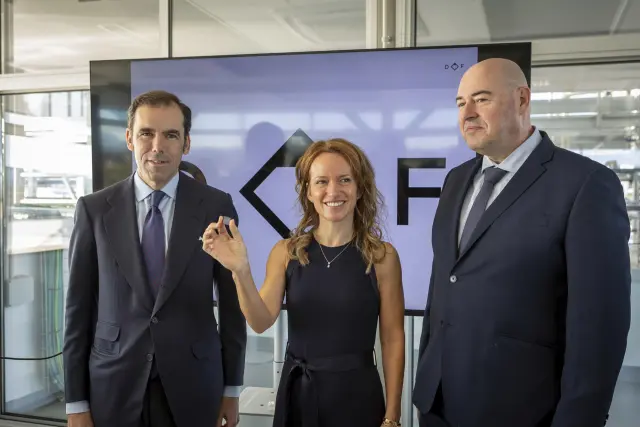
The town of Trujillo in Cáceres is set to become the world’s largest supplier of diamonds for chips, a sustainable alternative to silicon.
If we talk about beautiful places in Spain, Trujillo was already on the map. This municipality in Extremadura, between the city of Cáceres and the Monfragüe National Park, is a beautiful town full of artistic treasures. Now Trujillo is going to be on the world map. It is set to become the world’s largest supplier of diamonds for chips.
With a total investment of 2.35 billion euros, the town in Cáceres will host a chip component factory. This is the result of an operation involving the Spanish Society for Technological Transformation (SETT) and the American company Diamond Foundry, in which actor Leonardo DiCaprio is a minority shareholder.
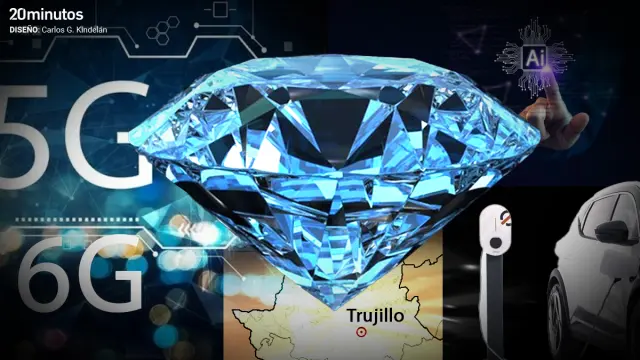
Diamonds for chips are not natural diamonds; they are synthetic. While the former are produced through geological processes, synthetics are achieved through technological processes. In Trujillo, these lab-grown diamonds will be manufactured, destined for the semiconductor industry, which is essential for technologies such as Artificial Intelligence, 5G and 6G networks, and electric cars.
The plant in Cáceres will produce synthetic diamond wafers, presented as a sustainable alternative to silicon in the semiconductor industry. This material offers the best performance in high-voltage, high-temperature, and high-frequency applications due to its electrical and thermal properties.
But before this, Trujillo already works for the jewelry and industrial sectors. The Extremaduran factory is already producing monocrystalline diamond ingots for these uses.
Mined diamonds involve the exploitation of natural resources. In contrast, lab-grown diamonds achieve that same mix of beauty and hardness but in a more sustainable way, without, in principle, harming the environment (the energy used by the Diamond Foundry factory in Trujillo is 100% green).
The process begins with a small carbon seed, a plate measuring 20 x 20 mm and 0.2 mm in height. This is subjected to extreme conditions of heat and pressure, triggering a growth process that culminates in the formation of a diamond.
The Mohs scale is a tool for measuring the hardness of minerals and gemstones, created in 1812 by geologist Friedrich Mohs.
Known for his environmental activism, Leonardo DiCaprio is one of the main investors in Diamond Foundry. At 24, he launched the foundation to preserve the planet’s biodiversity that bears his name. It is no coincidence that in 2006 we saw the actor in the film ‘Blood Diamond,’ which dealt with conflict diamonds, precious stones found within war zones and sold to finance combat. DiCaprio has supported other environmentally conscious projects in Spain, such as the solar energy startup Solarmente.
Synthetic diamonds are also known as CVD diamonds, chemical vapor deposition. In this method, a diamond seed is placed in a vacuum chamber with carbonaceous gases that, when heated to extreme temperatures, trigger the formation of diamond crystals.
But there is another method for their manufacture, HPHT, High Pressure, High Temperature. Similar to the natural diamond formation process, it applies high pressures and temperatures to a diamond seed, promoting the crystallization of carbon and the formation of a diamond.
Both CVD and HPHT have improved the quality of lab-grown diamonds and reduced their cost. In nature, a diamond takes between 1,000 and 3,300 million years to form. Synthetics are produced in a month.
At that temperature, the carbon seed grows until it reaches the desired size. Then, all that remains is cleaning and polishing, and we have the diamond.

The factory positions Spain and the region of Extremadura at the forefront of advanced semiconductor materials technology, attracting significant investment and creating high-tech jobs. It represents a strategic shift towards sustainable and high-performance alternatives in a critical global industry.