Editor’s Note
This overview highlights the essential role of packaging in the jewellery industry, focusing on protection, presentation, and brand value. The market’s growth reflects broader trends in retail and consumer experience.
Jewellery box packaging refers to the small, elegant containers used to protect and display jewellery. These boxes are made from materials like cardboard, wood, or plastic. They are designed to keep items safe, enhance presentation, and offer a luxury feel. Many are custom-designed for branding or gifting.
The jewellery box packaging market includes companies that design, produce, and sell packaging for jewellery items. Growth is supported by rising jewellery sales, gifting trends, and demand for premium packaging. The market also includes sustainable materials and customized packaging to suit branding needs in retail and e-commerce.
The jewellery box packaging segment serves markets like fine jewellery, watches, and designer accessories. As global e-commerce grows, packaging demand is rising. This trend boosts the need for premium, durable packaging.
The jewellery box packaging market is evolving with new designs, materials, and branding needs. Luxury brands want boxes that reflect elegance and protect high-value items. At the same time, packaging must also be sustainable. These factors are creating more opportunities for innovation and growth across this niche market.
On the flip side, competition is increasing. Many suppliers now offer similar styles and materials. To stand out, packaging firms focus on custom shapes, recyclable components, and luxury textures. Without such features, it’s harder to compete. Therefore, creative design and material sourcing are becoming business essentials.
Locally, cities with high luxury sales—like Paris or New York—are seeing faster shifts to eco-friendly boxes. These regions influence trends across the packaging sector. Meanwhile, smaller boutique brands are also adopting stylish and sustainable packaging to attract conscious consumers. This shows how change is happening at every scale.
Rigid Boxes dominate with 38.4% due to their strong structure, premium appearance, and wide use in luxury packaging.
In the Jewellery Box Packaging Market, product type plays a major role in value perception and brand image. Rigid boxes lead this segment because they offer high durability and a luxury feel. They are widely used by premium jewelry brands to protect valuable items and create an elegant unboxing experience.
Many high-end stores use custom rigid boxes with velvet or satin interiors to enhance the presentation. This adds perceived value to the jewelry and encourages repeat purchases. Consumers shopping for engagement rings or expensive watches often expect this type of packaging. As such, rigid boxes have become a standard in luxury and mid-range jewelry categories.
Drawer boxes appeal to modern buyers who prefer convenience and reusable packaging. Hinged boxes, though less flexible in design, still have a strong presence in traditional segments. The “Others” category includes eco-friendly boxes and pouch-style formats, which are gaining attention in niche markets that focus on sustainability and minimalist packaging.
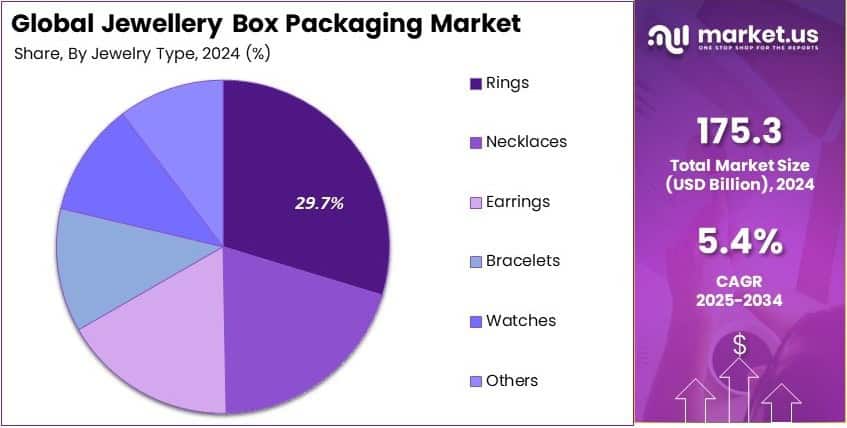
Jewelry box packaging for rings holds the largest market share due to the high frequency of purchase and gifting occasions. Rings are among the most commonly bought jewelry items, both for personal use and special events. As a result, the demand for small, elegant, and sturdy ring boxes is consistently strong.
Retailers often use luxurious packaging to reflect the importance of the item inside. Many ring boxes come with cushions or clips to secure the piece, especially for diamond or engagement rings. In global markets like the U.S. and India, where weddings and personal milestones drive frequent ring purchases, packaging becomes a key part of branding.
Necklaces follow closely, requiring larger and longer boxes with soft interiors to prevent tangling. Earrings are typically packaged in compact boxes with inserts to keep the pair secure. Bracelets need boxes that support the shape and reduce friction during transport, making quality packaging important for protection.
Watch packaging often uses large, protective boxes with cushion support and branding. The “Others” category includes brooches, anklets, or nose pins. These need specific packaging styles, but the lower sales volume keeps this group’s share smaller.
Retail Stores dominate with 44.2% due to direct customer interaction and the need to offer visually appealing packaging at the point of sale.
Retail stores lead the end-user segment of the Jewellery Box Packaging Market because packaging influences buying decisions. In-store purchases often rely on instant impressions. Shiny boxes, elegant finishes, and luxurious textures attract attention and help justify premium pricing.
Packaging is especially important for impulse buyers or for gifting purposes. Jewelry retailers use this as a tool to enhance brand experience and customer satisfaction. In high-traffic markets such as malls or tourist locations, attractive packaging increases foot traffic and encourages social sharing, which indirectly supports marketing.
