Editor’s Note
This article details the launch of Quimbaya Gold’s drilling program at its flagship Tahami project in Colombia. The site’s location in a proven mining district underscores its significant exploration potential.
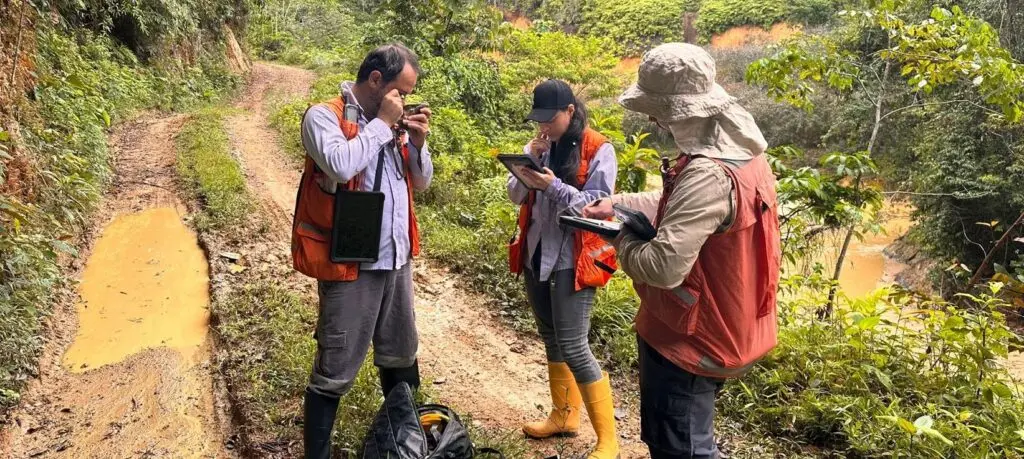
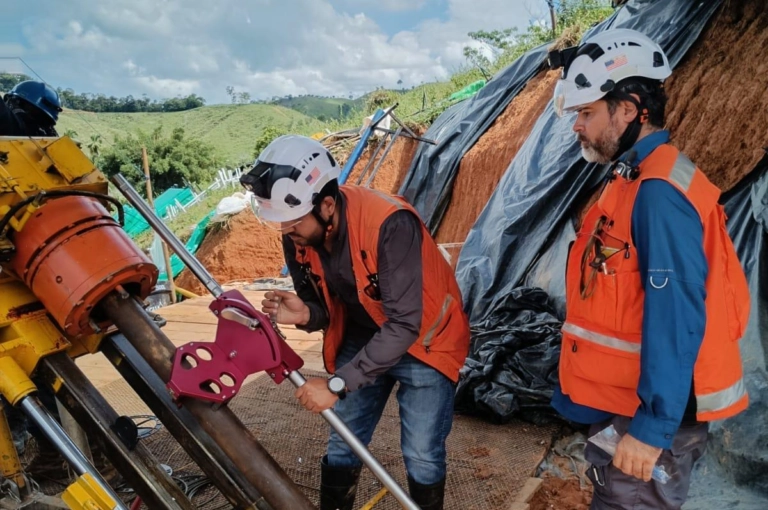
Amidst this powerful natural backdrop, the geologists of the gold explorer Quimbaya Gold are preparing a drilling program. The program is for the exploration of the most important project in its portfolio: Tahami. The 7,087-hectare program is located in the Antioquia region of Colombia and has attracted the attention of exploration experts.
One reason for this is the relevant neighborhood: Approximately 25 historical and current mines are located nearby. Aris Mining operates the Segovia mine in the vicinity, which produced 220,000 fine ounces of gold in 2023. The deposit beneath Segovia is estimated to contain 3.6 million ounces.
The Quimbaya Gold exploration team believes that Tahami also has the potential for a large deposit, based on geological similarities with its neighbors. Rock samples have already yielded promising gold grades.
However, the tide is gradually turning: The importance of mining for the national economy is increasingly coming to the government’s awareness. An auction for copper mining projects is set to start in May, as Alvaro Pardo, President of the government’s National Mining Agency, recently announced.
At the auction, a total of 17 exploration and production blocks in the departments of Antioquia, Cesar, and La Guajira will be offered.
But it’s not just in copper mining where things are happening: Last year, companies submitted 293 applications for the extraction of copper, gold, and other metals, surpassing the number of applications for coal projects, which traditionally play a major role in Colombia. Those submitting a license application anticipate success: The high number of applications is an indication of growing exploration activity in the country.
Recent success reports from other exploration and mining companies in the country fit the picture of a cautious but determined upswing. The Canadian junior exploration company Denarius Metals, for example, expects its first production from its Zancudo gold-silver project as early as the second quarter.
Last year, the company made significant efforts to advance the development and construction of the project, secure the required mining license, and obtain approval for the Environmental Impact Study (EIS). An eight-year contract with Trafigura for the Zancudo gold-silver concentrate has already been signed.
Outcrop Silver & Gold caused a stir at the exploration level at the beginning of the year. Step-out drilling south of the main resource at its Santa Ana project in central-western Colombia yielded grades of up to 1,913 grams of silver per tonne.
Investors are increasingly receptive to Quimbaya Gold’s venture. Not only has the share price risen by almost 30% in the past six months. The company also successfully completed a multi-stage capital increase totaling USD 3 million in February – no small feat for a junior explorer valued at just under EUR 7 million in the current market.
The management of Quimbaya Gold is banking on the potential of Colombia and specifically the Antioquia region. The country’s two largest gold mining projects, Segovia and Buritica, are located in the region. Antioquia accounts for 50% of Colombian gold mining – and offers substantial advantages for exploration companies with a well-developed road network and access to electricity and water.