Editor’s Note
This article examines why Antwerp, a historic global diamond hub, has become a focal point for international law enforcement following high-profile thefts. Its unique position in the trade network makes it a key location for both legitimate commerce and illicit activities.
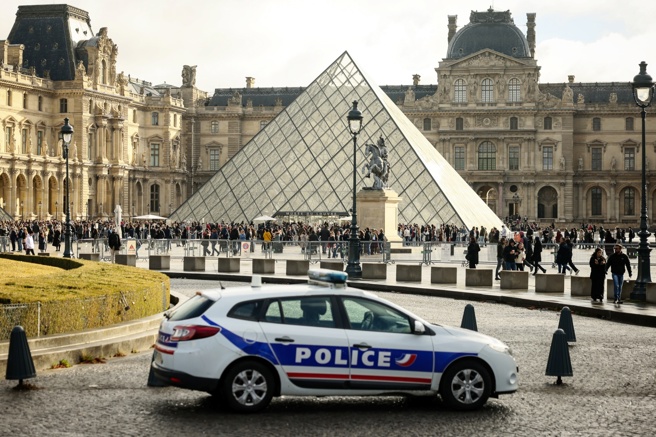
Following the theft of crown jewels worth over $100 million (approximately NT$3.05 billion) from the Louvre in France, French police have notified Belgium to closely monitor the movements of these jewels, suspecting they may be fenced in Antwerp. Why is Antwerp of particular concern? What makes this European port city, located 350 kilometers from the Louvre, so special?
According to Reuters, citing two Antwerp police officers, Belgian authorities received the alert from France via the ‘Pink Diamond’ network just hours after the Louvre heist on October 19. Pink Diamond is a channel supervised by Europol, connecting investigators specializing in high-value theft cases.
Upon receiving the French alert, Antwerp police immediately mobilized. An Antwerp officer stated:
Since the 16th century, Antwerp in northern Belgium has been a global center for diamond trade. Last year, the transaction volume of local diamond wholesalers approached $25 billion (approximately NT$764.2 billion). However, over the past 30 years, another, difficult-to-control underworld has gradually developed—a network of hundreds of gold and jewelry shops primarily operated by Georgians. While most conduct legitimate business, some provide a pipeline for fencing stolen gold and jewelry for criminals across Europe.
These Georgian merchants mostly settled in Antwerp after the dissolution of the Soviet Union in the 1990s. Many have backgrounds in metal trading and maintain deep connections with Antwerp’s diamond traders. Currently, there are about 300 jewelry shops outside Antwerp’s famous diamond district. Police reveal that a quarter of them are involved in fencing stolen goods.
The local jewelry scene presents two contrasting pictures: one consists of legitimate businesses struggling to survive due to G7 bans on Russian gems and price pressures from lab-grown diamonds; the other consists of shops whose owners drive top-tier Mercedes-Benz S-Class cars, continuously open new stores, and invest in overseas properties. Police say these jewelers are likely involved in fencing: “There are clearly two worlds here.”
Furthermore, theft crimes in France have become a steady income source for Antwerp jewelers. For example, in 2015, after US socialite Kim Kardashian was robbed in her Paris hotel room, the团伙 sold her gold and diamonds in Antwerp for over €25,000 (approximately NT$890,000). These items remain unrecovered, with French and Belgian police believing they were purchased by unscrupulous Georgian operators.
Following this major case, joint French-Belgian investigations revealed a criminal pipeline between the two countries. The typical method involves Balkan thieves handing stolen goods to intermediaries in France, who then deliver them to buyers in Antwerp, most of whom are Georgian.
Yakout Boudali, intelligence head of the French Gendarmerie’s Central Office for the Fight Against Itinerant Delinquency, noted that in two out of three cases her unit was involved in, the unscrupulous Antwerp operators held Georgian nationality or dual citizenship. However, she warned against stigmatizing Georgians or Antwerp, emphasizing that criminal groups within Romania are also increasingly active.
There is evidently a standard operating procedure for fencing goods in Antwerp. Police point out that selling stolen items locally is quick and convenient. Jewelers inspect the gold, gems, and diamonds, make an offer, and pay. Once the deal is done, the stolen goods quickly disappear, with gold being melted down into 1-kilogram ingots the size of a mobile phone.
However, police also suggest that the Louvre’s stolen treasures might be a hot potato even for these unscrupulous operators. The jewels are primarily set in silver, not gold, giving them low melt value. The large sapphires and diamonds are highly recognizable. Within Antwerp’s relatively small circle of diamond cutters and polishers, few are willing to handle such赃物. There are also few buyers specifically targeting pearls.