Editor’s Note
The following account details one of the most audacious and technically sophisticated heists in history—the 2003 Antwerp diamond vault robbery. It serves as a stark reminder that no security system, however formidable, is entirely beyond challenge.

The heist occurred in the heart of Antwerp’s diamond district, an area of just three streets that concentrates one of the world’s largest diamond transactions. There, in the basement of the World Diamond Centre, was a vault considered impregnable: a 30-centimeter-thick steel door, magnetic sensors, heat, motion, sound detectors, and seismic alarms designed to activate at the slightest intrusion attempt.
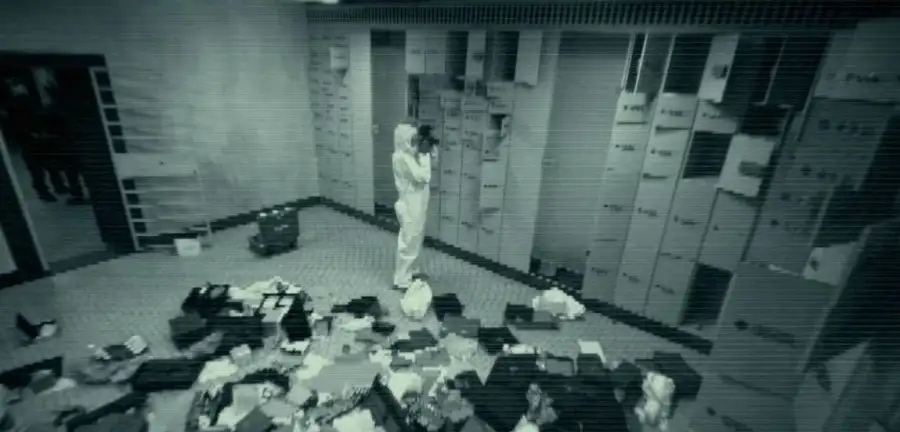
On the morning of February 17, 2003, Belgian detective Patrick Peys received the call that would define his career. The vault had been breached. Over a hundred safe deposit boxes were open and empty. Diamonds, jewels, gold, and money were scattered on the floor. The most baffling fact: no alarm had been triggered.
The scene revealed an unusual level of technical knowledge. The thieves had neutralized sensors with rudimentary but effective methods, such as covering heat detectors with insulating materials mounted on a simple broomstick. They had also manipulated the door’s magnetic system without triggering any signal.
For days, the investigation progressed without clear leads. The building’s security cameras had been stolen, and there was no visual record of the heist. Investigators felt they were dealing with criminals out of the ordinary.
The breakthrough came from an unexpected place: a forest near a highway, commonly used as an illegal dump. There, a retiree named August Van Kamp, known for reporting abandoned waste, found bags containing shredded documents, remnants of banknotes, and tiny green diamonds. Van Kamp walked the area daily with his pet ferrets and immediately noticed this trash was not ordinary.
The police arrived immediately. What seemed like a minor find became the first crack in the criminal plan.
Among the debris appeared a document with a key name: Leonardo Notarbartolo, an Italian diamond merchant with an office in the World Diamond Centre itself. Upon reviewing the vault, investigators noticed a disturbing detail: Notarbartolo’s safe deposit box was one of the few that had not been forced open.
The investigation revealed his office was empty and that, despite being listed as a merchant, he had never conducted any real buying or selling operations. Everything indicated his presence in Antwerp had been part of a long reconnaissance phase.
Confirmation came when, after locating him, police raided his home. There they found a rolled-up carpet containing the same tiny green diamonds found in the forest and at the robbery scene.

Another decisive element emerged from the same trash bag: a half-eaten salami sandwich and a receipt from a nearby supermarket. This clue led to an external security camera—one of the few that had not been stolen—where Ferdinando Finotto, a criminal with a record, was identified.
Finotto was part of a group known as the “School of Turin,” a network of specialized criminals, each an expert in a specific technique: alarms, locks, forged keys, or escape logistics. Their nicknames—the Genius, the Monster, the Speedy, and the King of Keys—seemed straight out of a detective novel, but behind them were years of experience in high-level robberies.
DNA analysis, phone records, and movements prior to the robbery allowed the reconstruction of the gang’s operation and hierarchy, with Notarbartolo as the mastermind.
The trial did not take place until 2015. Three gang members were sentenced to five years in prison, and Notarbartolo received a ten-year sentence as the group’s leader. The “King of Keys,” responsible for forging the vault’s master key, was never captured.

The diamonds never appeared. Investigators believe they were taken to Italy and gradually reintroduced into the legal market, a known possibility in the precious stone trade world.