Editor’s Note
This article highlights a significant development in Uganda’s economic landscape. The opening of the Wagagai gold mine, backed by Chinese investment, marks a strategic push by the nation to leverage its mineral wealth and establish a stronger position in Africa’s gold sector.
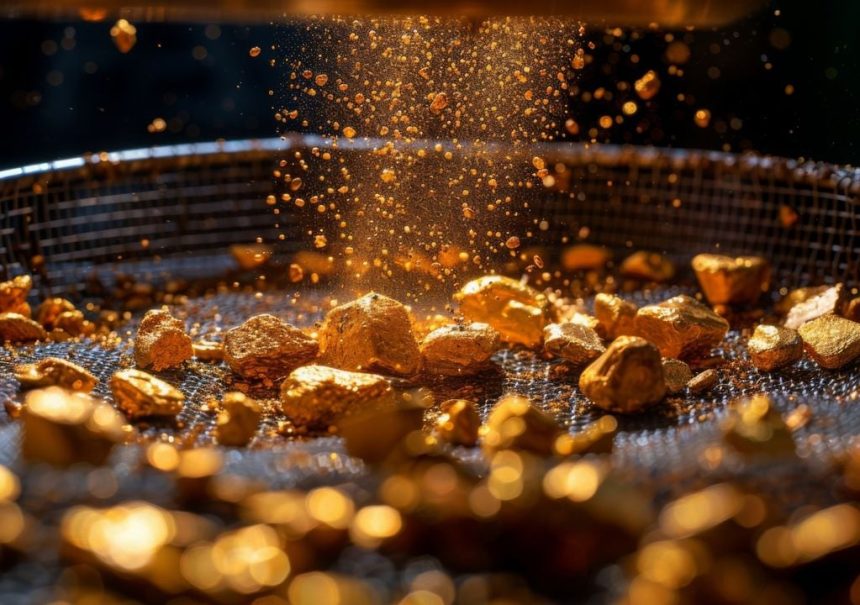
When Ugandan President Yoweri Museveni cut the ribbon at the Wagagai gold mine in the eastern Busia region, he was not just celebrating the launch of a mining facility; he was celebrating a turning point for his country. This ambitious $250 million project, financed by Chinese capital, represents a milestone in the national strategy to transform Uganda into a key player within the competitive African gold market.
For decades, Uganda has possessed a variety of mineral resources—copper, cobalt, iron, among others—without successfully converting them into a robust source of economic growth. Its gold production has been dominated by artisanal and small-scale operations, with limited refining capacity and minimal contribution to the formal economy. But the story changes with the entry of Wagagai Mining (U) Limited, which has already begun processing 5,000 tons of ore per day and expects to produce nearly 1.2 tons of refined gold per year with 99.9% purity.
The contrast with previous production is staggering: in 2023, Uganda only managed to generate 0.0042 tons of domestic gold. This new operation multiplies that figure by almost 300, opening the door not only to greater tax revenues but also to a network of industrial and social benefits. For Museveni, the message is clear: without added value, mineral resources do not realize their true potential.
The Busia mine is not just a source of gold; it is also a geopolitical symbol. Chinese involvement reinforces Beijing’s growing presence in Africa, a relationship that has been both praised for its investment capacity and criticized for the economic dependency it can generate. In this case, however, the Chinese presence also brings technology, infrastructure, and a refining plan that will prevent Uganda from exporting raw gold, as it has historically done.
In 2024, gold exports accounted for 37% of the country’s total export revenue, generating $3.4 billion, according to the central bank. However, most of that gold did not come from Ugandan mines but was re-exported. With the Wagagai operation, Uganda is positioning itself to change this dynamic and become a net producer of gold, not just a trading corridor.
The bet does not stop there. The revenue generated by the gold will be channeled into strategic infrastructure. Museveni explicitly mentioned the development of power plants and the standard-gauge railway currently under construction with a budget of 2.7 billion euros. This project will connect Uganda to Kenyan ports, significantly reducing logistical costs for imports and exports. A more efficient transportation network is crucial to ensuring minerals reach the global market on time and in proper form.
At its core, this project is also a declaration of mining sovereignty. Museveni has insisted on the need for Uganda to control the entire production cycle of its minerals: from extraction to the export of value-added products. For him, it makes no sense to continue giving away underground wealth without first transforming it into a commodity that generates jobs, taxes, and industrial growth.
Although Uganda is still far from reaching the production levels of Ghana, the continental leader which exported $11.6 billion worth of gold in 2024, the difference now is one of direction, not just scale. Ghana has already consolidated its dominance; Uganda is just beginning to build it, but with a plan that prioritizes industrialization and self-sufficiency.
From a Latin American perspective, what happened in Uganda offers important lessons. Mexico, for example, has also debated the importance of adding value to its strategic minerals like lithium. The Ugandan story shows how a well-structured mining policy, accompanied by foreign investment and a clear development vision, can make the difference between being a raw material exporter or a solid mining economy.
In a region where many countries still depend on unprocessed resources, the Wagagai mine represents a bold bet. It remains to be seen how the operation will develop in the long term and whether the benefits will be distributed equitably among local communities. Nevertheless, the precedent has been set. Uganda wants to stop being a transit point for African gold and become a production hub with its own identity.