Editor’s Note
The Canadian diamond mining industry is set to close all its mines by 2031, marking a significant shift in the global market. This transition is largely driven by the rise of lab-grown diamonds, which are reshaping consumer preferences and industry dynamics.
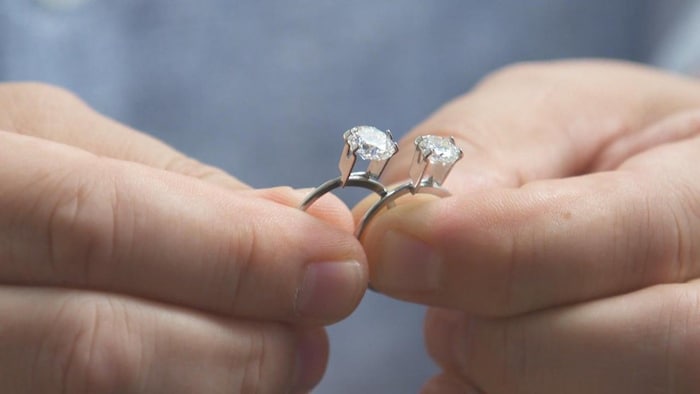
The closure of all Canadian diamond mines is planned by 2031. In our photo, a diamond worth $15.7 million from the Victor mine in Northern Ontario, now closed. (Archive photo)
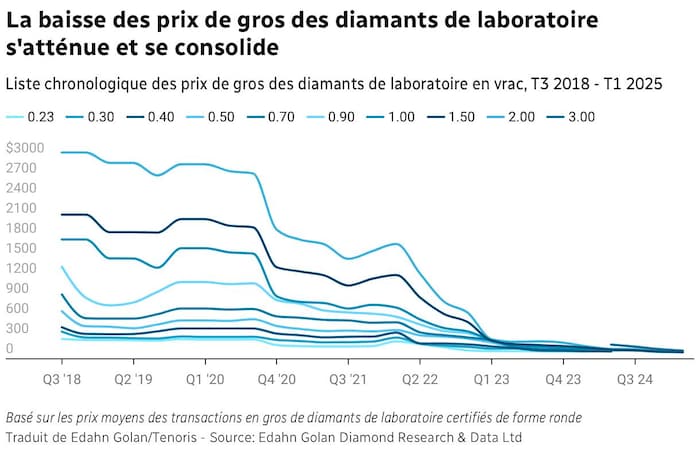
“Fashions fade, style is eternal”: this famous quote – sometimes attributed to Coco Chanel, sometimes to Yves Saint Laurent – is taking a hit lately. The diamond, an unparalleled ostentatious symbol, is being battered by its substitute. Indeed, lab-grown diamonds are so popular that the value of those extracted from the ground is plummeting like a stone down a mine shaft.
This dramatic fall is hitting Canada hard. The country was the world’s third-largest diamond producer in 2019, according to Natural Resources Canada. However, all of Canada’s diamond mines are on track to close by 2031. In fact, even global giants like De Beers are losing hundreds of millions of dollars.
Due to all this stress, an open war has erupted in the industry. Defenders of natural diamonds are using spectacular methods to discredit their lab-grown competitors. In June, the Antwerp World Diamond Centre filled a gumball machine with lab-grown diamonds to demonstrate their lack of value.
Lab-grown diamonds are so popular – because they are very cheap – that they are dragging down the value of diamonds extracted from the Earth’s upper mantle. But this same selling point could cause their downfall, according to some experts. The reason is surprising: they are becoming too cheap to symbolize prestige.

Lab-grown diamonds replicate the natural diamond formation process. Technicians place a fragment of a natural diamond in a plasma chamber. They expose it to the right temperature, pressure, and gases. This process releases carbon particles that deposit onto the fragment. The diamond grows.
These diamonds can be created in just a few weeks. Natural diamonds take millions of years to form deep within the Earth. To the naked eye, they are identical.
Aret Oymakas, owner of Livia Diamonds in Toronto, said in an interview with CBC earlier this week.
The Antwerp World Diamond Centre attempted a marketing stunt in June 2025. The organization installed a gumball machine filled with 180 lab-grown diamonds, each 0.30 carats, in a busy commercial district of Antwerp. Passersby could buy a token for five euros and retrieve their “prize.”
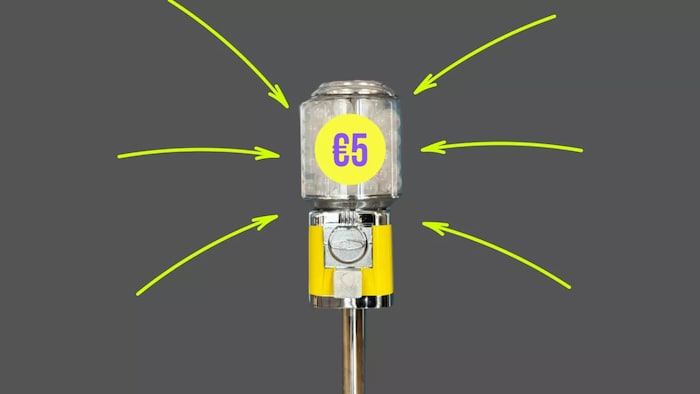
The message was clear: for them, lab-grown diamonds are practically worthless.
The press release associated with this campaign – titled “We Protect a Legacy” – explains that it aims to “raise public awareness of the fundamental differences between natural and synthetic diamonds.”
These differences? The most striking difference lies in their value: the price of synthetic diamonds has collapsed in recent months. […] But the differences go further: in terms of sustainability, positive impact on local mining communities, and emotional meaning, the contrasts are stark.
Paul Zimnisky, an independent diamond industry analyst, confirms that lab-grown diamonds are causing serious concern among giants. He explains that lab-grown diamonds represented only 1% of the market 10 years ago. That proportion was 10% five years ago. Today, they represent over 20% of the global diamond jewelry market.
In the United States, the dominance is even more striking. Lab-grown diamonds account for 44% of engagement ring sales by volume, according to Tenoris data for the period from January to July 2024. In terms of value, the proportion is 25%, compared to only 7.5% four years ago.
Mr. Oymakas, the Toronto jeweler, illustrates this transformation with his own sales figures. In 2018, he sold only natural diamonds. Today, among all his diamond jewelry sales, the natural version represents only 3 or 4%. He claims to sell a total of 80 to 100 rings per month in his downtown Toronto jewelry store.