Editor’s Note
This statement outlines the Canadian government’s commitment to ethical procurement, focusing on protecting supply chains from human rights abuses and promoting responsible practices with suppliers.
As the government’s primary buyer, Public Services and Procurement Canada (PSPC) is committed to upholding the highest ethical principles in government purchasing.
To achieve this, PSPC:
- protects federal supply chains from human trafficking, forced labor, and child labor
- works with suppliers to:
- mitigate negative impacts on human and labor rights
- improve outcomes when risks of such violations are identified
- promotes human rights due diligence and responsible business conduct to improve socioeconomic outcomes for Canadians
As part of its commitment, PSPC will undertake the following activities:
- develop initiatives, tools, and guidelines to address human and labor rights violations in federal public procurement supply chains
- increase awareness of supply chain risks
- increase the number of procurements with ethical objectives
- promote best practices
- establish data requirements for ethical procurement activities
- measure the effectiveness of its efforts
- adopt long-term approaches to combat human trafficking, forced labor, and child labor in federal supply chains
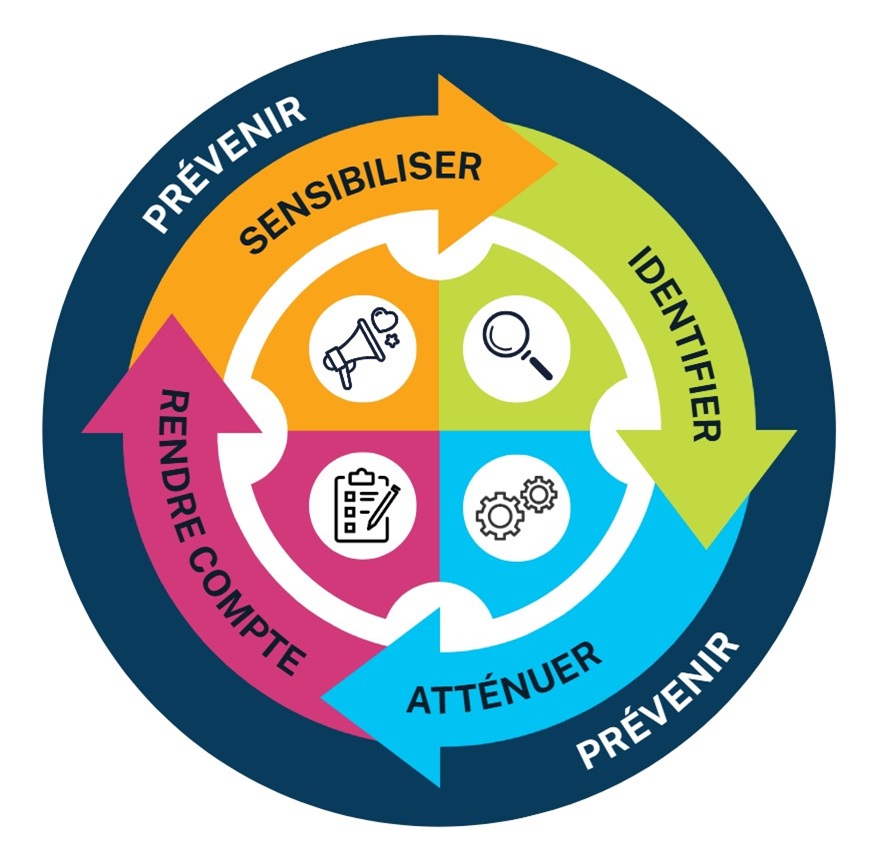
PSPC’s Human Rights Due Diligence Framework is a comprehensive and ongoing process. It includes activities that prevent and help manage the risks of human trafficking, forced labor, and child labor in federal supply chains.
Each activity in the Human Rights Due Diligence Framework falls into one or more of the following 4 categories:
1. Raise Awareness
- Educate people about risks and violations in supply chains
- Provide buyers and businesses with the necessary tools to address them
For example:
- development and dissemination of awareness and guidance documents
- organizing webinars
- stakeholder engagement and consultation
2. Identify
Identify where these risks might occur, based on industry trends and supply chain data.
For example: analysis of risks related to human trafficking, forced labor, and child labor in PSPC’s supply chains.
3. Mitigate
Mitigate identified risks.
For example: inclusion of anti-forced labor requirements in contracts, standing offers, and supply arrangements.
4. Report
- Report on results
- Assess the effectiveness of our methods
- Strengthen measures over time
For example: submission of an annual report under the Fighting Against Forced Labour and Child Labour in Supply Chains Act.
PSPC has created resources and requirements to help suppliers comply with ethical standards for public procurement.
Ethical Apparel Purchasing Requirements
In 2018, PSPC implemented procurement and attestation requirements for the ethical purchase of apparel. These requirements mandate that suppliers attest that they and their direct suppliers, both in Canada and abroad, comply with human and labor rights standards.
Government Supplier Code of Conduct
The Code of Conduct for Procurement outlines the Government of Canada’s expectations of its suppliers. The code requires that suppliers not engage in any form of human or labor rights violation.
As of April 1, 2023, the code is mandatory for all Government of Canada procurement.
Anti-Forced Labor Requirements
PSPC’s anti-forced labor clauses stipulate that suppliers must not provide, deliver, or sell goods or services in Canada that have been produced, in whole or in part, by forced labor.
These requirements were first implemented in November 2021, when anti-forced labor clauses were included in goods purchase contracts. PSPC expanded the anti-forced labor requirements to apply to standing offers and supply arrangements in November 2023. PSPC further expanded the requirements to include service and research and development contracts in December 2024.